From Legislation to Legacy; From History Remembered to Futures Imagined
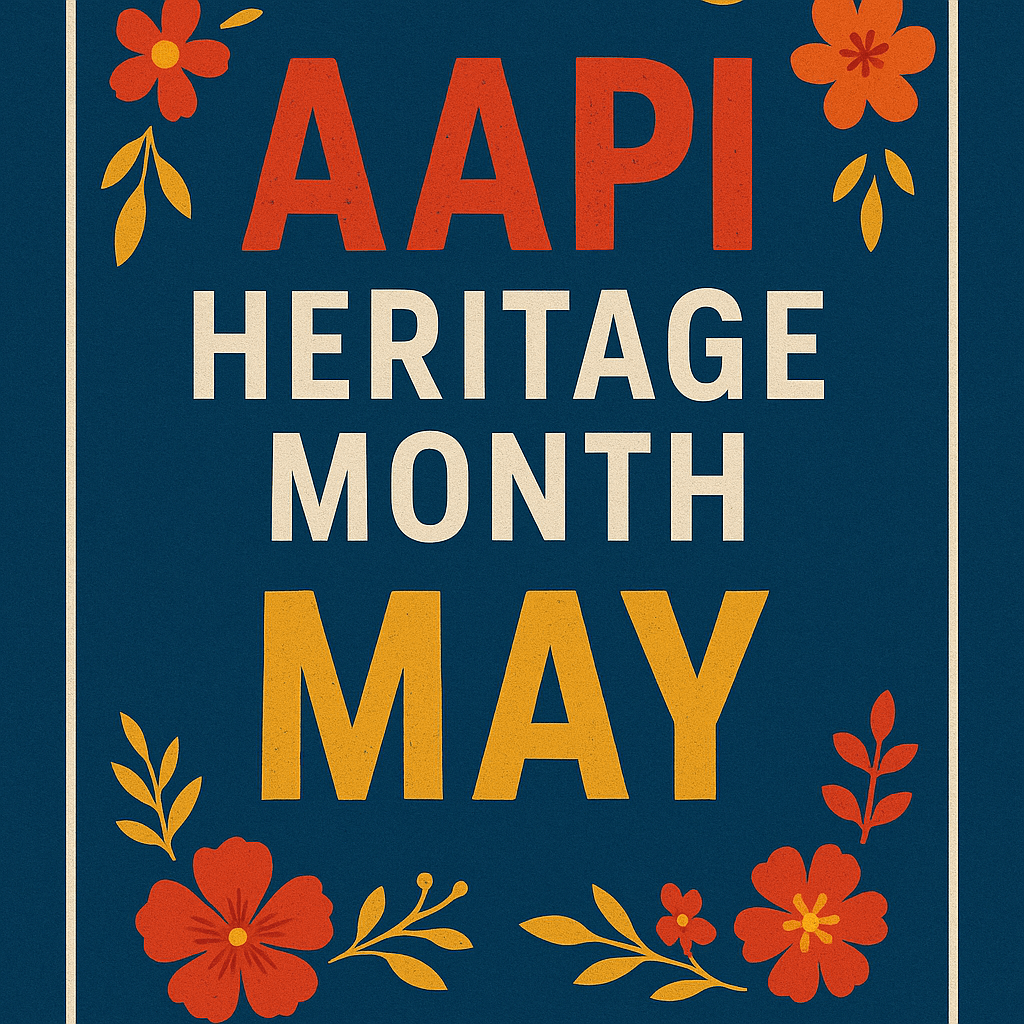
The Dawn: When Congress Began to Remember
On a quiet morning in 1843, waves from the Pacific gently touched the shores of San Francisco Bay. A lone traveler from Japan stepped onto American soil, unaware that his footsteps would begin a legacy spanning centuries. Two decades later, Chinese railroad workers, with shovels and sweat, laid the ties that stitched the American continent together. Silent yet vital, they carved paths that would change the course of this nation.
And yet, for decades, these stories went untold in textbooks, buried beneath layers of forgetting—until 1977, when silence gave way to motion.
That spring, Congressman Frank Horton of New York and Senator Daniel Inouye of Hawaii stood within the marble walls of Congress to propose a week of recognition for Asian Pacific Americans. “They built our railroads, tilled our fields—yet are missing from our national memory.”
In 1978, Congress passed a joint resolution signed by President Jimmy Carter, declaring the first week of May “Asian/Pacific American Heritage Week.” May was a month of symbolism—marking both the arrival of the first Japanese immigrant in 1843, and the 1869 completion of the transcontinental railroad, powered by thousands of Chinese laborers.
That week-long gesture became a movement. In 1990, President George H. W. Bush extended it to a full month. And in 1992, Congress enshrined May as Asian American and Pacific Islander Heritage Month. Long overdue, but powerful in its arrival.
A Desert Blooms: Nevada’s May Awakening
In the arid heat of Nevada, AAPI communities move like the morning breeze—quiet but persistent—leaving behind traces of language, memory, and culture.
As early as 1995, the Nevada State Legislature passed a resolution officially designating May as Asian Pacific Heritage Month, recognizing the enduring contributions of Asian Pacific residents to the state’s development. Since then, each late spring, the state and local governments have found their own ways to pay tribute:
– In city halls from Las Vegas to Reno, cherry blossoms and golden lotus designs adorn ceremonial scrolls;
– At a library in Las Vegas, a Chinese American mother teaches free weekly Mandarin sessions. “I want my children to know,” she says, “that every stroke of a character carries the roots of who we are.”
Such gestures shape Nevada’s multicultural soul. In Clark County libraries, volunteers fold paper cranes and write Chinese calligraphy with children, while sharing stories of ancestors who once crossed oceans in search of uncertain hope.
Each celebration is not mere performance—it is reclamation, remembrance, and reaffirmation.
The Light of May: Through Resistance and Silence
The AAPI journey in America has never followed a straight path.
It has wound through thorny terrain, steep hills, and fragrant blossoms—always moving forward.
There was exclusion: the Chinese Exclusion Act of 1882.
There was confinement: Japanese American internment camps during World War II.
There was silence: street corners marked by prejudice and pain.
But like flowers pushing through rocky soil, AAPI communities have bloomed under the weight of hardship.
Heritage Month is not simply about memory—it is empowerment.
It places Chinese ink paintings of immigrant longing on public library walls, and welcomes more leaders who speak English with foreign accents into the halls of power.
After the 2020 surge in anti-Asian hate, each May has grown heavier—yet more urgent.
A collective declaration rises: “We deserve to be seen. We deserve to be heard.”
Our May, Beyond Celebration
The wind in May carries scents of citrus and lilac. In quiet corners of the city, people pause at exhibit boards, linger over pages of bilingual books, and meet each other’s eyes with a new kind of recognition.
This month invites reflection and imagination:
– More AAPI storytellers taking the stage and screen;
– More schools teaching not just “American history,” but “our shared history”;
– More mothers proudly saying they are from Samoa or Myanmar, without fear or apology.
And for a new generation of Chinese Americans raised between two languages, this month is not only a bridge to heritage—it’s a chance to redefine expression itself.
On podiums, in courtrooms, through a bowl of soup or a childhood memory, they share pride wrapped in tenderness. They tell the Chinese American story in their own rhythm.
Epilogue: A Page of Poetry for May, a Light for What Comes Next
May evenings are cool, like the words of an elderly Japanese American who once said: “We plant trees whose fruits we may never taste, but the wind will remember the scent of their blossoms.”
AAPI Heritage Month is both remembrance and renewal. It is a poem still being written.
May we all—no matter where we come from—listen, share, and plant seeds of understanding that bloom in the springs yet to come.
Composed in Las Vegas, where May carries the stories of our heritage
— May
Discover more from 华人语界|Chinese Voices
Subscribe to get the latest posts sent to your email.
