— Unpacking the Tensions Between NV Energy and Solar Installers
In the past two years, several solar companies based in Las Vegas have publicly criticized NV Energy’s solar interconnection process as ‘delayed, opaque, and inconsistent.’ Some companies reported that customers waited so long for grid approval that installations were canceled, affecting their business.
On the surface, this may seem like a procedural dispute, but underneath lies a deeper struggle over control and market power: who will shape the future of solar energy? Will it be utility-driven centralized generation, or a decentralized transformation led by individual users and solar companies?
In Nevada—especially in Las Vegas—solar energy seems like an ideal green solution. But there’s a curious contradiction: on one hand, residents are increasingly eager to install rooftop solar; on the other, NV Energy and other utilities seem reluctant to support this shift, often opposing higher compensation rates for solar users feeding power back into the grid. Why?
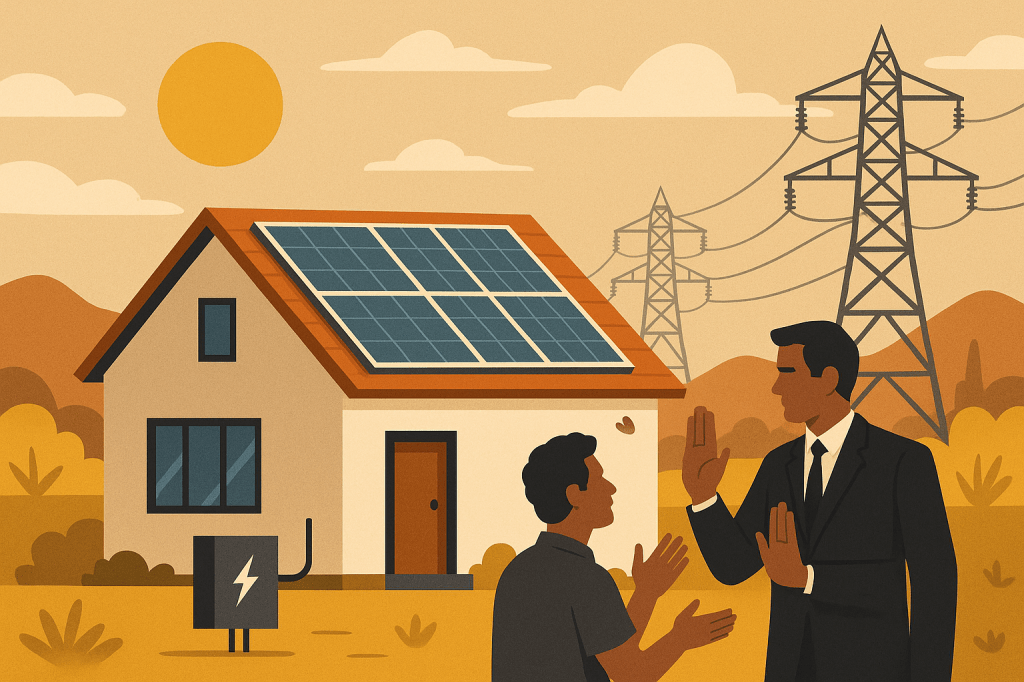
A Structural Conflict Over Control
This is not just an environmental issue. It’s a systemic clash of interests:
1. Revenue Model Conflict: NV Energy earns profits by selling electricity. When homeowners produce their own power—and even sell it back—they reduce utility revenue, even though the utility must still maintain transmission infrastructure and backup power.
2. System Control Conflict: NV Energy relies on a centralized model—large plants feeding power through one coordinated grid. Rooftop solar is distributed and unpredictable, making the grid more complex and less controllable. For NV Energy, it’s not innovation—it’s risk.
3. Market Logic Conflict: Solar installation companies thrive on user independence. Their success grows when every household becomes its own power plant. What NV Energy sees as fragmentation, they see as empowerment.
The Result: Pushback, Policy Reversals, Public Confusion
This is why we see policy swings—sometimes increasing net metering rates, sometimes cutting them. Installers oppose; utilities support. The public is caught in between.
This isn’t about right or wrong. It’s about a shifting balance of power:
– From a few centralized power plants → to participation by thousands of households
– From passive energy consumers → to active energy producers
– From one-way electricity sales → to complex, two-way energy exchange
Toward Cooperation, Not Just Competition
Rather than staying locked in opposition, the future could hold new forms of collaboration:
1. Cost-sharing Mechanisms: Revise rate structures so solar users also contribute fairly to grid upkeep.
2. Community Solar: Let nonprofits or cooperatives build shared solar arrays that serve groups of residents—centralized yet inclusive.
3. Storage and Smart Grids: Enable better integration of distributed energy using batteries and intelligent systems.
4. Role Reimagining: NV Energy doesn’t have to sell electricity to survive. It could evolve into a platform managing storage, infrastructure, and services—much like telecoms shifted from voice calls to data networks.
Conclusion: A Question of Power, Not Just Technology
The debate over solar isn’t just about panels and prices. It’s about whether we’re ready to redesign the rules of energy for a decentralized future.
Everyone is part of this transformation. What we need is not just conflict, but a new social contract—forging cooperation where sunlight is most abundant, and potential is greatest.
By NevadaChinesePerspective.org
Discover more from 华人语界|Chinese Voices
Subscribe to get the latest posts sent to your email.
