— Electricity Pricing and Fairness in the Solar Era
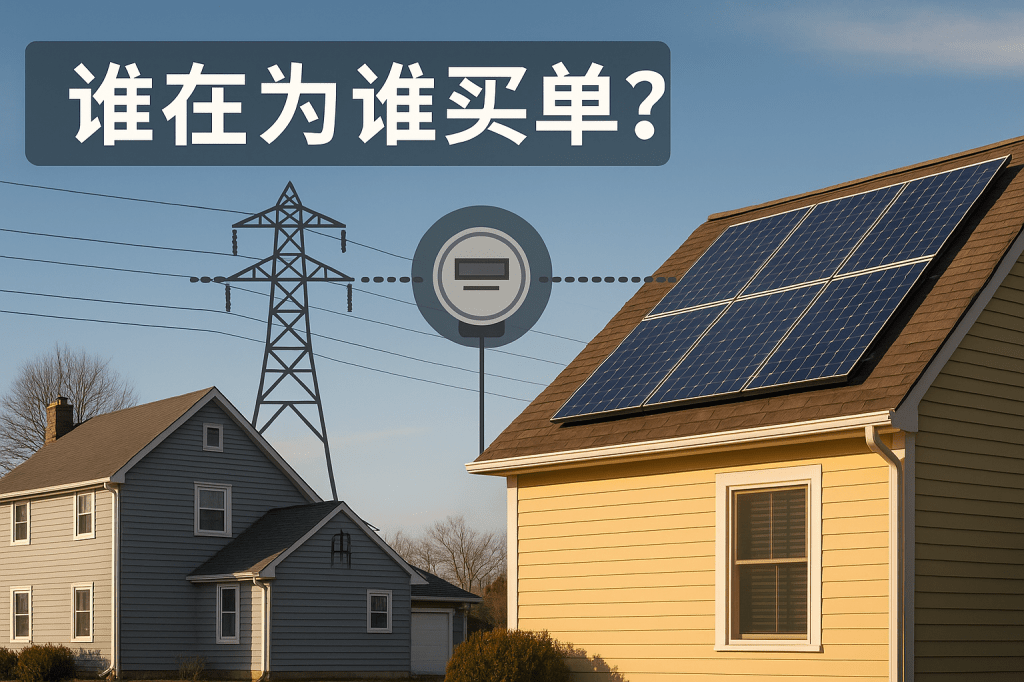
As more households install solar panels on their rooftops, a quiet green energy revolution is underway. But beneath this transition lies a less visible issue: Under the current electricity pricing structure, are households without solar systems effectively subsidizing those who do have them?
This question deserves everyone’s attention.
☀️ What Is Net Metering?
Net metering is a policy designed to promote residential solar adoption. When your home solar system generates more electricity than you consume during the day, the excess is sent back to the grid. In return, the utility company gives you credits on your bill — often at the same rate you would have paid to buy electricity.
On the surface, this seems fair. You’re contributing clean energy, so you should be rewarded. But here’s where it gets complicated.
⚖️ How Are Costs Being Shifted?
The electric grid isn’t just about energy trading. It includes transmission lines, substations, backup power (especially at night or during cloudy days), emergency repairs, customer support, smart meters, voltage stabilization, and even energy storage systems.
These are shared infrastructure costs — yet solar users, because they use less electricity from the grid, also pay much less. Their financial contribution to grid upkeep drops, even though they still rely on the grid when their panels aren’t producing.
To cover the shortfall, utilities raise rates or fees for customers who don’t have solar systems. This phenomenon is known as cost-shifting.
🧮 A Simple Illustration
Suppose maintaining the electric grid for a community costs $1,000,000 annually. Initially, 10,000 households split the cost — $100 each per year.
Now, 2,000 households install solar and use very little grid electricity, contributing only $30 each. The remaining 8,000 households must now cover the difference.
The result: Solar users enjoy lower bills, while non-solar users end up paying more — even though their energy use hasn’t changed.
⚠️ Why This Matters
This isn’t just about who saves money. It’s about fairness: Are we creating an unequal energy system? Could this erode public support for solar adoption? Might it undermine the social consensus for climate action?
If non-solar households feel penalized, support for green policies may waver — slowing progress toward sustainability.
✅ What Can Be Done? Finding a Better Balance
Several U.S. states, including Nevada, are exploring fairer models:
1. Adjust net metering rates: Instead of reimbursing at 100% of retail price, pay 75–80% to account for grid service costs.
2. Introduce a two-part rate structure: A portion based on energy use, and a fixed fee for grid access — ensuring everyone helps fund the shared infrastructure.
3. Encourage community solar and storage: Shared generation and storage systems reduce reliance on individual incentives and foster broader equity.
✨ Conclusion: A Fair Future for a Green Transition
Solar energy is the future — but a just energy transition must avoid creating new inequalities.
In a world striving to be greener, we must ask two questions: How do we use cleaner energy? And how do we share it more fairly?
The debate over electricity pricing sits right at the intersection of those two questions.
By Nevada Chinese Perspective
Discover more from 华人语界|Chinese Voices
Subscribe to get the latest posts sent to your email.
