— Federal Subsidies, Fairness, and the Debate on Public Interest
As solar energy adoption spreads, the federal government has encouraged more households and businesses to install solar systems through tax incentives and other forms of support. But an increasingly pressing question has emerged: Are these subsidies truly fair? And do they amount to all taxpayers subsidizing a select group of solar users?
1. How Do Federal Solar Subsidies Work?
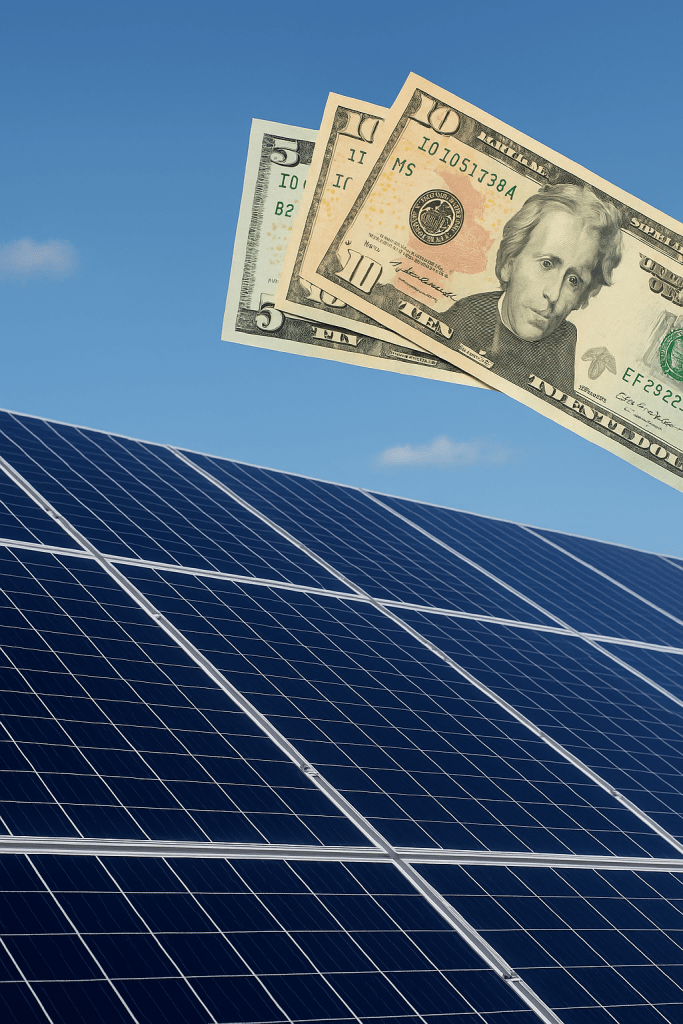
Currently, the primary form of federal support for solar energy comes through the Investment Tax Credit (ITC). For eligible residential or commercial solar projects, the federal government allows a tax deduction equal to 30% of the installation cost (a rate expected to remain in place through 2032). In other words, if you spend $20,000 installing a solar system, you can deduct $6,000 from your federal taxes over the coming years.
The intent of this policy is to lower upfront barriers and stimulate green energy investment. But in essence, it works by reducing public tax revenue to incentivize specific behavior—effectively asking all taxpayers to subsidize the early adopters of solar.
2. Is That Fair? — A Policy Response Through AB 458
In practice, the primary beneficiaries of this federal tax credit tend to be homeowners with good credit and enough financial capacity to cover upfront costs. Renters, low-income households, and individuals with limited credit access are often unable to participate—even if the subsidies exist on paper. As a result, critics argue that the system represents a form of ‘reverse redistribution,’ using public resources to benefit those who are already better off.
Local governments, however, are beginning to address this structural inequality. Nevada’s AB 458, passed in 2025 and signed into law by the governor, offers a promising example of this shift.
AB 458: Moving Beyond Rooftop Ownership
AB 458 enables tenants in affordable and multi-family housing to participate in net metering through shared solar. The law addresses several key issues:
– Tenants typically cannot install their own solar panels and thus miss out on savings and benefits;
– Landlords lack incentives to pass cost savings on to tenants;
– Tenants often have limited knowledge of their potential rights under clean energy policies.
AB 458 requires landlords to:
– Fairly distribute solar generation benefits (e.g., by unit or square footage);
– Clearly inform tenants of their rights and benefits before and after installation;
– Ensure transparent contracts and proper system compliance, avoiding hidden fees or unfair cost shifts.
The significance of this policy lies in its efforts to:
– Include renters—especially low-income households—who were previously left out of solar incentives;
– Shift the paradigm from individual consumption to shared community benefit.
The law is set to take effect in 2026. Regulatory agencies are currently developing implementation rules that are expected to open up access to clean energy for thousands of families.
3. Are There Fairer Alternatives?
Beyond state legislation like AB 458, experts and advocacy groups have proposed adjustments to the federal system to improve equity and access:
– Increase the subsidy percentage for low-income or vulnerable communities;
– Expand community solar programs that allow renters or apartment dwellers to benefit by subscribing to shared solar projects;
– Publicly fund solar infrastructure on public housing, schools, or community buildings, returning benefits to the broader community;
– Develop financial innovations like green leases, credit guarantees, or waived upfront payments to reduce financial barriers.
What these approaches share is a rejection of the ‘whoever can pay goes first’ logic—pushing instead for a more inclusive energy transition.
4. Conclusion: Public Funds Deserve Scrutiny
Subsidies aren’t just about who receives the money—they’re about whether public funds are being directed toward outcomes with long-term social value. Equity and efficiency, markets and public responsibility, do not have to be in conflict—they can be pursued in tandem.
If we can design a system that balances incentive with justice, and makes solar energy a public good rather than a consumer privilege, it will be far more likely to gain lasting public support—and pave the way toward a sustainable future for all.
By Nevada Chinese Perspective
Discover more from 华人语界|Chinese Voices
Subscribe to get the latest posts sent to your email.
