In this recent special legislative session, the Nevada Assembly felt less like a policymaking chamber and more like the center of a political whirlwind. In a narrow 22–20 vote, lawmakers approved AB5 — a sweeping 15‑year program offering $120 million per year in transferable film tax credits.
But the bill did not pass because lawmakers reached consensus. It advanced amid intra‑party fractures, procedural disputes, and flashing red warnings about long‑term fiscal risks. More than an economic proposal, AB5 is a mirror reflecting Nevada’s political reality: a tug‑of‑war among interest groups, budget anxieties, and lawmakers increasingly divided within their own parties.
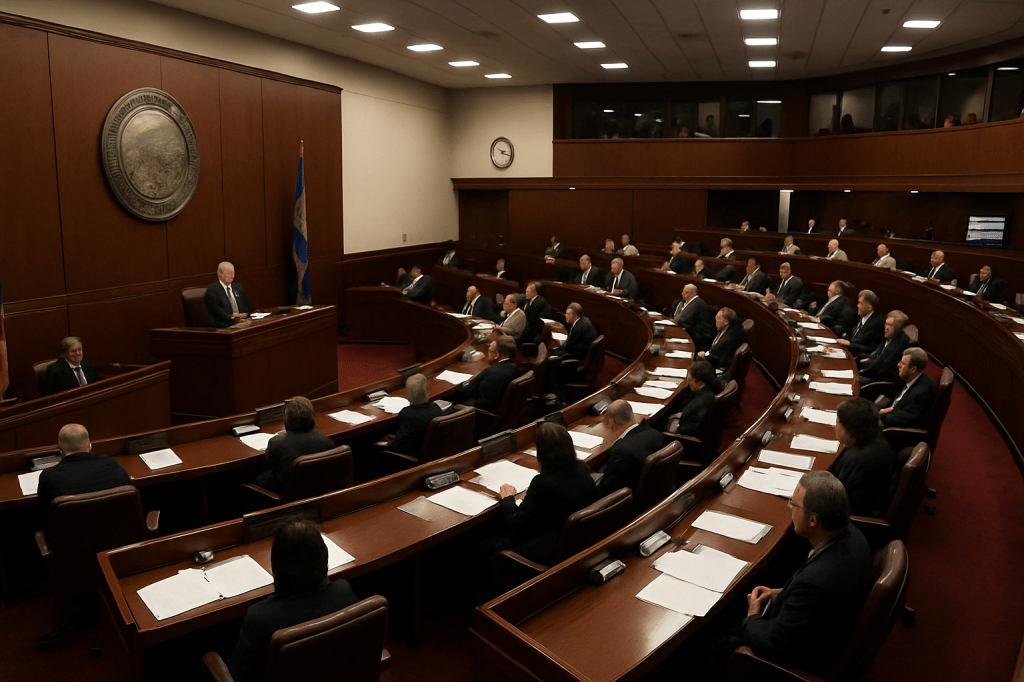
This is not a “Democrats vs. Republicans” fight — it’s two internal civil wars
The most striking feature of AB5 is not partisan polarization but simultaneous fractures inside both parties.
Within the Democratic caucus, tensions erupted publicly: accusations of opaque procedure, frustration over last‑minute amendments, and even a public allegation of “mansplaining.” The final tally — 16 in favor, 11 opposed — made the division unmistakable.
Republicans were just as divided. Instead of a unified opposition to corporate tax credits, six Republicans supported the bill while nine voted against it. Behind the scenes, some lawmakers faced pressure and even warnings about potential primary challengers.
The real divide wasn’t between red and blue, but within each party’s own ranks.
Clear fiscal warnings were overshadowed by political momentum
Nevada’s fiscal analysts provided projections that were anything but ambiguous: an estimated $100 million deficit in 2030 and a $260 million shortfall in 2031 — deficits that would not exist without the film tax credit program.
Opponents put it plainly: “If we pass this bill, we will either raise taxes or cut services.”
Yet lawmakers received the key fiscal analysis at the last minute, with virtually no opportunity for thorough debate. Political urgency eclipsed fiscal caution.
A legislative process drifting toward dysfunction
The legislative handling of AB5 resembled a political farce: lawmakers on vacation casting remote votes, obscure procedural rules repeatedly invoked, a newly sworn‑in lawmaker admitting confusion during his first vote, and an eight‑page amendment rushed into the process with almost no review time.
Legislative procedure is meant to guarantee legitimacy. Instead, it became a tool of improvisation, eroding public trust in the process itself.
Who wins? Not families, not schools — but major corporations
The clearest beneficiaries of AB5 are not ordinary Nevadans, but major corporations such as Sony, Warner Bros. Discovery, and Howard Hughes Holdings.
A state‑commissioned analysis found that for every $1 in tax credits issued, the government recoups only $0.23–$0.53 in revenue. The larger the subsidy, the greater the fiscal loss.
Over time, this could mean tighter education budgets, reduced public services, and long‑term burdens shifted onto working families.
The real issue isn’t filmmaking — it’s Nevada’s value hierarchy
Supporters argue that AB5 will diversify the economy, expand union employment, and reduce dependence on tourism. Opponents counter that Nevada’s budget is already strained, and subsidies for corporations should not come before basic public needs.
Ultimately, AB5 forces the state to confront a deeper question: Whose future will Nevada prioritize — corporate interests or the needs of children, workers, and communities?
Latest Developments (as of tonight)
AB5 has moved to the Senate, but the final vote has not yet taken place. New fiscal estimates project a $62.1 million structural deficit beginning in 2029 and a potential $102.6 million shortfall in 2030 if the state is to maintain its required reserve levels.
At least one Republican senator has publicly stated opposition. The next 24–48 hours will be critical in determining whether the bill advances or collapses under fiscal and political pressure.
Conclusion: Nevada does not lack movies — it lacks trustworthy governance
Developing a film industry is not inherently problematic, but how the policy is crafted and implemented matters greatly.
AB5 highlights Nevada’s need for transparent decision‑making, credible fiscal planning, procedural integrity, and a genuine focus on public welfare.
Regardless of the bill’s final outcome, one lesson is clear: Nevada’s future depends not on glamorous investment stories, but on governance that people can trust.
By Nevada Chinese Perspective
Discover more from 华人语界|Chinese Voices
Subscribe to get the latest posts sent to your email.
