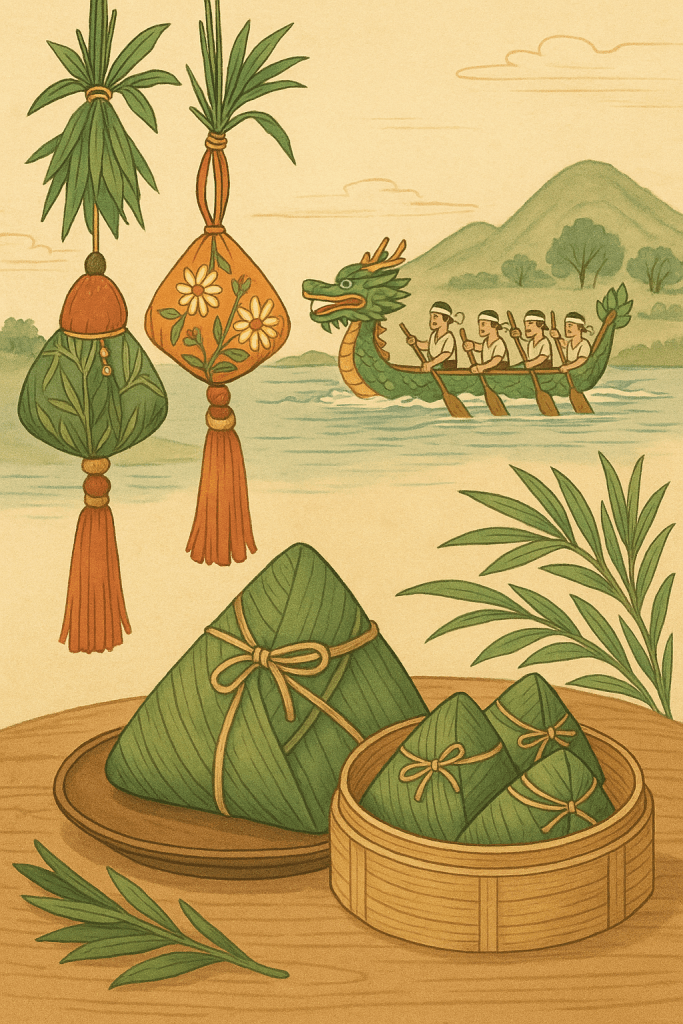
A Fragrant Thread Through Time
Every year on the fifth day of the fifth lunar month, Chinese households around the world come alive with the familiar aroma of sticky rice, bundles of mugwort and calamus hung by doorways, and the unmistakable air of celebration. This is the Dragon Boat Festival, one of the most culturally rich and enduring traditional holidays of the Chinese people.
Origins: Remembrance and Wellness Intertwined
The most widely known origin of the Dragon Boat Festival lies in the commemoration of Qu Yuan, a patriotic poet and minister from the Warring States period. According to legend, after Qu Yuan drowned himself in the Miluo River out of despair for his country, local people raced out in boats to recover his body. To protect it from fish and evil spirits, they threw rice dumplings into the water—giving rise to both dragon boat racing and the custom of eating zongzi.
But the roots of the festival go even deeper. In ancient times, the fifth lunar month was considered ominous, often associated with heat, disease, and pests. To ward off illness and misfortune, people developed customs such as wearing fragrant sachets, drinking realgar wine, and hanging mugwort—forming a unique blend of ritual, medicine, and seasonal awareness.
Traditions: A Tapestry of Cultural Detail
Across China, regional practices for the Dragon Boat Festival vary, yet all reflect rich layers of folk tradition:
– Eating Zongzi: Sticky rice parcels filled with red bean paste, salted egg yolk, pork, or other ingredients, wrapped in bamboo leaves and shaped into triangles or rectangles.
– Dragon Boat Racing: Especially popular in the river towns of southern China, these races honor Qu Yuan’s legacy and celebrate teamwork, strength, and rhythm.
– Hanging Mugwort and Wearing Sachets: These aromatic herbs and handmade pouches are believed to repel insects and evil spirits while offering symbolic blessings.
– Wearing Five-Colored Thread and Longevity Charms: Children often wear threads of five colors or pendants shaped like locks to wish for health and long life.
Deeper Meaning: Cultural Identity and the Wisdom of Living
For overseas Chinese communities, the Dragon Boat Festival is not only a cultural memory, but a reaffirmation of identity. It reminds us that no matter where we are in the world, we remain connected to a civilization that spans millennia.
More than just reverence for Qu Yuan’s loyalty, the festival also embodies a distinctly Chinese philosophy of harmony with nature: seasonal eating, herbal wellness, and alignment with the rhythms of time are all part of the cultural intelligence embedded in this day.
Conclusion: Savoring a Festival Abroad
Even far from home, we can still wrap zongzi, gift a fragrant sachet, or tell the story of Qu Yuan to our children. In doing so, we pass along more than just a tradition—we share warmth, memory, and meaning.
The Dragon Boat Festival is a symbol of Chinese heritage, a reminder of who we are and where we come from. May the fragrance of rice and herbs this season bring you comfort, connect you to your roots, and carry your wishes for health and harmony wherever you are.
(By May)
Discover more from 华人语界|Chinese Voices
Subscribe to get the latest posts sent to your email.
