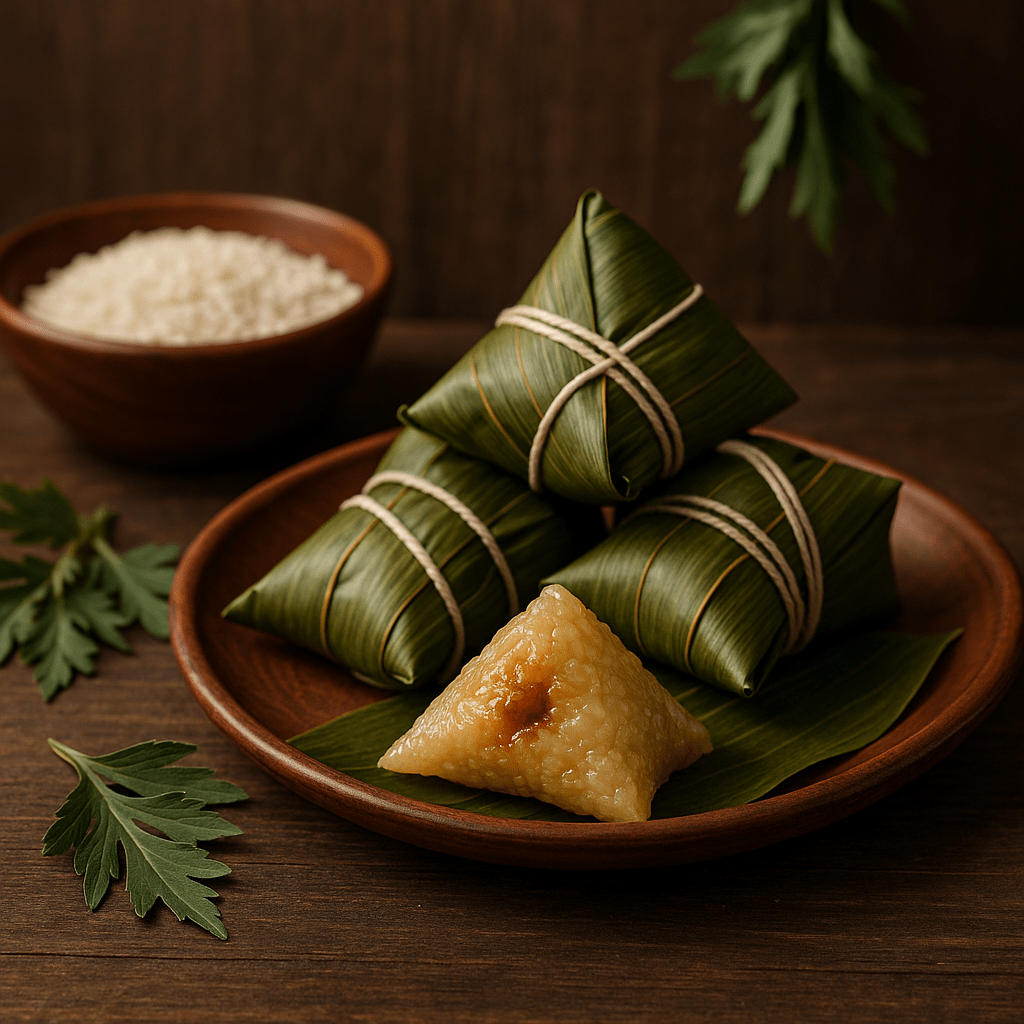
Every year on the fifth day of the fifth lunar month, as the scent of sticky rice fills kitchens and mugwort hangs by the doorways, the Dragon Boat Festival quietly arrives. Among all the traditional customs tied to this cherished holiday—dragon boat racing, hanging herbs, wearing sachets—zongzi, or sticky rice dumplings wrapped in leaves, stands out as one of the most beloved and symbolic. But why do we eat zongzi during the Dragon Boat Festival? What deeper meanings lie behind this humble treat?
Remembering Qu Yuan: The Cultural Origins of Zongzi
The most well-known origin of the Dragon Boat Festival is the commemoration of Qu Yuan, a patriotic poet and official of the Chu State during the Warring States period. According to legend, when his homeland fell into enemy hands, Qu Yuan, devastated, threw himself into the Miluo River. Locals, mourning his loss, raced their boats to recover his body and threw rice into the river to prevent fish from eating him. These rice offerings eventually evolved into today’s zongzi, and boat races became dragon boat competitions.
Thus, zongzi is not just a festive food—it carries the enduring spirit of loyalty, patriotism, and reverence for ancestors embedded in Chinese tradition.
Seasonal Wisdom: Zongzi as a Symbol of Health
Long before it became a memorial, the Dragon Boat Festival was also a time for warding off disease and misfortune. In ancient China, the fifth lunar month was called the “month of poison,” when the hot, damp climate bred illness and decay. To counter these influences, people developed customs like hanging mugwort and calamus, wearing perfumed sachets, and eating zongzi.
The leaves used to wrap zongzi—typically bamboo or reed leaves—have natural antibacterial properties. Mugwort, commonly seen during the festival, was not used in zongzi but was an important herb for purification. Together, these elements reflect a traditional Chinese understanding of seasonal health and harmony with nature.
Regional Flavors, Shared Memories
Zongzi takes many forms across China’s diverse regions:
In northern China, they are often sweet, filled with red bean paste or jujubes. In the south, zongzi are more often savory, with fillings like marinated pork belly, salted duck egg yolks, or cured meats. The Hakka people have unique variations like alkaline water zongzi and ash-lye zongzi.
No matter the flavor, the act of wrapping zongzi is a cherished family ritual. As the holiday nears, mothers or grandmothers soak leaves, wash glutinous rice, and gather loved ones around the table to fold, wrap, and tie. These moments, tender and ordinary, are etched in the memories of many Chinese people as a powerful expression of home and belonging.
Celebrating Abroad: Zongzi as a Cultural Thread
For Chinese communities across the world, zongzi is more than just festive food—it is a vessel of cultural identity. Whether in New York’s Chinatown, Sydney’s suburbs, or a small Chinese grocery store in Paris, there’s often a place where zongzi can be found, bringing warmth and familiarity to distant lands.
More and more younger generations of overseas Chinese are also learning to make zongzi, listening to stories of Qu Yuan and tales of their ancestors as they wrap the leaves. Even if they don’t speak fluent Chinese, they come to understand the language of tradition through taste and touch. In this way, zongzi becomes a thread connecting families across generations, and cultures across oceans.
More Than Just Sticky Rice: A Gift of Culture and Love
Zongzi may appear small and humble, but it holds within it the weight of ritual, remembrance, and home. Even from across the world, it brings us closer to our roots and to those who came before us. This Dragon Boat Festival, consider wrapping a zongzi yourself—not just for the flavor, but for the love and meaning sealed inside each fold.
Written by May a few days ahead of Dragon Boat Festival
Discover more from 华人语界|Chinese Voices
Subscribe to get the latest posts sent to your email.
