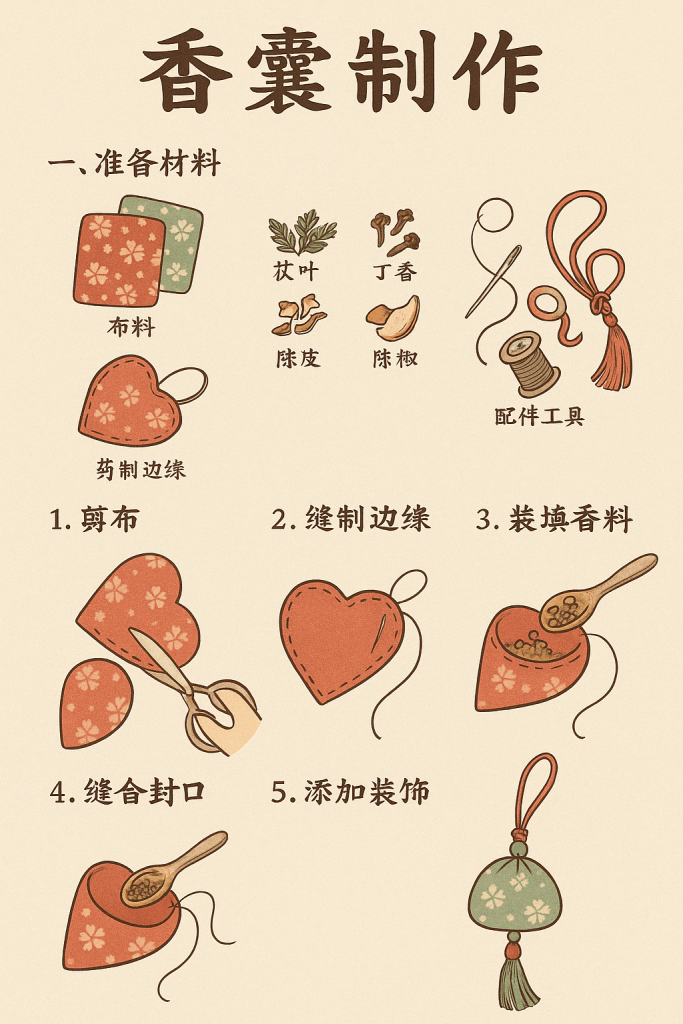
Wearing sachets during the Dragon Boat Festival is a tradition that has endured for thousands of years. More than just festive ornaments, sachets represent the ancient Chinese wisdom of seasonal health practices and carry wishes for peace and well-being. Their origins are deeply rooted in the ways our ancestors responded to seasonal changes and outbreaks of disease, reflecting a rich integration of traditional Chinese medicine and cultural beliefs.
Historical Origins: Sachets and the Culture of Protection
The tradition of sachets is closely linked to the Dragon Boat Festival’s original purpose of warding off evil and disease. Ancient Chinese believed that the fifth lunar month was a “poisonous month” and that the fifth day of that month was particularly inauspicious. As summer brought heat, dampness, and epidemics, people developed customs to protect themselves—such as hanging mugwort and calamus, drinking realgar wine, and wearing herbal sachets.
According to ancient texts such as the “Chronicles of the Seasons in Jingchu,” people would grind fragrant medicinal herbs into powder, wrap them in silk cloth to create sachets of various shapes, and wear them on their chest, waist, or children’s collars. These sachets not only repelled insects and disease but also gave off a pleasant aroma that refreshed the mind. Among the nobility, sachets were exchanged as festival gifts symbolizing good health and deep friendship.
Benefits and Cultural Meanings of Sachets
The significance of sachets goes beyond practical use—they embody deep cultural symbolism:
• Disease Prevention: Herbs like mugwort, angelica, mint, clove, and agastache in sachets are believed to repel insects and prevent illness, in line with traditional Chinese medicine’s theory of “fragrant herbs to dispel dampness.”
• Calming and Refreshing: The scent of these herbs can open the senses and soothe the spirit, helping relieve summer fatigue and dizziness.
• Holiday Blessings: Sachets are often embroidered with auspicious phrases like “peace” and “longevity,” carrying good wishes for health and happiness.
• Artistic Beauty: With their vibrant colors and intricate designs, sachets not only adorn traditional clothing but also showcase Chinese embroidery and craftsmanship.
Cultural Evolution: From Folk Craft to Intangible Heritage
During the Tang and Song dynasties, sachets became increasingly refined, transforming into tokens exchanged among scholars and nobles during festivals. By the Ming and Qing dynasties, sachets were widespread in both the imperial court and the common folk. Girls were often taught to embroider sachets as part of their cultural education and household training.
In modern times, sachets have evolved from traditional seasonal items into versatile cultural artifacts used in wellness, intangible heritage education, and creative design. Whether as DIY crafts, school festival projects, or cultural exhibitions, sachets continue to convey the enduring wisdom of ancient seasonal traditions.
Conclusion
A sachet is more than a pouch of herbs—it is a fragrant vessel of memory. It reflects the Chinese people’s sensitivity to nature, their pursuit of health, and their way of expressing love and care through seasonal customs. As we wear sachets during the Dragon Boat Festival today, we are not merely continuing a tradition—we are experiencing a timeless connection to the rhythms of nature and the beauty of cultural continuity.
(By May):
Discover more from 华人语界|Chinese Voices
Subscribe to get the latest posts sent to your email.
