Reflections from a Community Screening and Dialogue in Las Vegas: Who Defines the Future of Chinatown?
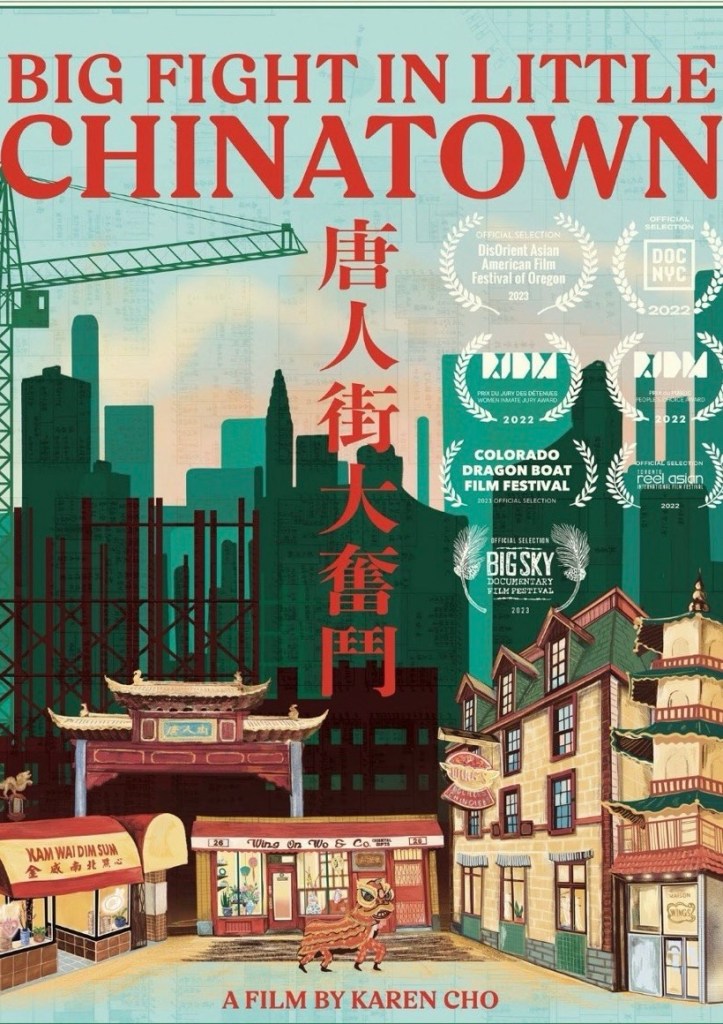
On the evening of June 21, 2025, over a hundred community members gathered at the Desert Breeze Community Center in Las Vegas to watch the documentary Big Fight in Little Chinatown and participate in a post-screening roundtable discussion. Hosted by the Asian & Asian American Studies Program at UNLV, the Neon Pacific Initiative, and Desert Breeze Community Center, the event centered on the urgent question of Chinatown redevelopment—and how Chinese communities can be not just stakeholders, but active co-creators in shaping their own futures.
Big Fight in Little Chinatown: A Documentary About the Survival of Culture
Have you ever strolled through a Chinatown in a North American city—beneath traditional archways, through wafts of roasted meats, and past familiar Chinese storefront signs—and wondered how these enclaves came to be? And how they’ve managed to persist through wave after wave of urban development and gentrification?
Directed by Canadian filmmaker Karen Cho, Big Fight in Little Chinatown dives deep into the evolving fate of Chinatowns across North America. Traversing New York, Montreal, Vancouver, and San Francisco, the film immerses viewers in real-life community battles, capturing the voices of those who—amid threats of displacement and cultural erasure—are fighting fiercely to preserve the roots of their heritage.
More Than Just Chinatown—A Sense of Belonging
Rather than exoticizing Chinatown, the film begins from within, using an unfiltered lens to document the everyday lives of its residents—restaurant owners, elders, youth organizers, cultural workers. These are not passive bystanders waiting for fate to unfold—they are active agents speaking up and standing firm for the future of their communities.
Whether opposing the construction of a mega-jail in New York’s Chinatown or resisting the demolition of historic buildings in Vancouver, the actions portrayed in the film are not acts of violence or resistance for its own sake. They are organized, deliberate efforts: holding community meetings, visiting legislators, launching petitions, and rebuilding cultural pride through storytelling and festivals. These scenes reveal a quiet yet unyielding strength.
Why This Film Matters to the Chinese Community
1. It tells a story we know, yet too often overlook: Chinatowns are more than tourist spots or culinary hubs—they embody the struggles, memories, and contributions of generations of Chinese immigrants. This film gives voice to these stories, reminding us that preserving Chinatown is not just about keeping the buildings, but about keeping our language, our identity, and our sense of home.
2. It reveals the deeper power dynamics behind urban development: Urban renewal and real estate projects are often portrayed as signs of “progress,” but do they truly serve the residents who have long lived there? The film shows that what Chinese communities face are not just economic struggles—but an imbalance of political voice and power.
3. It inspires us to think about action and organization: When cultural spaces disappear, how should we respond? The film offers examples that are neither based in anger nor silence, but rooted in strategic community mobilization, intergenerational collaboration, and cross-racial solidarity. For anyone seeking to build stronger communities, this is a well of insight.
Roundtable Discussion: Who Deserves a Seat at the Table?
After the screening, five guest speakers from different cities shared their experiences working on Chinatown-related issues, responding to a core question: Are Chinese Americans ready to be participants—not just subjects—in the shaping of our cities?
Brenda Chi, an illustrator based in Los Angeles and the San Gabriel Valley, spoke about using art to document family memories and inspire cultural awareness among younger generations.
Jeremy Liu, Managing Partner at Creative Development Partners (San Francisco), observed how community voices are often left out of the planning process. He stressed the need to build systems that ensure communities are not merely consulted, but actually co-design the projects that shape their neighborhoods.
Meilani Mandery, from the Seattle-based CID Coalition, shared how her community used petitions, policy advocacy, and cross-organizational alliances to push back against unjust city planning proposals.
Betty Yu, co-founder of Chinatown Art Brigade (New York), reflected on her lived experience growing up in Chinatown and emphasized that true redevelopment must center the long-term residents, not displace them in favor of investors. Improving the neighborhood should mean uplifting the people already there—not pricing them out.
Minjia Yan, a local Las Vegas resident and director at Millennium Commercial Properties, delivered one of the most memorable lines of the night:
“Be at the table or be on the menu.”
If we don’t take our place at the decision-making table, she warned, we risk becoming the ones served up. She called on Chinese communities to be involved as co-designers in every future redevelopment project—not as a reaction, but from the very beginning.
Minjia’s dual expertise in real estate and community advocacy grounded her call in both practicality and passion. Her message echoed a powerful truth: If we want a say in what the future of our cities looks like, we must show up now—not after the deals are done.
Looking Ahead, Not Just Back
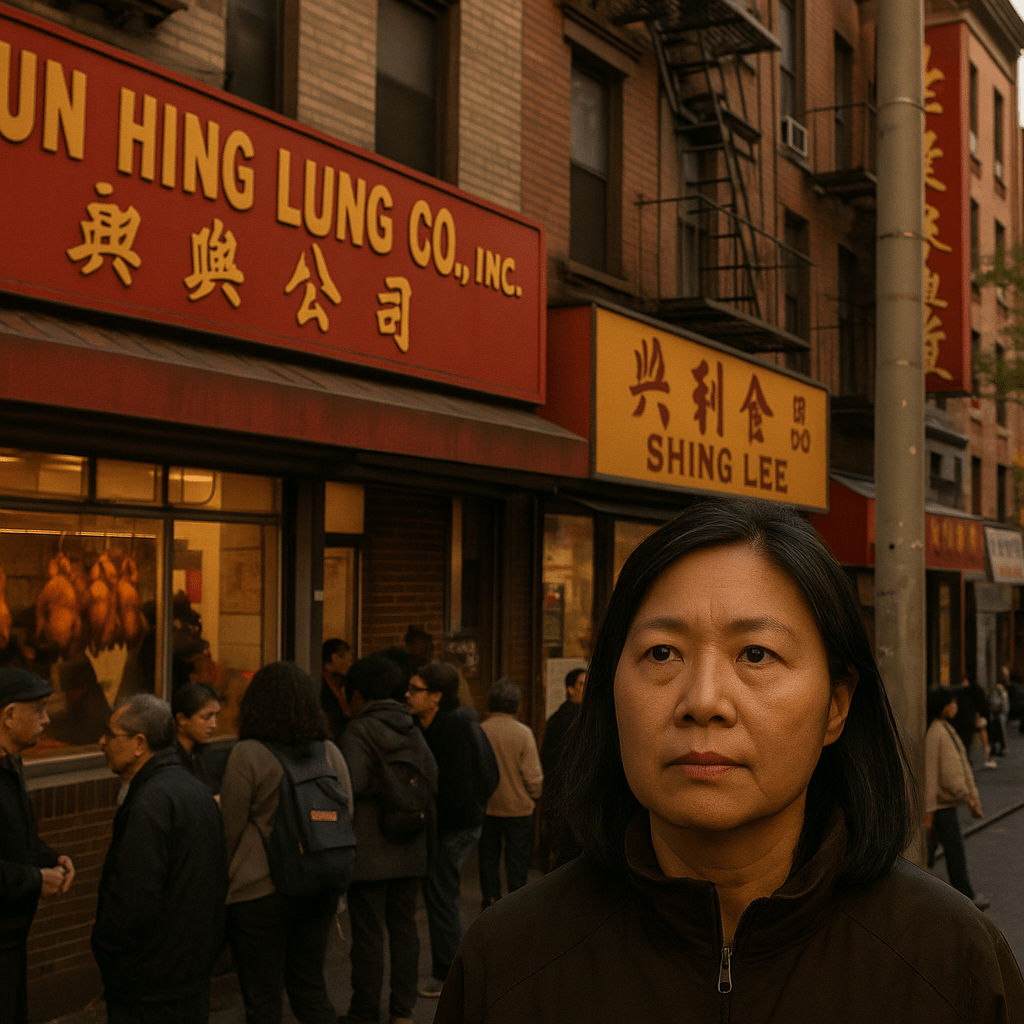
Big Fight in Little Chinatown is more than a documentary—it’s a mirror. It reflects both the fragility of today’s Chinatowns and the collective strength that remains in our communities. It reminds us:
– To preserve Chinatown is to protect our public existence as a people, not just to preserve a landmark;
– To resist marginalization is to claim our voice, not just to avoid displacement;
– To be Chinese American is not to be the object of development, but to be an agent in it.
This is a cultural defense—and a political awakening. We can start from where we are: with a screening, a gathering, a speech. From there, we move step by step toward the centers of power. We begin to reclaim cultural and spatial sovereignty.
The future of Chinatown is not predetermined. It will be shaped by those who show up. So let us ask: Who will define it? Who will participate? Because in this city, we should not live merely inside someone else’s vision. We must be the ones who draw the map.
By One Voice
Discover more from 华人语界|Chinese Voices
Subscribe to get the latest posts sent to your email.
