As the flags wave and fireworks prepare to light up the night sky, we once again raise our glasses to celebrate the birth of freedom. But amid this ritual of “independence” and “self-determination,” have we noticed that, as consumers, we may be footing the bill for a different, less glamorous kind of freedom?
Tariffs haven’t even taken effect, yet prices are already rising. Doesn’t this price of freedom feel all too familiar?
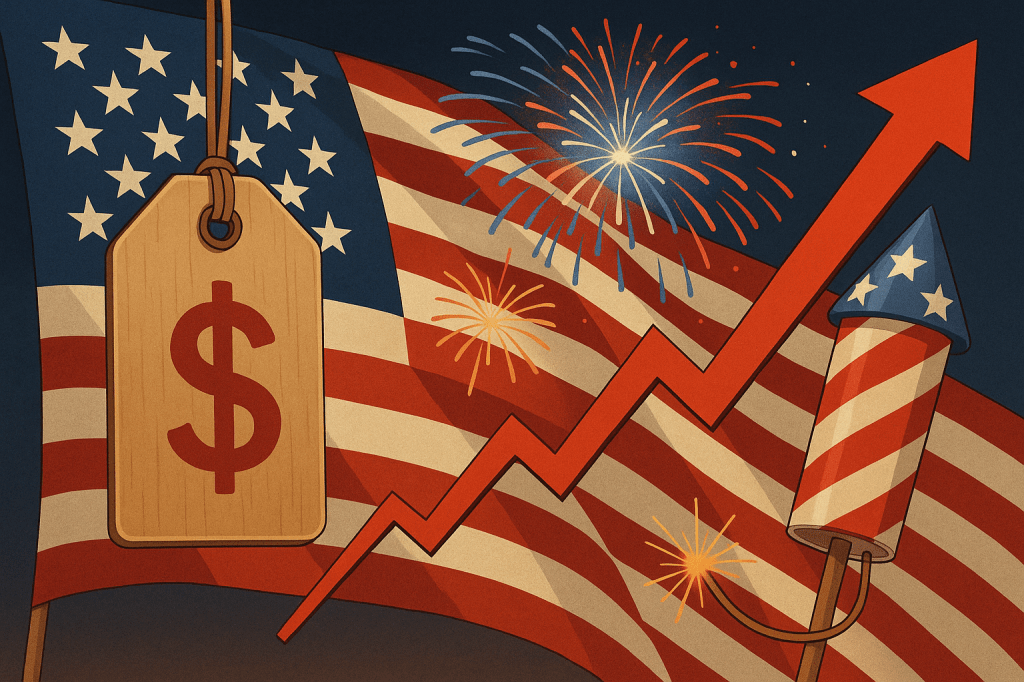
🛒 ‘The tariffs haven’t started—so why have prices quietly gone up?’
Recently, many consumers have noticed that prices for a wide range of goods—especially toys, appliances, and household products—are subtly climbing in stores and online. What’s puzzling is that although the U.S. government has only just announced a new round of tariffs on select imports from China, major retailers like Walmart have already started raising prices.
Are these companies clairvoyant? Or are we, the everyday consumers, once again being left to absorb the costs of strategic market decisions?
📈 The Logic Behind Premature Price Hikes: Rational in Theory, Calculated in Practice
In reality, these early price increases are part of a preemptive pricing strategy that companies adopt in anticipation of future cost hikes. Even if tariffs aren’t yet in effect, businesses foresee that their import costs will rise and adjust their prices accordingly to mitigate future risk.
Take Walmart as an example. With some items restocked every six weeks, waiting until tariffs are implemented could result in a temporary profit squeeze. So they choose to raise prices now. In economics, this is known as “anticipatory pricing.”
But here’s the question: are we truly just covering rising costs—or also inflating profits?
💰 It’s Not Just About Costs—Who’s Profiting in the Middle?
Many companies aren’t just offsetting tariff costs—they’re using the tariff narrative as a justification for price increases they’ve long wanted to make. This tactic is called “opportunistic pricing.”
Consider a “Jurassic World” toy that rose in price by 38% between May and June 2025 at Walmart. Yet the projected tariffs on such items start at 25%—and weren’t even active at the time.
In other words, we’re not just pre-paying for taxes—we’re also paying for corporate pricing strategies and risk management maneuvers.
🧸 Why Toys Are Hit the Hardest
Toy prices have risen more dramatically than most categories, for several reasons:
– Heavy reliance on Chinese manufacturing: Over 75% of toys sold in the U.S. are made in China, making them highly susceptible to tariffs.
– Difficult to relocate production: Unlike apparel, toy manufacturing involves molds, electronics, and strict quality control, which make relocating production costly and time-consuming.
– Strong brand pricing power: Major players like LEGO and Hasbro dominate the market, enjoy high markups, and operate with pricing structures that consumers rarely understand.
– Emotion-driven consumption: Toys are often purchased for holidays, birthdays, or rewards—parents are less likely to resist a few extra dollars when joy is on the line.
All of this makes toys the perfect playground for price experimentation.
🧾 Where Does All the Extra Money Go?
The additional money consumers are paying due to these early hikes is being funneled in multiple directions:
– ⛽ Part of it covers legitimate future cost increases due to tariffs.
– 📦 Another portion is used for stockpiling inventory to avoid future uncertainties.
– 💸 Some is locked in as profit—especially when price hikes exceed actual cost projections.
– 📊 And some serves as a market test, helping companies gauge consumer reactions for future pricing strategies.
In short, we’re not just paying for tariffs. We’re underwriting risk, cushioning profits, and contributing to corporate experiments—all without being told.
🧠 What Can Consumers Do in a Market That Only Looks Free?
– Price compare: The same LEGO set may rise 10% at Walmart but remain flat at Target or Amazon.
– Delay non-essential purchases: Post-holiday clearance and seasonal sales often offer better deals.
– Explore alternatives: Store brands or lesser-known labels may offer comparable quality without the price surge.
– Try secondhand: For durable items like LEGO, the resale market is active and cost-effective.
🎇 A Final Note Before Independence Day
As we celebrate freedom and honor independence, let’s not forget: pricing freedom has never been equally distributed.
Retail giants and corporations can adjust prices based on forecasts, and governments can sway markets through policy. But we—everyday consumers—often have the least information and the fewest choices.
This doesn’t mean we’re powerless. It means we must stay informed. In a marketplace where pricing and power are intertwined, awareness is one of the last freedoms we can still hold onto.
By One Voice
Discover more from 华人语界|Chinese Voices
Subscribe to get the latest posts sent to your email.
