— A Response to Las Vegas Chinese Daily Newspaper’s Misplaced Blame and the Arrogance of Capital
On July 13, 2025, Las Vegas Chinese Daily Newspaper published an editorial titled “The Chronic Illness of America’s Manufacturing Comeback—Overgrown Union Culture and Excessive Labor Rights.” The piece argues that delays at TSMC’s Arizona chip plant are due to coddled American workers, overpowered unions, and an overprotected society. Such framing, however, misses the point entirely. The real obstacle to reshoring manufacturing lies not in labor rights—but in the relentless, unchecked pursuit of profit by global capital.
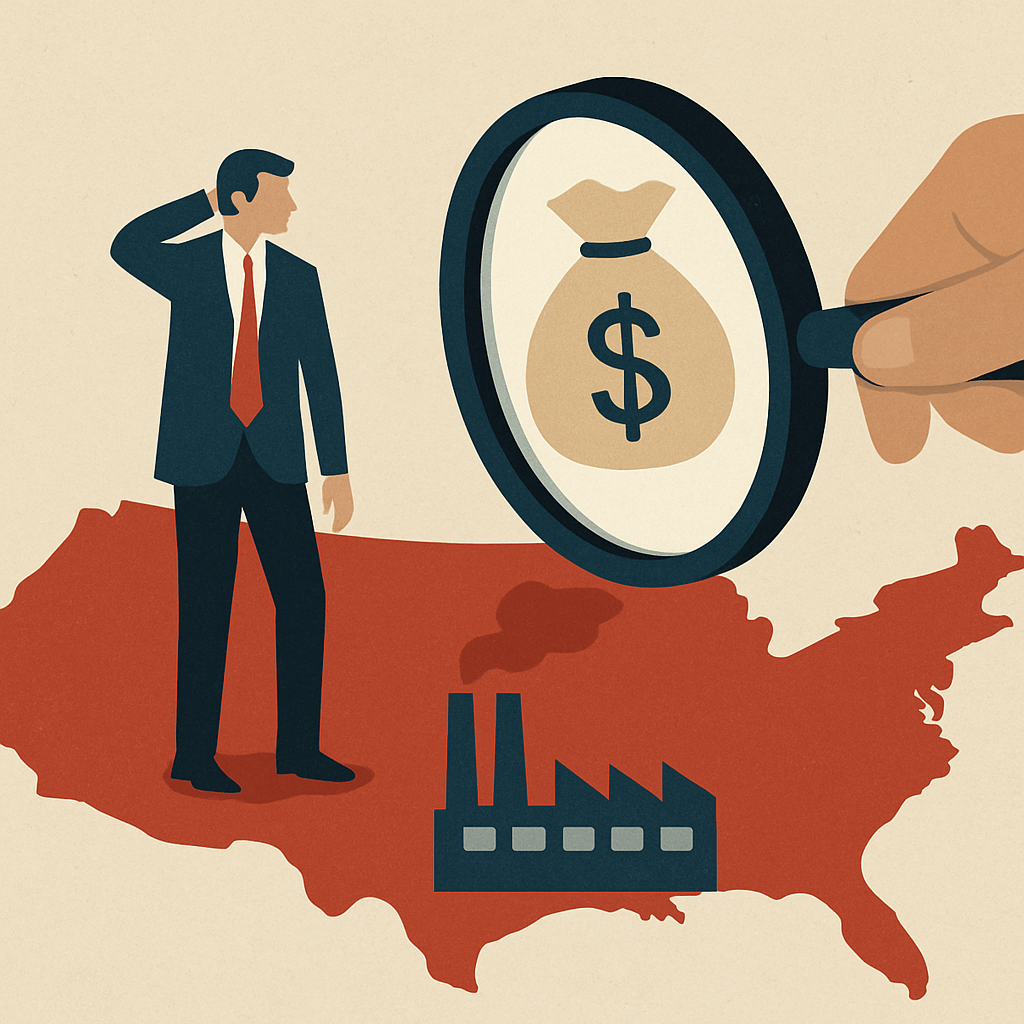
Capital-Driven Offshoring Is the True Cause of Manufacturing Decline
The Daily seeks to blame American unions for the decline of U.S. manufacturing. But history tells a different story: decades of offshoring were not caused by workers being “too lazy,” but by corporate decisions to relocate production to countries with cheaper labor and looser protections, all in the name of profit.
Companies didn’t choose Vietnam, India, or Mexico because workers there are inherently more industrious, but because these countries lack robust labor protections or strong union rights—allowing corporations to slash costs with impunity. Even in more regulated economies like Taiwan or Japan, differences in culture and labor relations shape workplace rhythms that contrast with those in the United States.
Workers often romanticized as “hardworking” simply lack alternatives. Were they afforded the same legal protections and bargaining rights as Americans, they would just as likely demand fair hours and decent pay. People don’t suffer because they love hardship—they do so because they lack choices.
Capital Can Move Freely—Workers Cannot Freely Say No
Capital enjoys the luxury of global mobility: it can relocate operations, exploit tax loopholes, and outsource risk. Workers—especially those at the bottom—do not have such freedom. They must either accept deteriorating conditions or face unemployment. If capital is free to move, it must also be held accountable to the labor laws of the places it chooses to invest. It cannot demand access to American subsidies and markets while simultaneously rejecting U.S. labor standards.
Criticisms that American workers “can’t handle hardship” reveal a double standard: capital is allowed to maximize profits without limits, while workers are expected to quietly absorb pressure and give up their right to protest.
This isn’t about “work ethic.” It’s about a serious imbalance in the power between labor and capital. The Daily’s framing exemplifies this asymmetry—steeped in arrogance and prejudice.
TSMC Holds Up a Mirror to the Fantasy of De-Globalization
During the Trump era, the U.S. launched a campaign to bring manufacturing “back home,” leaning on subsidies and trade walls to reverse decades of globalization. But such a strategy ignored a basic reality: capital moves faster than institutions, and competitive advantage cannot be restored with patriotic slogans alone.
TSMC’s case is a mirror reflecting this contradiction. As one of the world’s most advanced chipmakers attempts to transplant its operations to the U.S., it has faced cultural clashes, labor friction, soaring costs, and mounting delays—not because Americans aren’t trying hard enough, but because the logic of global capitalism runs counter to the dream of domestic industrial revival.
Reshoring manufacturing isn’t a matter of rhetoric. Unless we constrain corporate greed and demand greater social responsibility from multinational firms, no subsidy will create true reshoring—only speculative opportunism.
What Needs Rethinking Is Capital’s Logic, Not Workers’ Rights
Complaints that workers ask for too much or that the media is too sympathetic to labor are nothing new—they are fallback narratives when corporate strategies falter. Beneath them lies a worldview that treats working people as inherently subordinate and undeserving of advocacy.
But what truly needs reform is not the worker’s willingness to suffer—but the employer’s readiness to adapt:
We don’t need workers who “complain less”; we need companies that “prepare better.”
We don’t need workers who “endure more”; we need companies that “respect differences.”
We don’t need a society that “protects workers less”; we need systems that protect them better.
Conclusion: A Call for Accountability in Capital
If the United States is serious about reviving its manufacturing base, it must stop sustaining competitiveness by exploiting workers—and stop blaming unions for what is ultimately a crisis of management and accountability.
We don’t need more obedient workers. We need more responsible capital.
To place the blame solely on labor and unions is to misread history and evade present reality. If the U.S. hopes to rebuild a resilient, independent industrial sector, it must recognize that the same labor protections and union rights that once built the middle class are still vital today.
What will truly sustain “Made in America” is not capital alone, but a workforce that is respected, protected, and heard. That is why union culture matters.
By Hearing Each Other
Legal Disclaimer: This commentary references publicly available media coverage for the purpose of public interest discussion. The views expressed are solely those of the author and are not intended to malign any institution or individual.
Discover more from 华人语界|Chinese Voices
Subscribe to get the latest posts sent to your email.
