Identity & Ethnicity Series (Part 4) Between Intergenerational Breaks and Hybrid Selves, They Are Writing a New “We”
By Voices In Between
Introduction|Tradition Is Not a Burden—It’s Raw Material
In earlier installments, we mapped out ethnic identity across groups, explored five identity paths among Chinese Americans, and examined how schools and communities shape how we’re seen.
This time, we center the younger generation—those coming of age in an era of unprecedented overlap: social media, translingual expression, multicultural living, global protests, and new forms of identity awakening.
They are no longer content with inherited labels.
They refuse to be boxed in as the “model minority.”
They want to speak, create, disrupt—and rewrite.
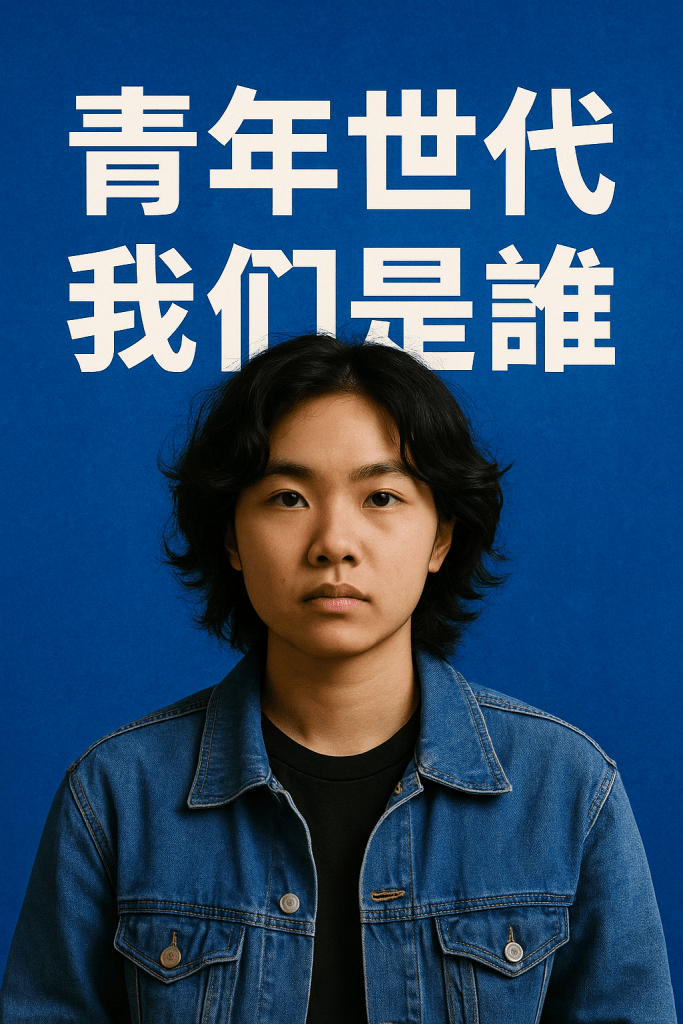
The Intergenerational Break: We Don’t Reject Identity—We Want to Name It Ourselves
Many young Chinese Americans have grown up hearing familiar refrains:
“Don’t forget you’re Chinese.”
“Our generation struggled so hard to bring you here.”
“Why is your Chinese so bad?”
These words reflect a deep anxiety from older generations about cultural preservation. But to many youth, they feel more like moral burdens than bridges to belonging.
They’re not rejecting identity. They just can’t claim it in the old language.
They want to define who they are on their own terms—not memorize it as an obligation.
Youth Creativity: We Tell “Us” in Our Own Way
Zines. Podcasts. Reels. Cross-language poetry. Visual essays. Photobooks. Riso prints. Micro-docs.
Young Chinese Americans are using all of these to tell their stories and reshape what “ethnic identity” can look like.
They don’t treat culture as a relic or a museum piece.
They treat it as something to remix, reimagine, and recompose.
They’re not “promoting tradition”—they’re creating a future.
A space that holds the complexity of their lived experience.
Cultural Hybridity: Identity Is Not a Multiple-Choice Question—It’s a Color Palette
“I can rap in Mandarin.”
“My dad’s Taishanese, my mom’s Vietnamese Chinese, and I grew up vibing to AAPI DJs.”
“It was only when I worked in Korea that I felt like I looked… normal.”
For this generation, identity isn’t a checkbox. It’s a color palette in motion.
They live in multi-lingual, multi-cultural, multi-mapped realities.
They listen to Eason Chan and join Palestine solidarity marches.
They reject the question “Which are you?”
Instead, they answer: “I’m becoming something new.”
New Ethnic Expression: We Don’t Just Want to Be Seen—We Want to Be Understood
Young people today aren’t satisfied with token visibility.
Not content with being “the Asian on the panel.”
Not appeased by surface-level “diversity.”
They ask:
“Who gets to control the ethnic narrative?”
“Why are our stories edited into PR reels?”
“Why can’t we speak in our own tone, language, and imagery?”
This is not a rejection of the mainstream.
It’s a call to reshape it from within—on their own terms.
They don’t want to be included.
They want to rewrite the rules.
Conclusion|Culture Is Not a Noun—It’s a Verb
If older generations treated culture as a “thing” to protect, this generation treats it as a verb—a living act.
Culture is not just “what is.” It’s “what we are doing now.”
They may be messy, mixed, misunderstood—but they are also real, open, and creative.
They’re telling us:
“We’re not the kind of ‘Chinese’ you expect. But we are still Chinese.”
That, perhaps, is the boldest form of identity.
📌 Coming Next
Identity & Ethnicity Series (Part 5): Who Gets to Shape Our Collective Future?
In the final installment of this series, we’ll move beyond the question of “Who am I?” to ask: “Who are we?” What happens when identity becomes more than a private dilemma—when it enters the realm of narrative power, resource allocation, and institutional design? Can we build a future from our plural, lived truths?
Discover more from 华人语界|Chinese Voices
Subscribe to get the latest posts sent to your email.
