Reflections on “Big Fight in Little Chinatown”: As Chinese Americans, how do we preserve a place we can still call home?
By One Voice
Introduction|A Moment to Ask: Where Did We Come From, and Where Are We Going?
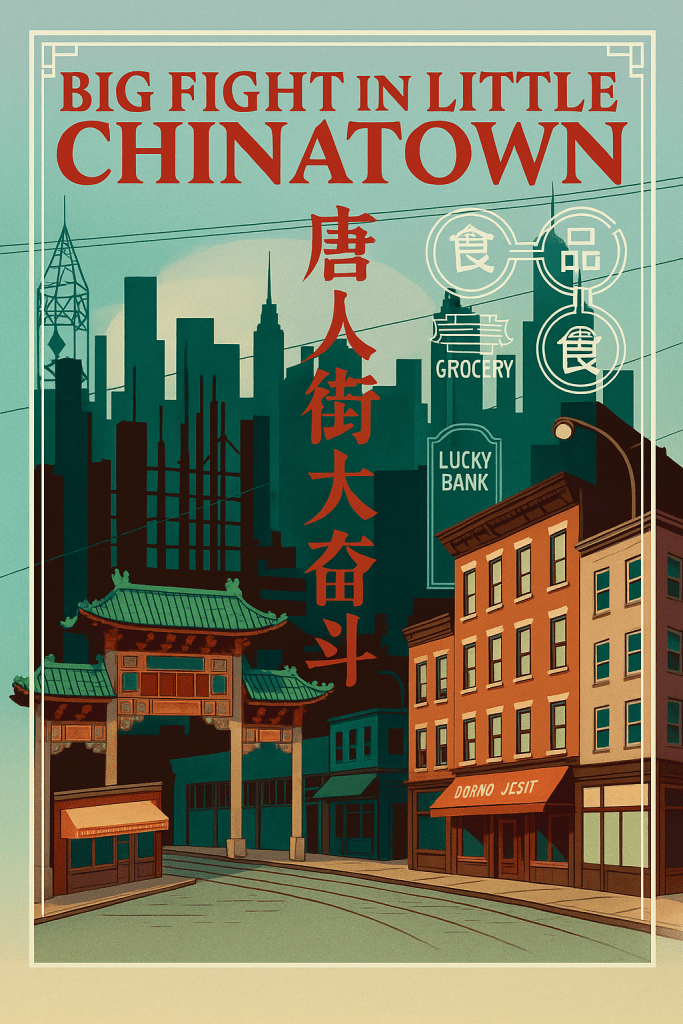
On July 26, 2025, a community screening and dialogue was held at the Marjorie Barrick Museum of Art on the UNLV campus in Las Vegas. The documentary *Big Fight in Little Chinatown* took us through Chinatowns in Vancouver, Montreal, New York, and San Francisco, revealing how these communities struggle to survive amid urban development, racial politics, and historical erasure. For Chinese Americans, it prompts a deeper reflection: What does it mean to be Chinese in America today?
More than just a film screening, the event opened up space for a collective conversation about identity, space, and future. Through this film, we didn’t just witness others’ stories—we were confronted with our own. This article is a reflection written in the aftermath of that experience.
Chinatown Is Not a Relic—It’s a Testament to Our Presence
As I watched *Big Fight in Little Chinatown*, I found myself asking: Are these vanishing streets a preview of our own future?
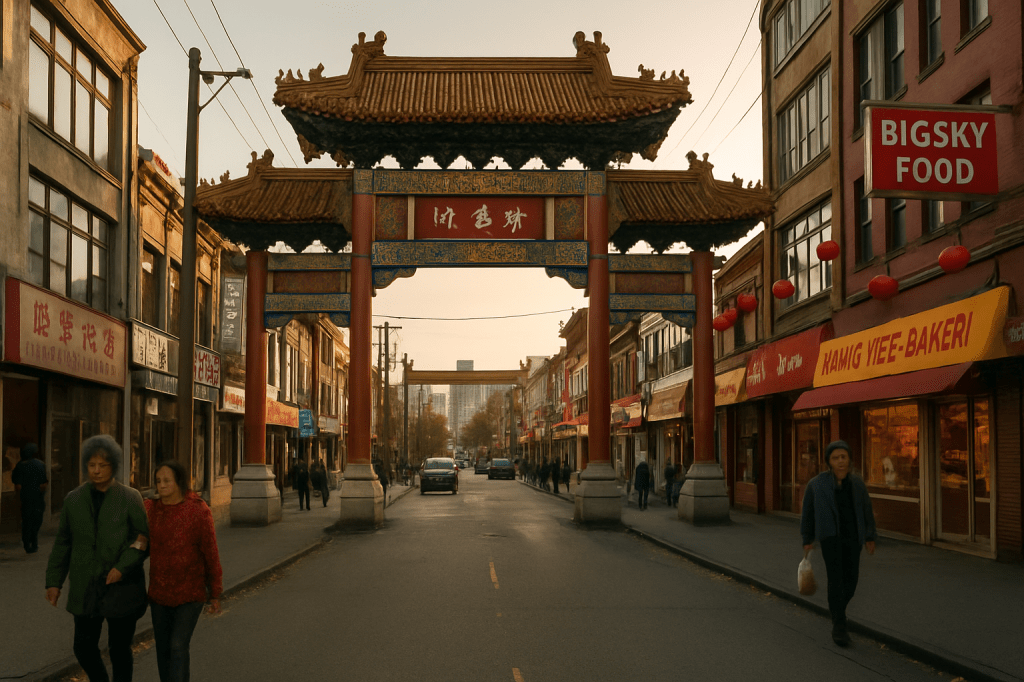
The documentary brings viewers through multiple Chinatowns facing the same fate: redevelopment, rising rents, anti-Asian violence, and policy neglect. Familiar scenes—a faded archway, shuttered shops, elderly residents fundraising on the streets—evoke both sorrow and urgency.
We often think of Chinatown as a historic site, a memory of our parents’ generation. But the film makes it clear: Chinatown is not the past. It is a living part of our ethnic politics, a visible assertion that we exist. Its importance lies not in its aesthetics, but in its embodiment of a right to space that is still worth fighting for today.
Who Gets to Represent ‘Us’? Who Defines the Community?
One of the most powerful moments in the documentary comes during a public hearing. A Chinatown resident, speaking in broken English, says: “This is where my kid learns Chinese. This is where we eat New Year dinner. You can’t just take that away for some ‘development plan.’”
Unfortunately, real residents rarely have seats at the tables of city planners. They are “represented” instead—by governments, non-Asian developers, or even well-meaning cultural promoters. Our desires are translated into tourist zones, cultural exhibits, or “heritage branding”—but no longer reflect the lives of those struggling to stay.
It raises a difficult question: Who tells the story of Chinese America? And are we, by remaining silent, complicit in letting others define it for us? If we don’t speak up, who will?
In a Wave of Hate, Is Chinatown Our Last Refuge?
After the COVID-19 pandemic, anti-Asian violence surged across the United States. Communities were attacked, elders assaulted, businesses shuttered. During that time, I often asked myself: If things get worse, where could we even go? And the answer, perhaps, is Chinatown.
In the film, we see volunteers organizing safety patrols, food deliveries, and health education for low-income immigrant families. These small actions demonstrate that even when the outside world turns cold, we can still preserve warmth among ourselves.
Chinatown is not merely a heritage site—it is a test of whether we can still care for one another. If even it disappears, how will the next generation remember where they came from? What community foundation will we have left to face the next crisis?
Preserving Culture Isn’t Reenactment—It’s Re-Creation
The documentary avoids nostalgia. Instead, it turns its lens on those still in action: elders running local shops, young curators, filmmakers, and community organizers. They’re not simply preserving festivals; they’re reinventing narratives—through exhibitions, podcasts, and protest art.
That struck a deep chord with me: Cultural inheritance isn’t about copying our parents’ lives. It’s about translating their values and experiences into our own time and tools.
We can’t expect our kids to automatically understand why Chinatown matters. We have to create the conditions for them to participate. It might be co-authorship, community archiving, activism—or maybe just a meaningful dinner table conversation.
What Are We Willing to Do for Our Community?
In the film, people hand out flyers at dawn, write petitions late at night, and show up repeatedly at city council meetings to oppose demolition plans. Others quit high-paying jobs to open Chinese bookstores, or keep small theaters alive under rising rents.
None of this is required. But they do it anyway—not because they’re saints, but because they know: if we don’t fight for this space, no one else will.
It made me think about my own position—as a Chinese American with some stability, who too often leaves ‘community work’ to others. After watching the documentary, I had to ask myself: Am I willing to take one more step, to help preserve a real and tangible public space for us?
Conclusion|Not Just a Retrospective, but a Call to Action
*Big Fight in Little Chinatown* is not a nostalgic tribute to the past—it’s a call to face the present. In a time of rising anti-Asian sentiment, systemic neglect, and economic pressure, the existence of a space that we define for ourselves is both rare and worth defending.
If we don’t want our children to grow up without any visible history, then we must write it now. If we don’t want to scatter again in the next crisis, then we must build gathering spaces now.
The future of Chinatown is not just the responsibility of our elders. It is a shared task for all of us. The question is: Are we ready to pick up the baton?
Discover more from 华人语界|Chinese Voices
Subscribe to get the latest posts sent to your email.
