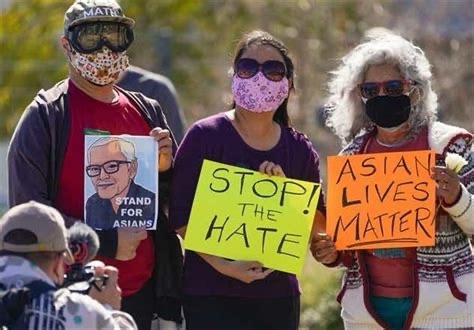
When 75-year-old Amadeo Quindara was brutally assaulted in his garage in Las Vegas, his family hoped the justice system would do what it promised: hold his attacker accountable and affirm that anti-Asian violence has no place in Nevada. Instead, two years after the attack, they watched a judge sentence the perpetrator to just 90 days in jail.
This was not just a disappointment. It was a gut punch to an already grieving family—and to many in the Asian American and Pacific Islander (AAPI) community who had followed the case hoping that justice would prevail.
The attacker, Christian Lentz, pleaded guilty but mentally ill to charges that included burglary motivated by bias and abuse of an older person. The hate crime enhancements were acknowledged but ultimately folded into a plea deal shaped around mental illness. In the end, the court emphasized rehabilitation over incarceration.
But what happens when the community sees a hate-motivated crime and the system sees only a psychiatric episode?
The Disappearing Act of Racial Harm
Quindara’s assault was not random. The day before the attack, Lentz had allegedly told Quindara and his friends to “speak English”—a phrase familiar to anyone who has been told, explicitly or implicitly, that they do not belong.
That racial context was critical to the Quindara family. And it was erased.
The defense pointed to bipolar disorder. The judge cited Lentz’s stability in recent years. In the eyes of the court, this was a mental health tragedy—not a racially motivated one. The victim’s trauma—both physical and cultural—was acknowledged in words, but not in the sentence.
This isn’t a legal technicality. It’s a pattern. Again and again, when people of color are harmed, especially older immigrants, the system finds ways to explain the violence as exceptional, emotional, or medical—but not structural or racial.
Mental Illness Is Real. So Is Racism.
Let’s be clear: mental illness is real. So is racism. They can and often do coexist. The problem isn’t acknowledging mental health struggles—it’s when they overshadow or excuse racist behavior, particularly when that behavior leads to real-world harm.
In this case, the legal system decided that mental illness reduced culpability, even in the presence of hate. But for the Quindara family, there is no such relief. Amadeo Quindara still suffers memory loss. He still cannot drive or walk without assistance. He still lives with fear.
And as a community, we are left asking: What does a hate crime need to look like for it to matter?
When the Law Isn’t Enough, Communities Must Act
The law often moves on. Families and communities do not.
The Quindara case reminds us that victims have no legal power to appeal a plea deal. That sentencing, once decided, often cannot be challenged. And that public outrage, while morally powerful, carries no weight in a courtroom.
So what can we do?
We can demand better. We can push for hate crime sentencing reforms that include mandatory minimums in cases of physical violence, especially against elders. We can call for greater transparency in plea deals, and require that victims be consulted before such agreements are finalized.
We can also invest in civil legal options, public pressure campaigns, and education. Because true safety does not come from the courts alone—it comes from empowered communities who refuse to let these stories fade quietly.
Justice Deferred Cannot Be Justice Denied
The Quindara family said something powerful after the sentencing: “We feel like we have to keep fighting.”
So do we.
Because every time a racially motivated attack is softened by the courts, every time an elder’s pain is minimized, and every time a community is told to move on, we must respond—not with silence, but with action.
Justice may have faltered in that courtroom. But it does not have to end there.
(By One APIA Nevada)
Discover more from 华人语界|Chinese Voices
Subscribe to get the latest posts sent to your email.
