Identity & Ethnicity Series · Essay 3
By Voice in Between
Introduction
I want my kids to learn Chinese, to know where they come from.
Every year we celebrate Mid-Autumn Festival and make dumplings. I don’t want our culture to end with my generation.
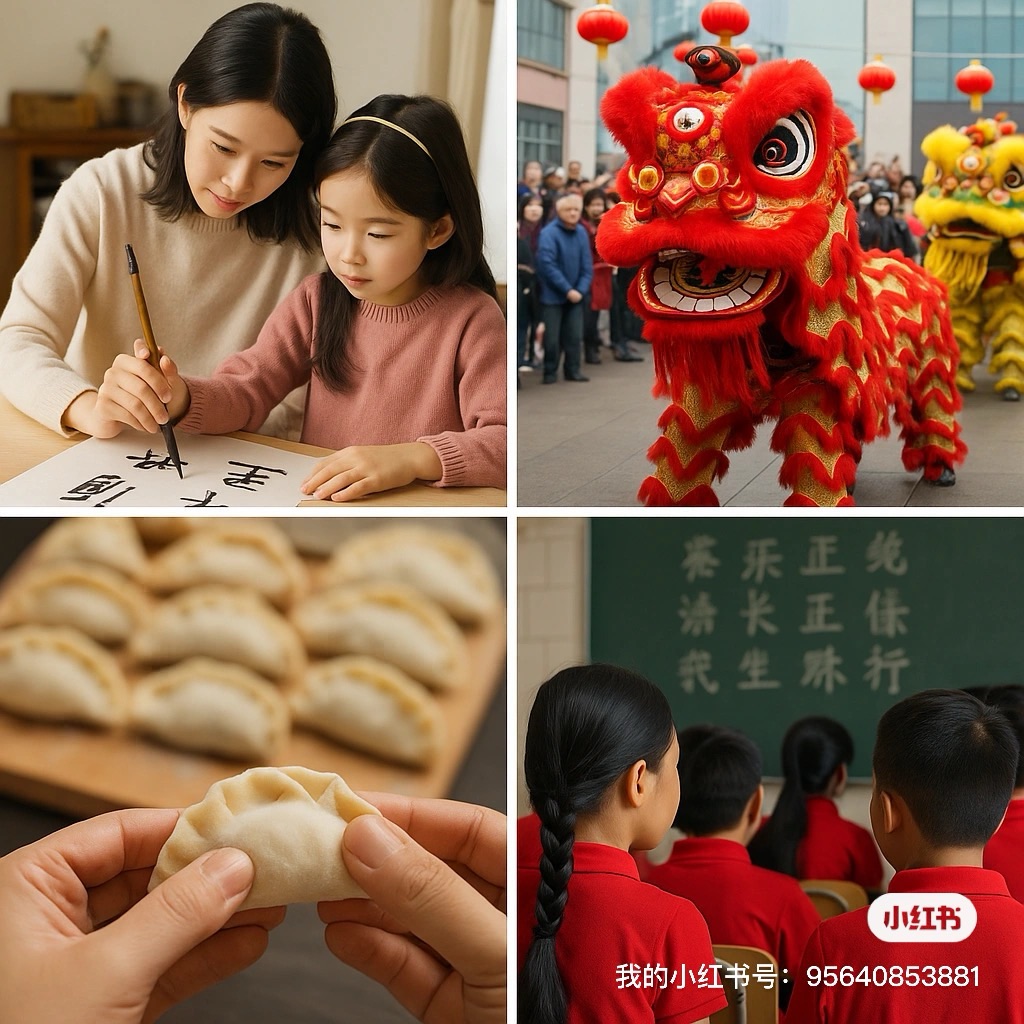
In an America that increasingly emphasizes “identity diversity,” some Chinese families are choosing a different path: cultural reconnection, a deliberate reinforcement of ethnic identity. They speak Chinese at home, enroll their children in heritage camps, send them to weekend Chinese school, cook traditional food, and celebrate every Lunar New Year without fail.
For some, this return to tradition is emotional. For others, it’s resistance to assimilation. Still others see it as a psychological refuge in a confusing society.
But here’s the question: is this return an act of nostalgia or a form of self-enclosure? Is it protection—or quiet exclusion? In a country that claims to celebrate multiculturalism, is cultural reconnection a conscious choice, or a defensive retreat?
Speaking Chinese — but What Kind of Chinese?
For families who choose cultural reconnection, language preservation is often at the core. Language isn’t just a tool—it’s seen as the key to identity. As long as their children speak Chinese, they’re still “one of us.”
But speaking Chinese isn’t just about fluency. It’s about what kind of Chinese, and why it’s being spoken.
Some parents insist on proper pronunciation, pinyin, and reciting Tang poetry. Others focus on helping kids use Chinese to tell their own stories, even if the grammar’s off. The former emphasizes “authenticity,” while the latter prioritizes “connection.”
This difference points to a deeper question: Do we want our children to inherit our past, or to reimagine our culture for the present?
And beyond language skills, heritage transmission often includes values and ideologies—like what makes a “good child,” or what family means. These unspoken norms may not always fit the lived realities of the next generation.
Self-Protection or Quiet Exclusion?
Cultural reconnection is sometimes a direct response to external uncertainty. When anti-Asian hate rises, when political discourse grows hostile toward immigrants, many Chinese Americans turn to familiar cultural spaces for safety and belonging.
In these moments, traditions like dragon dances, Chinese school, or Mid-Autumn gatherings become cultural havens—offering warmth, memory, and identity in a world that can feel cold or threatening.
But we must ask: when does protection turn into isolation?
Sometimes, community WeChat groups exclude those who don’t write in Chinese. Heritage programs prioritize “Han-centric” narratives while downplaying other Asian identities or mixed-race families. Some kids are even told, “You can’t bring your non-Chinese friend to the celebration.”
When cultural reconnection becomes a way to build walls instead of bridges, it shifts from healing into exclusion.
Choosing to Reconnect—or Retreating Out of Necessity?
Cultural reconnection isn’t new. Jewish Americans preserved Hebrew; Latino families created entire Spanish-language media ecosystems. The key question is: Is this return to heritage a chosen empowerment—or a reaction to systemic exclusion?
If we reconnect with culture because it gives us meaning, strength, and clarity, then that’s a powerful, creative act. It helps us stand firmly in a diverse society and engage with others on equal footing.
But if the return is driven by rejection—if society says, “you’ll never belong here,” and we quietly walk away—then it becomes a kind of retreat.
Over time, that retreat may stifle the culture itself. It may convince younger generations that heritage equals burden.
Conclusion: Let Culture Take Root in the Present
Cultural reconnection isn’t wrong. Teaching Chinese, making zongzi, performing lion dances—these are beautiful, soulful, and worthy of preservation.
But we must be cautious: Let’s not confuse reconnection with retreat. Let’s not mistake heritage for control.
We can teach children to speak Chinese, but also let them express emotions in English. We can celebrate the Spring Festival, and still understand why they want to fit in at school.
Cultural roots don’t have to grow only in the past. They can take hold in our present—in lived experience, in real conversations, in every moment we meet the world as ourselves.
Discover more from 华人语界|Chinese Voices
Subscribe to get the latest posts sent to your email.
