Identity & Ethnicity Series · Essay 4
By Voice in Between
Introduction
“I used to think that if I just lived quietly, everything would be fine.”
“It wasn’t until that moment that I realized—if you don’t engage in politics, politics will still find you.”
For many Chinese immigrants, “politics” once felt distant and abstract. The real path to survival seemed to be pragmatic: work hard, raise your family, stay out of trouble.
But in recent years, a wave of events—anti-Asian hate crimes, pandemic scapegoating, exclusionary policies, redistricting battles—has rung the political alarm bell for Chinese communities across the U.S. More and more people have come to understand that identity is not just a cultural marker—it is a social position that demands active defense.
Political awakening is not just about slogans. It’s the journey from asking “Who am I?” to confronting “What must I do?”
But this path is anything but easy. It’s filled with personal hesitation, communal pushback, and systemic barriers.
This article explores a crucial question: when a Chinese American realizes that politics is necessary, how do they begin? How do they continue? And what forms of action can truly make a difference?
The Awakening: Silence Doesn’t Guarantee Safety
For many, political awakening doesn’t come from textbooks—it grows out of lived experience.
Some woke up the day a stranger screamed “Go back to China!” at them during the pandemic.
Some realized it when their elders, unable to navigate English-only ballots, lost their vote—or when their children were excluded from school programs because of their race.
Others were shaken when rising rent, declining public safety, and sudden neighborhood changes made it clear: they had no say in the place they called home.
These quiet moments of exclusion or anger became seeds of political consciousness.
Not cynicism—but clarity born of pain:
“We are no longer just bystanders.”
“Silence doesn’t buy us respect.”
The Loneliness of the Politically Active: Misunderstood by All Sides
For those who do step forward, political action often feels like walking a tightrope.
On one hand, mainstream society questions their motives:
“Do you care about the greater good, or just your own interests?”
On the other hand, within the Chinese community, they face doubts and pushback:
“Aren’t you being too radical?”
“Wouldn’t it be safer if we just kept our heads down?”
As one organizer put it,
“The loneliest part isn’t media criticism—it’s hearing your own people say you’re embarrassing us.”
Young activists advocating for progressive causes are sometimes labeled “disobedient” or “naïve” by older generations.
In reality, political awakening is not just a matter of willingness—it’s a daily struggle against oversimplification and alienation.
There are no ready-made role models. Many must learn as they go, fall as they lead.
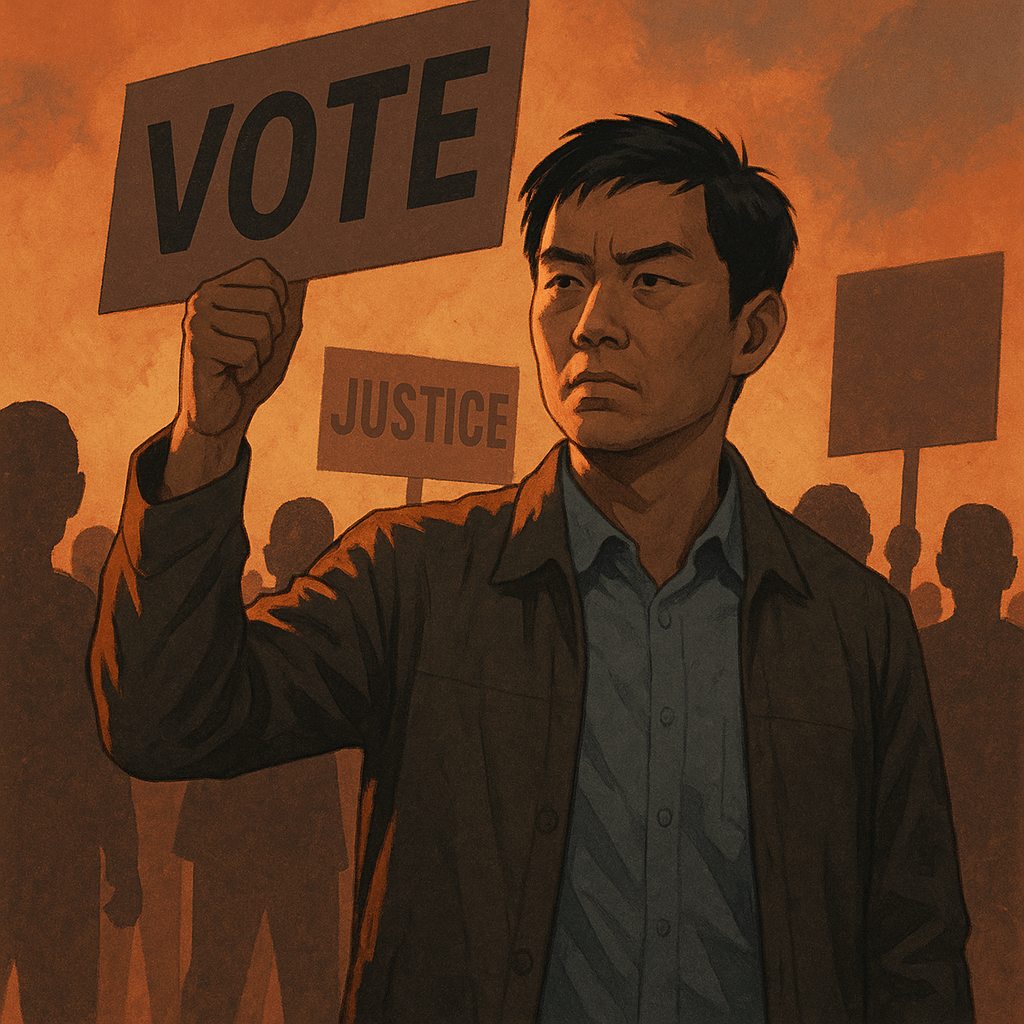
Beyond the Ballot: The Many Faces of Political Engagement
Yes, voting is important. But it’s not the only thing.
Real political participation is ongoing, multifaceted, and often invisible. It might look like:
– Grassroots organizing: From neighborhood meetings and interpretation services to mutual aid and tenant rights hotlines—these shift the power dynamic from the ground up.
– Public advocacy: Testifying at school board meetings or city hearings, or sharing Chinese American perspectives in mainstream media—these help reshape public narratives.
– Institutional work: Supporting Asian American candidates, drafting legislation, or serving on local commissions—this is how representation moves inside the system.
– Cross-racial coalition building: Collaborating with Black, Latino, Indigenous, or immigrant groups ensures Asian Americans are not isolated cases, but part of a larger movement for justice.
Different people may find different forms of engagement—but one truth holds across the board:
We can’t wait for others to speak for us.
Conclusion: From “Identity” to “Shared Belonging”
Political awakening isn’t about becoming aggressive. It’s about becoming aware.
It shows us that:
– Working hard and staying out of trouble won’t necessarily keep us safe.
– Culture and education alone won’t change policy.
When we realize we are not only Chinese, but also residents, parents, tenants, patients, workers—
our identity begins to transform into action.
And over time, action builds into a shared sense of community power.
This is the heart of awakening:
It doesn’t give us easy answers to “Who am I?”—
It gives us a reason to start changing the world through what we do.
Discover more from 华人语界|Chinese Voices
Subscribe to get the latest posts sent to your email.
