By | Voice in Between
In the U.S. family-based immigration system, “waiting” is a shared reality for almost all families. Some parents file their petitions and then wait years — sometimes more than a decade — before they can finally reunite with their loved ones. For applicants with minor children, this wait carries an additional worry: will the child turn 21 during the process and lose eligibility to immigrate together with the parents? In immigration law, this is known as “aging out.”
To prevent children from aging out solely due to government processing delays, the U.S. Congress enacted the Child Status Protection Act (CSPA) in 2002. Its purpose is to “freeze” or “recalculate” a child’s age under certain conditions, so that they can still be considered under 21 for immigration purposes and remain eligible as a derivative beneficiary.
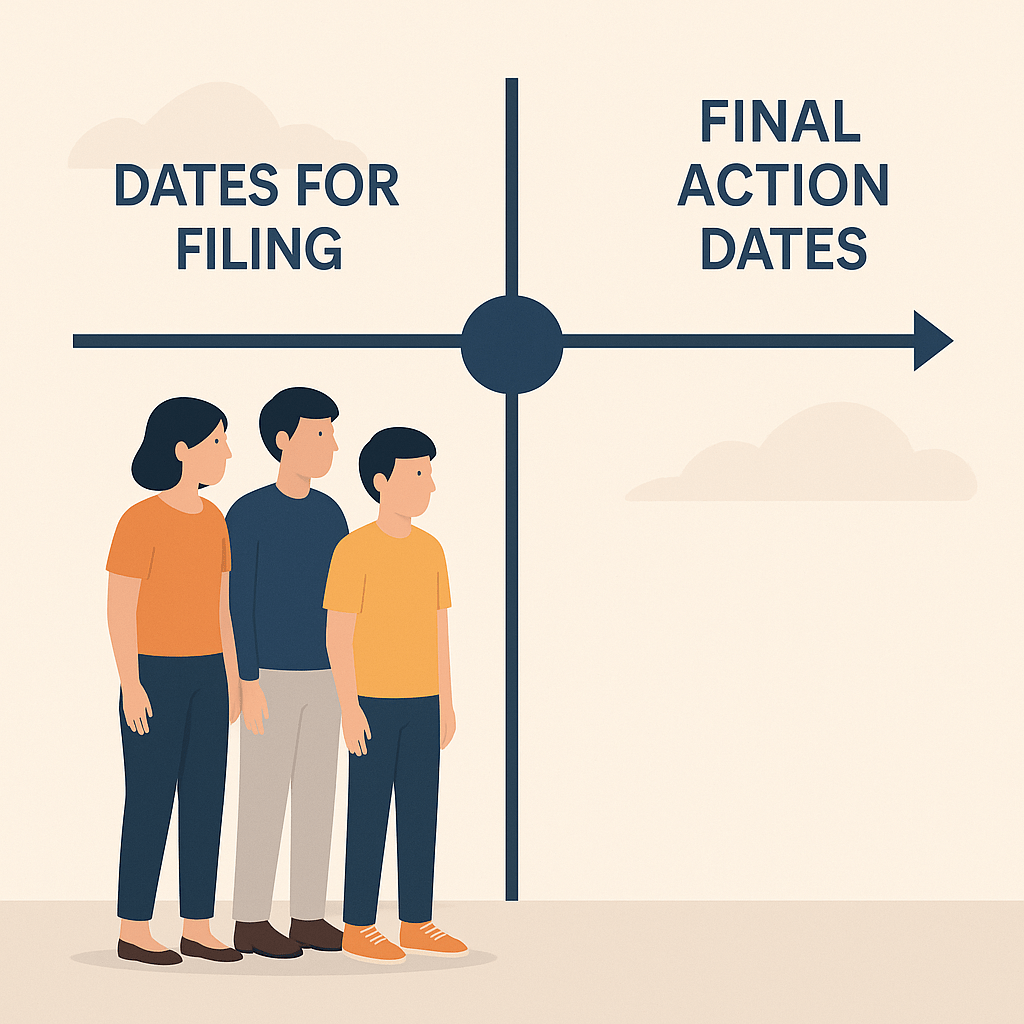
The Logic of CSPA: Same Formula, Different Timing
The CSPA calculation is simple. In short:
CSPA Age = The child’s actual age on the date an immigrant visa becomes available − The time the petition (I‑130 or I‑140) was pending.
For example, if parents filed an I‑130 for their child and it took two years to process, and the child is 22 years old when the visa becomes available, you subtract the two-year processing time and get a “CSPA age” of 20 — still eligible.
The recent USCIS policy change does not alter this formula. What has changed is how the “visa availability” date is determined: it will now be based solely on the Final Action Date in the Visa Bulletin, rather than often allowing the earlier Dates for Filing to be used.
Dates for Filing are like an early gate — you can file your adjustment of status application and enter the processing queue even if approval isn’t immediate. The Final Action Date is when your case can actually be approved and the green card issued. Since Final Action Dates usually lag months or even years behind Dates for Filing, moving the trigger to this later date pushes the “age freeze” further back, making it easier for children to age out.
Why This Change Increases the Risk
Under the old approach, a child’s CSPA age could be frozen as early as the Dates for Filing, securing an earlier, more favorable point in time for the family. The new rule waits for the Final Action Date, delaying the freeze. This means the CSPA age is calculated later — and more children will exceed the 21-year cutoff.
For families with long visa backlogs, this delay may be only a few months or up to a year, but for children close to turning 21, it could mean losing eligibility entirely.
Who Is Most Likely to Be Affected
Those at greatest risk are families whose children are already near 21 and are in slower-moving visa categories, such as F2A (permanent residents applying for spouses and unmarried children under 21) and F2B (permanent residents applying for unmarried adult children), and applicants from countries with heavy visa backlogs such as China, India, Mexico, and the Philippines.
For these families, the waiting period already feels tight — and the new rule tightens it further.
What Families Can Realistically Do
Realistically, most applicants can do very little in response to this policy change. The CSPA formula hasn’t changed — only the date used to determine visa availability has, and once the new rule takes effect, that date will always be later, increasing the risk of aging out.
If your case is already in the queue and your child is close to 21, the only scenario that might make a difference is if you are eligible and able to file the I‑485 (adjustment of status application) before August 15, 2025, thereby locking in the old rule. Beyond that, there is no way to reverse the impact.
The most important thing, then, is to understand and accept the change. Knowing that the CSPA age freeze will now be triggered by the Final Action Date means adjusting expectations — and, if there’s a real possibility your child will age out, preparing for that reality sooner rather than later. This avoids unrealistic hopes and the shock of finding out only when the case is denied.
Conclusion
The CSPA was intended as a safety net, helping countless families avoid separation when a child turns 21. This USCIS change doesn’t alter the formula, but it does shrink the net’s mesh — pushing the freeze date further away. For families with children close to the age limit, this delay of even a few months could mean the difference between immigrating together or apart.
On this issue, neither time nor policy is on the applicant’s side. The best you can do is stay informed, so your plans and expectations match the reality.
Discover more from 华人语界|Chinese Voices
Subscribe to get the latest posts sent to your email.
