— NV Energy’s New Billing System and the Community Concerns Behind the Greenlink Project
By|One Voice
A New System: Bills Determined by Peak Usage
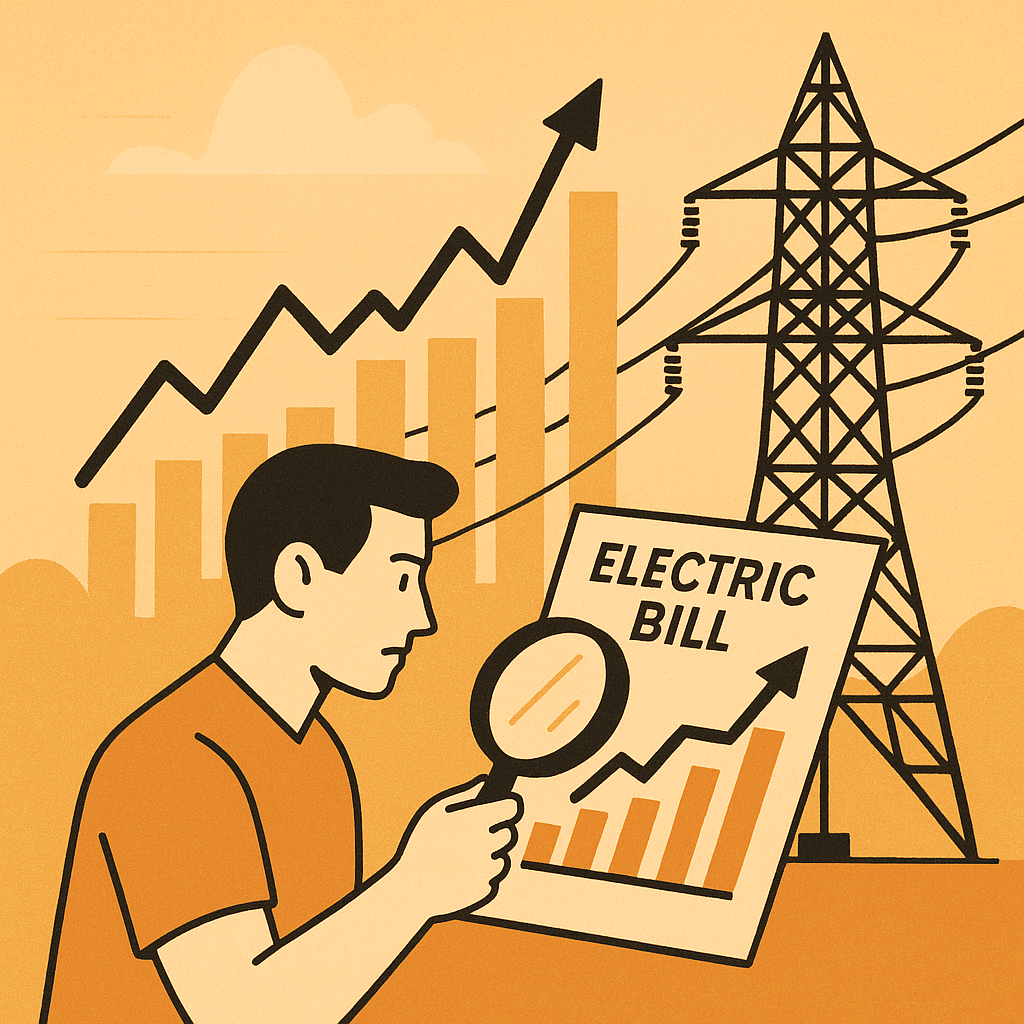
NV Energy, the state’s largest utility, recently announced a major change to its billing practices in Southern Nevada. Instead of charging customers based on their total monthly electricity use, the company will now calculate bills based on their highest level of electricity consumption during any single interval.
In practice, this means that even if a household is frugal most of the month, running the air conditioner, oven, and washing machine at the same time—even once—could raise the entire month’s bill.
At the same time, state regulators approved the cost of the massive Greenlink transmission project, which will connect the northern and southern grids and expand Nevada’s ability to transmit renewable energy. While the project is billed as a long-term investment in clean energy, its construction costs will ultimately appear on consumers’ bills.
Background: How the Plan Was Approved
Regulatory Process
Any major rate changes or infrastructure investments by NV Energy must be reviewed by the Public Utilities Commission of Nevada (PUCN). The PUCN evaluates whether such proposals are “reasonable and necessary,” and holds public hearings where residents, community groups, and consumer advocates can voice their opinions.
Main Supporters
1. NV Energy and state officials – Emphasize grid security and the push toward renewable energy.
2. Environmental and energy groups – Support the Greenlink project as vital for transmitting more solar and wind power.
3. Large-scale energy users – Favor peak-demand pricing as a predictable mechanism to manage energy costs and consumption.
Main Opponents
1. Community residents and consumer advocates – Argue that peak-demand billing increases uncertainty for households, especially seniors and low-income families who cannot easily shift their usage.
2. Small business owners – Point out that restaurants, grocery stores, and salons have unavoidable peak hours when energy-intensive equipment must run.
3. Some unions and local officials – Question whether Greenlink’s costs are excessive and fear that consumers will bear the entire financial burden.
Timeline
• Public hearings – June 4 and June 6, 2025: residents, businesses, and advocacy groups presented support and opposition.
• Evidentiary hearing – July 21, 2025: experts and attorneys reviewed technical evidence and cross-examined witnesses.
• Final decision – September 17, 2025: PUCN voted to approve both the peak-demand billing system and the Greenlink project costs, while requiring NV Energy to provide consumer education and ongoing impact monitoring.
Efficiency on Paper, Burden in Reality
From an energy-management perspective, peak-demand billing does have logic: it discourages simultaneous high usage, reduces grid stress, and lowers the risk of blackouts.
But the policy’s impact is not equally distributed.
For many seniors living on Social Security or fixed incomes, electricity is already one of their largest expenses. They may not understand English notices, nor know which appliances consume the most power, let alone manage usage around peak hours. The result: sudden bill increases without explanation.
Small businesses face an even tougher challenge. In Las Vegas’s Chinese community, family-run restaurants, supermarkets, and nail salons must use multiple power-hungry appliances during lunch, dinner, or weekend rushes. Unlike households, these businesses cannot stagger their usage. For them, higher peak-demand bills may directly cut into already thin profit margins.
The Green Energy Vision vs. Economic Reality
The Greenlink project is framed as a milestone for Nevada’s clean energy future, enabling greater reliance on solar and wind power. Long-term, this may indeed be beneficial.
But in the short term, the question remains: who pays now? The answer is, once again, the consumer. For low-income households and small businesses, this represents a “pay now, benefit later” arrangement—fronting the costs for future gains they may never fully enjoy.
What the Community Needs: Education and Support
If NV Energy intends to move forward, it must do more than issue English-only notices or post technical explanations online. In a diverse community like Las Vegas, the company should provide multilingual guidance—including Chinese and Spanish—and host public information sessions.
State officials and NV Energy should also consider:
• For residents: simple usage reminders, smart meters, or community workshops to help families avoid costly peak usage.
• For small businesses: subsidies for energy-efficient upgrades, transitional support, or phased-in pricing to ease the financial burden.
Conclusion: Fairness and Transparency Are Key
Energy transition is inevitable, but if reforms lack fairness and transparency, “clean energy” risks becoming a slogan rather than a shared reality.
Peak-demand billing and the Greenlink project may pave the way for Nevada’s energy future, but today they add anxiety and cost for households and small businesses. Only by protecting vulnerable groups and supporting community adaptation can this reform truly gain widespread trust and legitimacy.
Discover more from 华人语界|Chinese Voices
Subscribe to get the latest posts sent to your email.
