Why Are So Many Students Graduating Without Mastering Core Skills?
In the Clark County School District (CCSD), Nevada’s largest and the fifth-largest school district in the United States, more than 81% of high school students graduate on time each year. On the surface, this seems like a sign of success—evidence that the system is working and students are moving forward.
But a closer look reveals a more troubling picture.
State and national test results show that only about 30% of CCSD students are proficient in math, and just around 40% are proficient in English Language Arts. In other words, less than half of graduates are leaving school with grade-level academic skills.
So why does this gap exist—and what does it mean?
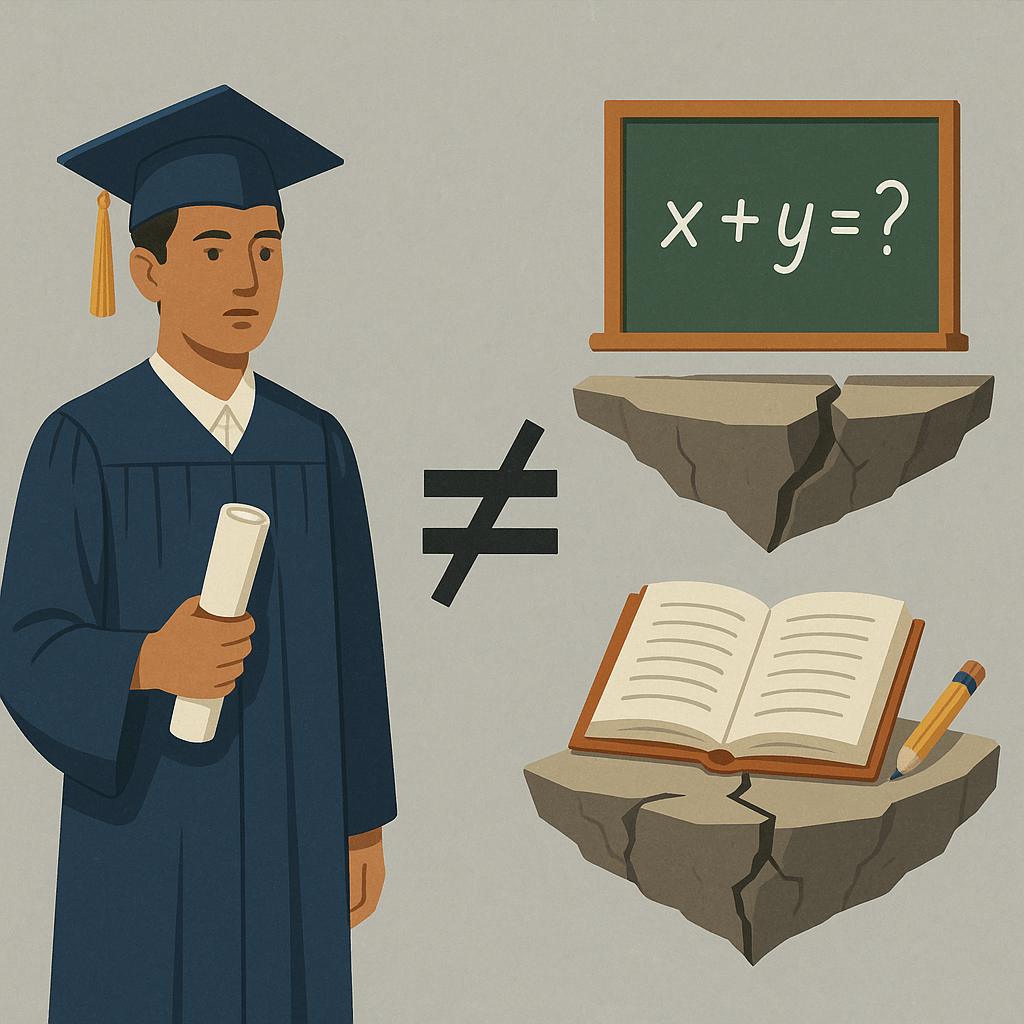
Graduation Isn’t the Same as Mastery
The key lies in understanding what a high school diploma actually measures. To graduate, students must accumulate a certain number of course credits, pass required classes, and meet minimum attendance and behavioral expectations. These requirements are set by the state and enforced by schools.
But standardized test proficiency—on exams like Nevada’s SBAC or the national NAEP—measures whether students truly understand and can apply key academic concepts for their grade level.
You can earn good grades and pass your classes while still falling short on statewide exams that demand deeper understanding.
Grades Reflect More Than Just Test Performance
Grades are influenced by a range of factors:
– Homework completion
– Class participation
– Improvement over time
– Teacher discretion
This makes them more holistic—but also less standardized. A “B” in one school might mean something different than a “B” in another.
By contrast, standardized tests are scored uniformly, with clear-cut thresholds for proficiency. They are not influenced by effort, behavior, or extra credit. That means students who perform well in class might still score below proficiency on a standardized test.
The Push for Higher Graduation Rates
Over the past two decades, schools across the U.S. have been under intense pressure to raise graduation rates. This push has led to:
– The expansion of credit recovery programs (online or makeup courses)
– Reduced graduation exam requirements in many states
– More flexibility for students with disabilities or life challenges
While these changes have helped more students earn diplomas, they have not necessarily improved academic performance.
In fact, critics argue that some districts have prioritized pushing students across the finish line over ensuring they’re actually prepared for college or the workforce.
The Impact on Students and Society
The gap between graduation and proficiency matters. A diploma should represent readiness—not just completion.
When students graduate without mastering math, reading, and critical thinking skills:
– They are more likely to struggle in college and drop out
– They may be underprepared for skilled jobs
– They face greater challenges in managing finances, voting, or navigating healthcare and legal systems
For employers and colleges, a diploma that doesn’t reflect true readiness undermines trust in the education system.
Rethinking Success in Education
To close this gap, schools must:
– Strengthen academic support before students fall behind
– Provide meaningful learning opportunities, not just credit recovery
– Rethink grading practices to align more closely with real learning
– Balance graduation goals with true student preparedness
Parents and communities also have a role to play: asking tougher questions not just about how many students are graduating, but how many are truly ready to succeed after high school.
In CCSD, and Beyond
CCSD’s experience is not unique—it reflects a broader national trend. Across the U.S., graduation rates have risen steadily, while test scores in core subjects have stagnated or declined, especially since the COVID-19 pandemic.
The solution isn’t to lower standards or blame teachers—it’s to build a system that supports both achievement and equity, where a diploma reflects both effort and understanding.
Success in education is more than crossing a stage in a cap and gown. It’s being ready to meet the world with confidence, competence, and the tools to thrive.
By One Voice
Discover more from 华人语界|Chinese Voices
Subscribe to get the latest posts sent to your email.
