Under the same moonlight, we find our shared sense of togetherness
The Same Moon, Different Stories
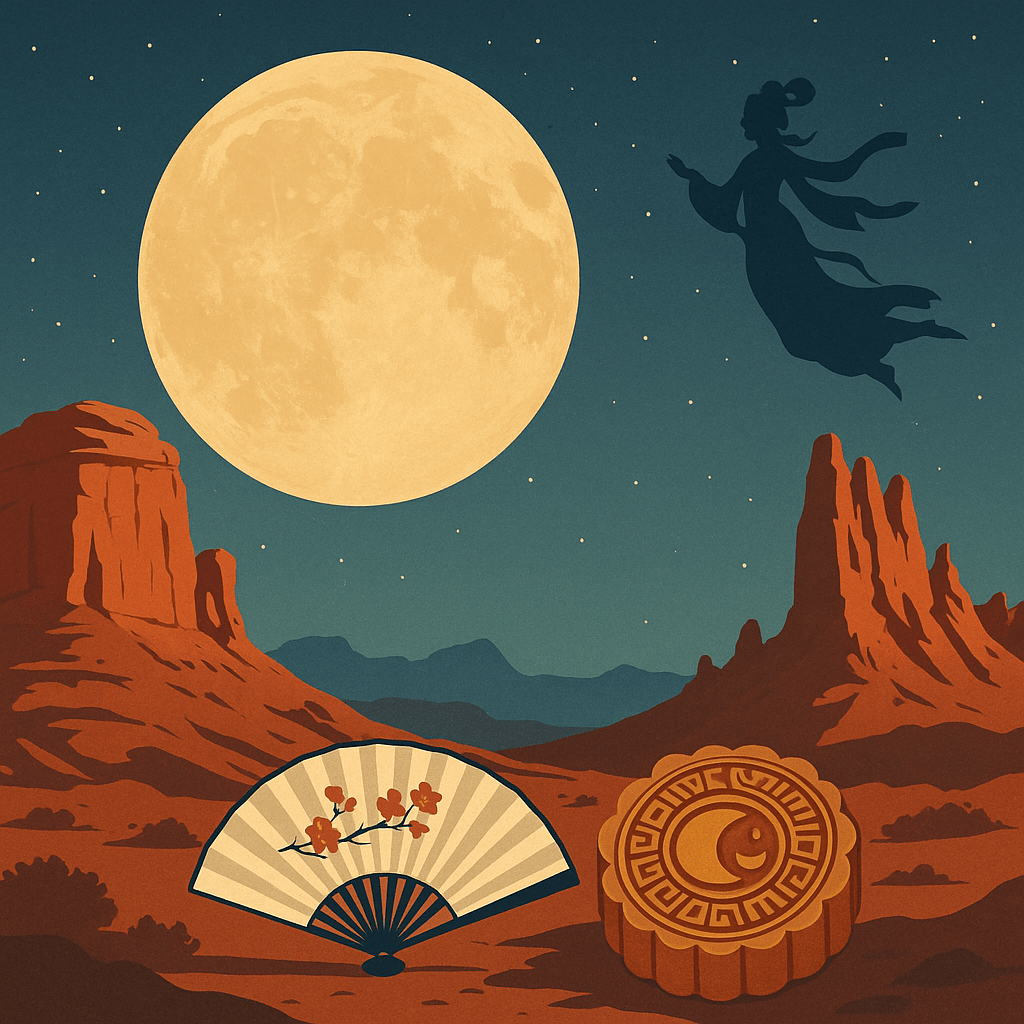
Every Mid-Autumn Festival, people look up at the bright moon and think of those far away. For Chinese communities, this sentiment runs deep — from the legend of Chang’e flying to the moon and Wu Gang chopping the laurel tree, to classic verses like “The bright moon rises above the sea; from afar we share this moment.” The moon has always symbolized reunion and longing.
In Western culture, there is also an autumn moon — the Harvest Moon — appearing near the fall equinox. It represents abundance, gratitude, and family gatherings. During this season, farms, schools, and small towns across America hold Harvest Festivals, celebrating the generosity of nature with pumpkins, bonfires, and folk music.
Though born from different histories, both traditions see the moon as a rhythm of life and an emblem of connection. It shines as a shared symbol of human emotion.
When Chang’e Meets the Harvest Moon
In recent years, more American schools, libraries, and cultural centers have begun introducing Mid-Autumn Festival stories during the fall season. In Las Vegas, local libraries often host family-friendly cultural programs each autumn — and in some years, those include Mid-Autumn-themed activities. Teachers might tell students: “In China, this holiday is called the Mid-Autumn Festival. People share mooncakes and watch the moon, just like Americans gather for Thanksgiving.”
These cultural exchanges go far beyond storytelling. They help children recognize that different cultures speak the same emotional language — reunion, gratitude, and sharing. In classrooms where the tales of Chang’e and the Harvest Moon are told side by side, children realize with delight that people everywhere gaze at the same moon during the same season.
Bilingual Families Beneath the Moon
For Chinese-American families, the Mid-Autumn Festival is also a moment of bilingual learning and cultural storytelling. Parents may brew tea and cut mooncakes while saying in English, “This is Chang’e, the lady who flew to the Moon. Her husband Hou Yi loved her deeply.” Through these bilingual moments, children learn not only vocabulary but also the emotional texture of heritage.
Across Nevada and California, Chinese schools and cultural centers hold “Mid-Autumn Cultural Days,” where children write moon poems or paint jade rabbits — blending art and tradition. For the second generation, the festival becomes more than a family custom; it becomes a bridge for defining identity — to be both Chinese and American.
Under the Same Moonlight
Whether it is Chang’e’s myth or the Harvest Moon’s song, humanity’s longing for the moon never fades. In today’s diverse and sometimes divided world, festivals like these remind us that cultural difference is not a barrier — it is a starting point for dialogue. When the moon rises, whether in the East or West, we all stand beneath the same light.
Notes
1. Records and materials from the Clark County Library District (Las Vegas, NV).
2. National Geographic, “What Is a Harvest Moon?” (2023).
3. The Nevada Independent, “Asian American Communities Celebrate Mid-Autumn Festival Across the Valley.” (2024).
By One Voice
Discover more from 华人语界|Chinese Voices
Subscribe to get the latest posts sent to your email.
