From Budget Battles to Polarized Politics
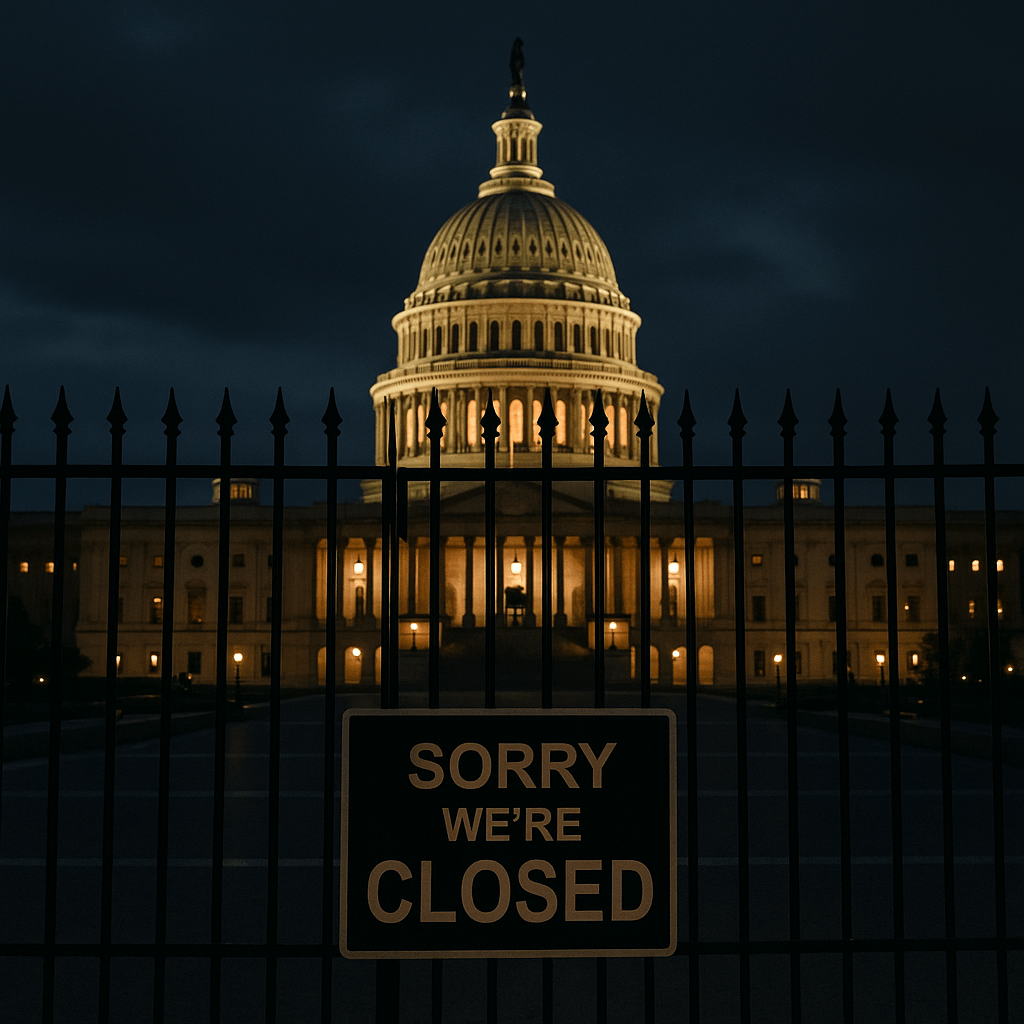
Another Shutdown, Another Deadlock
In October, the U.S. federal government once again entered a shutdown crisis. The Treasury wasn’t broke, yet Congress failed to pass a new spending bill before the start of the fiscal year. Hundreds of thousands of federal workers were furloughed. National parks closed, airports faced delays, and research projects were frozen.
It’s a familiar scene. Since 1976, the United States has experienced more than twenty government shutdowns. They’ve become a recurring symptom of dysfunction — a ritual of paralysis in the world’s most powerful democracy. Why does the U.S. government, of all governments, keep “closing its doors”?
The Surface Cause: No Budget, No Money
Under the Constitution, the government cannot spend money without Congress’s approval. Each year, lawmakers must pass 12 appropriations bills funding different agencies — from Defense to Education. If the House and Senate can’t agree, or the President vetoes a temporary measure, the government runs out of legal authority to spend.
When neither a full-year budget nor a stopgap funding bill (CR, or Continuing Resolution) is passed, nonessential agencies must shut down. That’s the technical definition of a “government shutdown.”
In short, it’s not a financial collapse — it’s a procedural failure.
The Deeper Cause: Politics as Hostage
Every modern shutdown has been less about money and more about leverage. The budget becomes a hostage in political negotiations between the White House and Congress.
For example: In 1995–96, Republicans clashed with President Clinton over health care reform. In 2013, Tea Party conservatives demanded to delay Obama’s Affordable Care Act. In 2018–19, Trump refused to sign any budget lacking funds for his border wall. And in 2025, deadlock largely stemmed from disagreements between House conservatives and the White House over the scale of federal spending and funding priorities, including disputes about budget allocations for defense, immigration enforcement, and health insurance subsidies.
This pattern has hardened into habit: one side uses the threat of a shutdown as a weapon; the other yields in the name of stability. The cost is borne by the country’s institutions — and by ordinary citizens.
Structural Flaws: Polarization and the Double Veto
Frequent shutdowns are not just the product of partisanship — they’re built into the system.
First, the U.S. separation of powers creates a double veto structure. The President, House, or Senate can each block spending. And unlike many countries, the U.S. lacks an “automatic funding” rule to keep agencies running if no agreement is reached.
Second, partisan polarization has empowered small factions to hijack the process. Hardline groups like the Freedom Caucus in the House often use budget votes to pressure their own party’s leadership. A minority can now paralyze the majority — and the public interest becomes collateral damage.
Third, the fragmented budget process itself fuels conflict. Each of the twelve appropriations bills becomes a separate battlefield, turning budgeting into a year-round war of attrition rather than a policy exercise.
Social Consequences: The Politics of Pause
A shutdown doesn’t mean America stops functioning. Soldiers, border agents, and air traffic controllers keep working — without pay. But tax processing, loans, visas, research, and tourism all grind to a halt.
To most Americans, this isn’t an abstract political drama; it’s a tangible disruption. Tax refunds delayed. Flights canceled. Welfare checks frozen. The shouting in Congress seeps into everyone’s daily lives.
Conclusion: Dysfunction and the Erosion of Trust
The root of America’s recurring shutdowns isn’t a lack of funds — it’s a lack of balance and trust.
The shutdown is not just a symbol of polarization. It’s a habit of dysfunction that citizens have learned to live with.
When lawmakers weaponize shutdowns as bargaining tools, the system weakens itself. And in this recurring theater of paralysis, the real casualty isn’t politics — it’s public faith in government.
By One Voice
Discover more from 华人语界|Chinese Voices
Subscribe to get the latest posts sent to your email.
