From a Dinner Table to a Cultural Insight
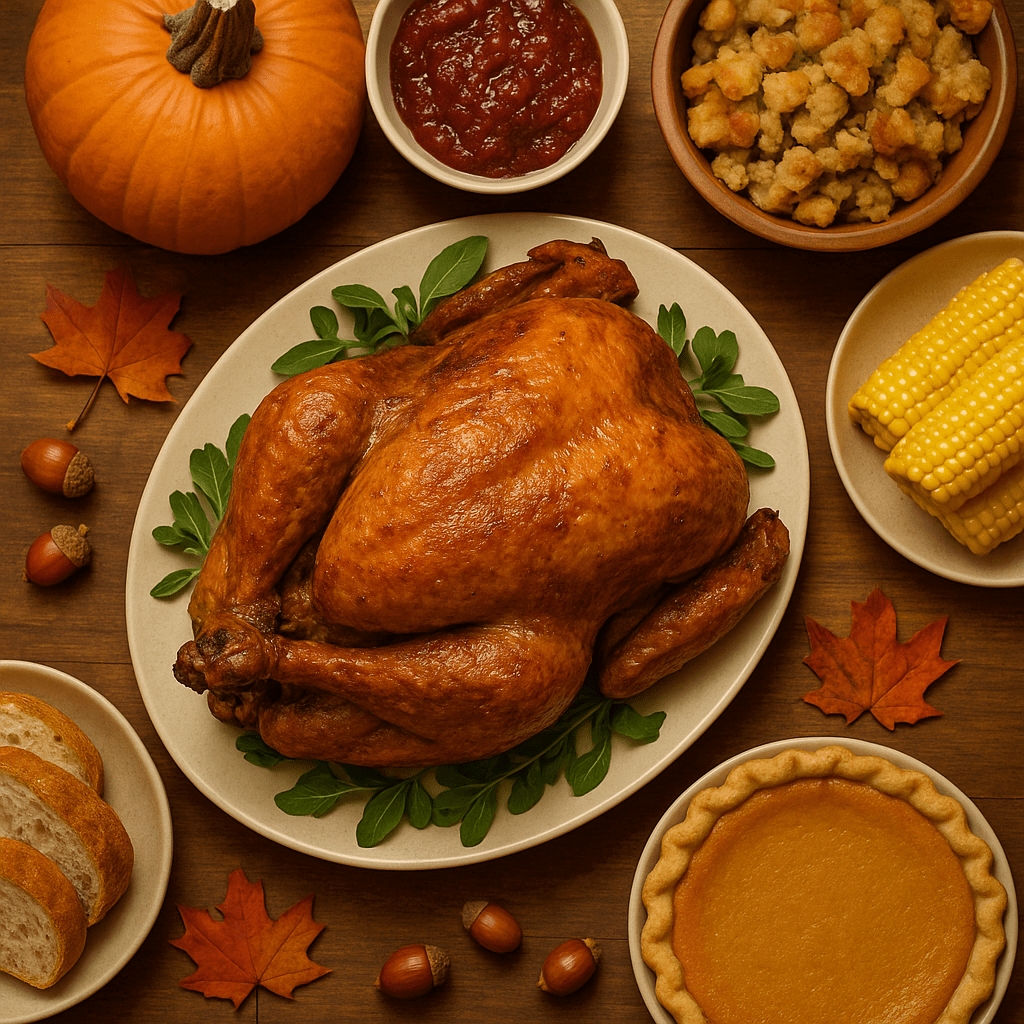
In the week leading up to Thanksgiving, supermarkets across the United States begin to feel different. People who rarely cook are pushing carts full of spices, college students are animatedly debating who will bring dessert, delivery drivers are shuttling turkeys in and out of loading zones, and even the air seems filled with a certain urgency—an unmistakable sense of “going home.”
In many Chinese immigrant households, rhythms shift as well.
After work on Friday, a software engineer who has lived in the U.S. for two years hesitates in front of the turkey freezer; a mother who immigrated twenty years ago wonders if she should try baking a pie this year; a first-year college student nervously calculates the budget for a Friendsgiving gathering; and a child working in another state books a ticket home.
These small, vivid moments form the truest picture of Thanksgiving for many Chinese immigrants—
a practice of living somewhere between the familiar and the unfamiliar.
The First Lesson: Learning to Pause
Thanksgiving is the day Americans are most willing to slow down.
No matter how crowded the airports or how terrible the traffic, people go home. Beneath this ritual lies a value deeply embedded in American culture:
Family isn’t just something that exists — it is something that must be tended to.
For many Chinese immigrants, this is a revelation.
In fast-paced immigrant life, family time often becomes something assumed rather than intentionally created.
Even when relationships are strained,
even when the year has been difficult,
even when misunderstandings linger,
Americans still make space to sit at the same table and say:
“We should eat together.”
This ritual teaches many immigrant families something subtle yet profound:
In America, making time for one another is an emotional expression in itself.
The Second Lesson: Letting Language Carry Emotion
Traditional Chinese culture expresses love through action rather than words.
Cooking someone’s favorite meal feels more natural than saying “I love you.”
Serving an extra bowl of soup feels easier than saying “I’m proud of you.”
Thanksgiving changes the script.
It creates a socially sanctioned moment where saying “thank you” feels safe, normal, even expected.
One community volunteer once told me her favorite part of Thanksgiving is this:
“Many fathers say ‘I’m proud of you’ to their children for the first time.”
She paused, and added quietly:
“You have no idea how rare that is.”
This is the power of Thanksgiving within Chinese immigrant homes:
It encourages a new emotional vocabulary—not to imitate American families, but to soften relationships and bridge generational distance.
The Third Lesson: When Cultures Meet on a Single Table
Over time, many Chinese immigrant families have developed their own Thanksgiving traditions:
• A turkey sitting next to a plate of mapo tofu
• A round of mahjong before the football game
• Friendsgiving gatherings where English and Chinese flow together
• Parents trying pumpkin pie for the first time, with children laughing, “Hey, that’s actually good!”
These moments are not cultural compromise.
They are cultural creation.
They remind us:
We aren’t choosing between cultures — we are generating a new one.
For many immigrants, this is the moment they truly feel rooted in America:
Not because they adopt an American tradition wholesale,
but because they add themselves into its story.
The Fourth Lesson: Thanksgiving Reveals the Meaning of Community
For newcomers, “community” often feels abstract.
But around Thanksgiving, American communities become tangible:
• Food drives
• Free church dinners
• School volunteer events
• Donation boxes outside grocery stores
• Community center breakfast gatherings
These scenes teach a core truth:
In America, holidays are a natural gateway into community life.
You don’t need fluent English.
You don’t need social connections.
You only need willingness to participate.
For many Chinese immigrants, the quiet realization that “I can be part of this community too” begins exactly here.
A Lesson With No Classroom, Yet Universal Impact
For Chinese immigrants, Thanksgiving is not an “American holiday” reserved for others.
It is a shared cultural moment for everyone living on this land.
It teaches us:
• To pause amid a busy life
• To let language serve as a bridge for emotion
• To create culture in our own way
• To find belonging through participation
Thanksgiving is not a tradition imposed on anyone.
It is a rhythm of life that gradually invites us in.
Perhaps taking root in America truly begins
with that very first Thanksgiving meal.
By Voice in Between
Discover more from 华人语界|Chinese Voices
Subscribe to get the latest posts sent to your email.
