2026 Election Issues Series — Part I
Over the past few years, everyday life for many American families has quietly but unmistakably changed. A routine trip to the grocery store now comes with a moment of hesitation at the checkout counter. Rent renewal notices often arrive with unwelcome increases. Child‑care tuition has reached a level that stretches even dual‑income households. And a single visit to the emergency room can shake an entire family’s finances.
Yet the broader economic narrative tells a different story: steady growth, low unemployment, and cooling inflation. The question is—why doesn’t any of this feel like relief?
Across the country, more and more Americans are asking the same question: “If I’m working this hard, why is life getting harder?” And it is this shared, deeply personal question that is reshaping the 2026 election. This will not be a contest about ideology, but a referendum on something much more fundamental: whether the cost of living remains bearable.
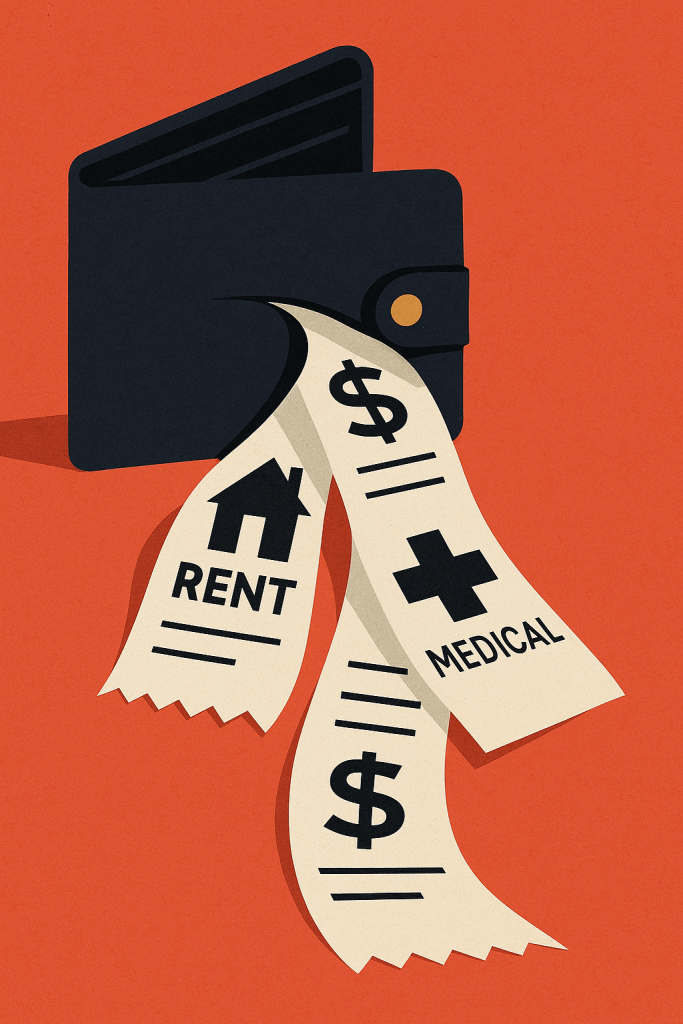
Beyond the Economic Data: What Families Actually Feel When They Open Their Bills
From a macroeconomic standpoint, the U.S. economy is not in crisis. But from a household’s standpoint, many feel they are standing on increasingly fragile ground.
Housing costs are one of the clearest pressure points. In many metropolitan areas, rents have surged far beyond wage growth. Younger families move farther out to find affordability; single parents juggle child‑care fees against rising rent; prospective homebuyers feel the dream slipping further away.
Grocery prices have stabilized on paper but have not returned to pre‑pandemic levels. People trust what they see in their shopping carts more than official inflation numbers.
Medical expenses remain a source of shock. Even with insurance, a single emergency‑room visit may cost hundreds or thousands of dollars. Ambulance bills arrive like unexpected strikes. As many Americans say: “In the U.S., the bill hurts more than the illness.”
When rent, food, child care, health care, and interest rates all climb at the same time, it is not an “economic trend.” It is a lived experience—one that cuts directly into a family’s savings.
Why the Cost of Living Is Becoming the Most Universal Issue of 2026
The power of this issue lies in its universality.
It crosses party lines, ethnic lines, income brackets, and geography. Whether a voter lives in New York or Phoenix, is white, Asian, Latino, or Black, supports Democrats or Republicans—everyone frowns at the same receipts.
And those receipts lead to the same anxious question: “How much longer can we keep this up?”
When an experience becomes this widely shared, it naturally becomes the defining force of an election. The 2026 race will not be won by whoever offers the boldest ideological narrative, but by whoever can sincerely answer: “What can I do to make next month easier for you?”
What Candidates Can Actually Do: The Power of Concrete, Not Grandiose
Voters do not need sweeping, abstract visions. They need changes they can feel—in their bank accounts, in their routines, in their stress levels.
Consider housing policy: limiting bulk purchases of homes by large investment firms, expanding affordable‑housing supply, and helping first‑time buyers may not be flashy, but they restore breathing room to families.
In health care, practical measures such as making ambulance and emergency‑room fees transparent, controlling prescription drug prices, and expanding local clinics reduce a household’s biggest vulnerabilities.
Child care and elder care—often more expensive than a college education—overwhelm many middle‑aged households. Support for child‑care subsidies, long‑term‑care programs, and family caregivers could transform daily life for millions.
Even food, energy, and transportation costs—mundane but unavoidable—shape a family’s sense of stability. Any policy that lowers weekly expenses is immediately felt and remembered.
The Cost of Living Is Not an “Economic Issue”—It Is About Confidence, Security, and Dignity
When voters say “life is getting more expensive,” they are rarely offering a technical analysis. They are expressing something deeper:
• uncertainty about the future
• anxiety about maintaining quality of life
• fear of unpredictable bills
• frustration that hard work no longer guarantees stability
These emotions are invisible in economic reports, yet they drive political behavior more powerfully than any dataset.
The cost of living is not about numbers. It is about dignity—about whether ordinary families feel they can keep their heads above water.
The 2026 Election: Whoever Makes Life Easier Has the Advantage
Voters do not expect candidates to fix everything overnight. But they do expect someone who understands their tension, their exhaustion—someone who acknowledges that the struggle is real.
What they want is simple: “I don’t need to be wealthy; I just don’t want next year to feel harder than this year.”
If a candidate can respond to that desire with clarity and sincerity, support will flow across ideological and demographic lines. Because when the cost of living becomes the defining pressure in a society, the political divide is not left versus right—it is between families who can hold on and families who fear they cannot.
In the end, the 2026 election will turn on one question: Who can help more Americans keep holding on?
By Voice in Between
Discover more from 华人语界|Chinese Voices
Subscribe to get the latest posts sent to your email.
