2026 Election Issues Series — Part III
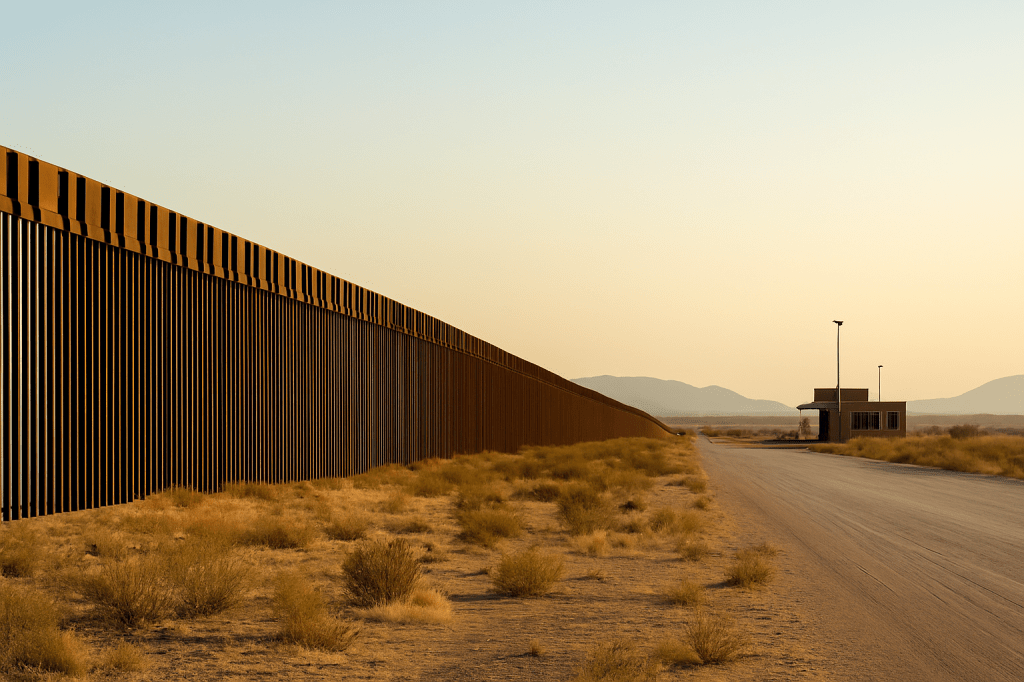
Among the issues most likely to shape the 2026 U.S. elections, immigration and border security stand out as one of the most emotionally mobilising and empirically elastic topics.
Its political salience does not depend solely on changes in hard data. Rather, it is driven by voters’ perceptions, media narratives and everyday experience. As a result, regardless of how statistics fluctuate, anxieties over whether the border is “out of control”, whether immigration levels are excessive, and whether government still possesses the capacity to manage basic order continue to intensify—and to convert steadily into political energy.
Not Just a Border Issue, but a Projection of Everyday Order
For many voters, immigration is no longer an abstract legal or humanitarian question.
Instead, it is directly linked to tangible and perceptible pressures: the difficulty of finding work, perceptions of public safety, strain on schools, hospitals, housing and social services, and the fiscal capacity of local governments.
Even when such perceptions are not fully borne out by macroeconomic data, they remain politically real. Politics, after all, responds not only to facts, but also to lived experience.
When economic growth slows, housing costs rise and public services tighten, immigration readily becomes a convenient explanation for a broader sense of disorder—a visible, nameable and assignable source of unease.
The Republican Advantage: Simplicity, Clarity and Attribution
On this issue, Republicans enjoy a near-structural advantage.
Their core narrative is tightly focused and easily transmitted: the border requires order; the nation requires security; the law must be enforced.
The strength of this narrative lies not in policy detail, but in directional clarity. It offers voters a straightforward causal chain: border failure leads to irregular migration; irregular migration increases community strain; strain reflects governmental incapacity or neglect.
In electoral politics, such a frame requires little elaboration. Repetition, visual reinforcement and emotional resonance are sufficient. For anxious voters, it provides the reassurance of having a clearly named problem.
Crucially, it assigns responsibility squarely to those in power—a dynamic that, heading into 2026, does not favour Democrats.
The Democratic Dilemma: Normative Coherence, Narrative Fragmentation
Democrats, by contrast, face a far more complex terrain.
They must balance humanitarian commitments, principles of fairness and inclusion, economic demand for labour, and adherence to the rule of law—all while responding to voter concerns about order, resources and enforcement.
The result is a message that may be normatively coherent, but communicatively inefficient.
Emphasising humanitarian values risks accusations of permissiveness; stressing pragmatic management can alienate progressive constituencies; advocating long-term structural reform offers little comfort to immediate anxieties.
Consequently, Democrats often say more yet communicate less. Their complexity, in a polarised media environment, is easily reduced to an image of weakness.
The 2026 Context: A High-Risk Information Environment
The 2026 electoral cycle heightens these dynamics.
Fiscal and operational tensions between federal, state and local governments remain unresolved, structural pressures on the asylum system persist, and any localised incident—whether related to crime, budgets, schools or housing—can rapidly be elevated into a national political symbol.
In a fragmented media ecosystem, immigration need not deteriorate systemically to dominate debate. Persistent uncertainty alone is sufficient.
The True Fault Line: Who Defines “Order”
At its core, the debate is not about support for immigration per se, but about who controls the definition of order.
Republicans have articulated a clear answer: hardened borders, strict enforcement and zero tolerance.
Unless Democrats can advance an alternative conception of order that is equally clear, operationally credible and intelligible to ordinary voters, they will struggle to reverse the asymmetry on this terrain.
In an election cycle marked by heightened anxiety, voters are not demanding institutional perfection. They are seeking reassurance that the state remains governable.
Immigration and border security have become one of the most visible tests of that belief.
By Voice in Between
Discover more from 华人语界|Chinese Voices
Subscribe to get the latest posts sent to your email.
