— How AI Is Quietly Eroding Democratic Mechanisms
2026 Election Issues Series · Part IX
In democratic systems, elections have never been merely technical procedures carried out on polling day. They rest on a far more fragile foundation: public trust. Voters must believe that information is broadly reliable, rules can be enforced, and individual judgment still carries meaning. Without these assumptions, electoral processes lose their legitimacy long before ballots are cast.
Artificial intelligence has not destroyed elections outright. What it is doing instead is more subtle—and potentially more consequential. AI is steadily eroding the conditions that allow democratic systems to function with confidence rather than suspicion.
This essay does not aim to provoke panic, nor does it offer technical solutions. Its purpose is more modest and more practical: to help ordinary voters preserve institutional judgment in an era of deep uncertainty.
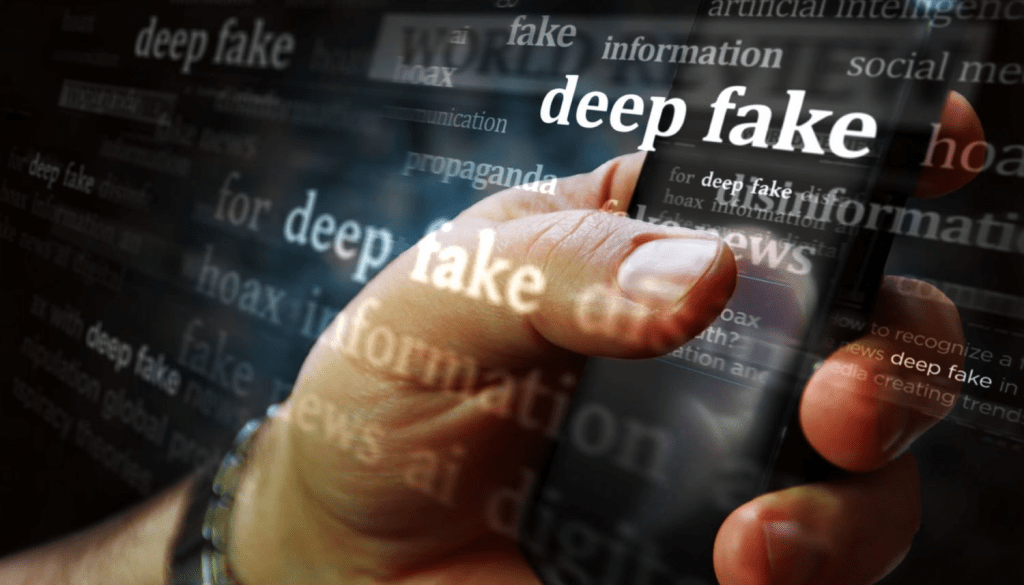
When “Truth Ambiguity” Becomes the Norm
Before the rise of AI, public discourse rested on a minimal shared assumption: images, audio recordings, and public statements—while often manipulated or selectively edited—were still generally anchored in reality. Artificial intelligence has fundamentally weakened that assumption.
Producing highly convincing videos or audio clips of political figures no longer requires vast technical resources. This does not mean that voters will be easily deceived. The deeper problem lies elsewhere: the gradual erosion of confidence in the very concept of authenticity.
When voters begin to assume that anything could be fabricated, the issue is no longer whether a specific piece of information is true. It becomes a question of whether democratic systems can still operate on any shared factual ground at all.
Undermining Trust Is Enough
A common misconception is that democracy is threatened only when technology directly manipulates voting outcomes. In reality, AI does not need to alter ballots to weaken democratic systems.
Its more powerful effect lies in its ability to generate persistent uncertainty at scale. Misinformation and authentic information intermingle, emotional content spreads faster than factual clarification, and efforts to correct falsehoods consistently lag behind their circulation.
Over time, this environment does not necessarily change voters’ political preferences. What it erodes instead is confidence—the sense that one’s judgment is informed, one’s participation meaningful, and the process itself worthy of respect. When skepticism becomes habitual, democratic legitimacy begins to hollow out from within.
The Growing Gap Between Platforms and Institutions
AI does not operate in isolation. Its influence is amplified through social media platforms, recommendation algorithms, and attention-driven distribution systems. Yet the pace of technological development has clearly outstripped the capacity of existing institutions to respond.
Basic questions remain unresolved: should AI-generated political content be clearly labeled; what responsibility platforms should bear for algorithmic amplification; and who is accountable when automated systems distort public discourse.
As long as these questions remain unanswered, institutional credibility continues to erode. Trust is not lost through dramatic failure, but through prolonged ambiguity.
A Test of Democratic Resilience
This challenge is not confined to any single election cycle or political figure. It is a test of democratic resilience under conditions of sustained informational instability.
If institutions cannot offer clear rules, enforceable standards, and credible mechanisms for correction, elections risk drifting away from collective decision-making toward emotional mobilization. The danger lies not in chaos, but in normalization—when uncertainty becomes an accepted feature of democratic life.

Preserving Judgment in the Age of AI
When individuals cannot solve technological problems themselves, the rational response is not to chase certainty, but to refine judgment.
In the AI era, voters need not verify every piece of content they encounter. A more realistic task is to evaluate which political narratives deserve trust and which do not.
AI-driven anxiety need not be merely endured. It can function as a filter—a tool for institutional assessment. Narratives that focus exclusively on threat while avoiding discussions of rules, accountability, or governance deserve skepticism.
Similarly, political actors who refuse to engage seriously with AI-related risks signal a lack of institutional maturity. Avoidance itself conveys information.
Restraint in information sharing also matters. In an algorithmically amplified environment, choosing not to circulate unverified or emotionally charged content is not disengagement; it is a form of institutional participation, however limited.
Democracy Is Not Error-Free—It Must Be Self-Correcting
Artificial intelligence has undeniably weakened the certainty surrounding elections. It has not, however, eliminated the capacity for democratic judgment.
The foundation of democracy has never been perfection. It is the ability to recognize error and correct course. In an age where truth is increasingly unstable, insisting on minimum standards of institutional responsibility is itself an act of public reason.
The future of elections may be less certain—but democratic integrity still depends on what citizens are willing to demand from the systems that govern them.
By Voice in Between
Discover more from 华人语界|Chinese Voices
Subscribe to get the latest posts sent to your email.
