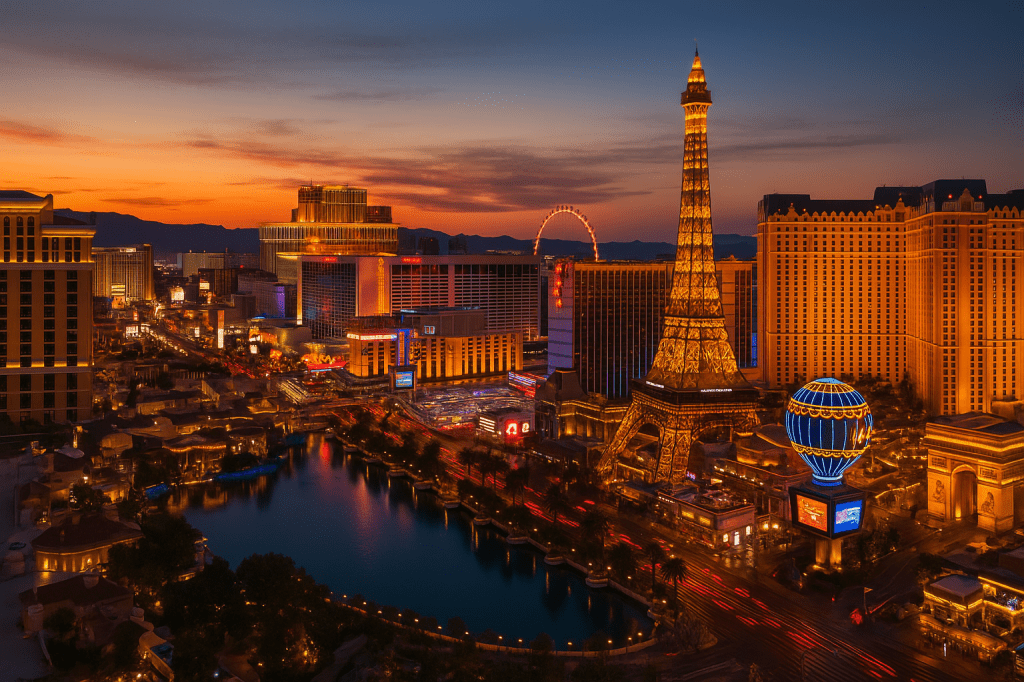
Las Vegas is undergoing a rare and profound structural transformation. For decades, the city was known for affordable hotel rates, cheap buffets, convenient entertainment options, and a highly concentrated casino culture. However, over the past ten years—especially in the most recent three to five years—Las Vegas has been quietly moving away from its traditional model and toward a high-end, diversified, event‑driven urban structure. This transformation is not linear; instead, it presents a mixture of signals: traditional indicators are declining, while high‑end sectors show notable strength.
Current Conditions and Mixed Signals
In recent years, traditional tourism indicators such as visitor volume, hotel occupancy, and average daily room rates have all declined. In 2025, total visitation fell for consecutive periods, and both ADR and occupancy dropped as well. For typical and mid‑market travelers, Las Vegas no longer feels as affordable or “worth it” as before.
Meanwhile, gaming revenue has remained strong. In 2025, Nevada’s total annual gaming revenue reached approximately $15.8 billion, setting a new historical record. Gaming revenue on the Las Vegas Strip totaled about $8.8 billion for the year, remaining largely flat compared with the previous year, with some months still showing growth, driven by high‑end table games and mobile sports betting. This indicates that although fewer visitors are coming, more of those who do visit are “the ones who can afford to gamble,” and Las Vegas continues to attract high‑value players.
The industry structure is also undergoing fundamental change. Over the past decades, the Strip’s revenue composition has shifted dramatically: gaming once accounted for 59% of total revenue but now makes up only about 35%. Non‑gaming income—including dining, entertainment, conventions, retail, and hotel rooms—has become the dominant source. Las Vegas no longer relies primarily on the casino floor; it now depends on the full ecosystem of integrated resort experiences.
At the same time, conventions, concerts, large‑scale events, and sports have become major growth engines. Las Vegas has long been a major convention city in the U.S., and in recent years, F1, NFL, NHL, and large‑scale live events have strengthened the city’s identity as a “global event hub.” Despite online criticism, the industry perspective is clear: Las Vegas is steadily transforming from a gambling‑centric city into an entertainment capital.
The Logic Behind the Transformation
This shift is not accidental—it is structurally inevitable. As more U.S. states legalize casinos and sports betting, Las Vegas has lost its former monopoly advantage. To maintain high profits, the city must increase per‑visitor spending and reposition itself toward high‑end and convention‑driven markets.
Higher‑end industries also carry higher profit margins. Although overall visitation is down, high‑end table games and high‑value players are generating more revenue. Meanwhile, hotel, dining, convention, and entertainment income streams are more stable and less sensitive to economic swings. The city is shifting from a “volume model” to a “quality and diversification model.”
Finally, the city’s brand is being redefined—from “Gambling City” to a global entertainment and convention metropolis. F1, Sphere, mega‑concerts, world‑class exhibitions, and major sports events are collectively pushing Las Vegas toward a new global identity.
Challenges Created by the Transformation
However, not everyone can adapt to this shift. Rising hotel rates, food prices, parking fees, and resort fees have pushed many middle‑class and ordinary travelers out of the core Las Vegas experience, making the city less of a mass‑market vacation destination. Heavy reliance on high‑end travelers and large events also brings greater risk: an economic slowdown could sharply reduce premium spending and destabilize the city.
The mid‑market visitor segment is quietly shrinking, which may weaken Las Vegas’ broad‑based appeal over time. For residents, rising living costs, strained public resources, and a “tourist‑first” urban strategy also diminish community quality of life.
Impact on the Chinese Community
For Chinese residents living in Las Vegas, this transformation brings rising living expenses, shifts in employment structure, and the risk of community marginalization. The community will need long‑term strategies in organization, career planning, housing, and investment—and greater attention to citywide policy developments.
Conclusion
Las Vegas’ transformation from a gambling‑centered city to an entertainment‑and‑convention‑driven metropolis aligns with global trends. This shift brings new prosperity but also higher costs and greater uncertainty. Whether ordinary residents, middle‑class families, and the Chinese community can maintain their place in this evolving city will remain an important question for the next decade.
By Voice in Between
Discover more from 华人语界|Chinese Voices
Subscribe to get the latest posts sent to your email.
