— A process most residents are never taught
【Column Introduction | Policy Is Not Made on Election Day】
This column is not about political positioning, nor is it news commentary. It addresses a question that is frequently overlooked, yet fundamental for ordinary residents: at what stage, and through which mechanisms, are policies actually shaped?
In the first article, we explored why casting a ballot does not equal real participation. This piece moves one step deeper, examining how policy in Nevada is gradually produced long before it ever reaches the legislative floor.
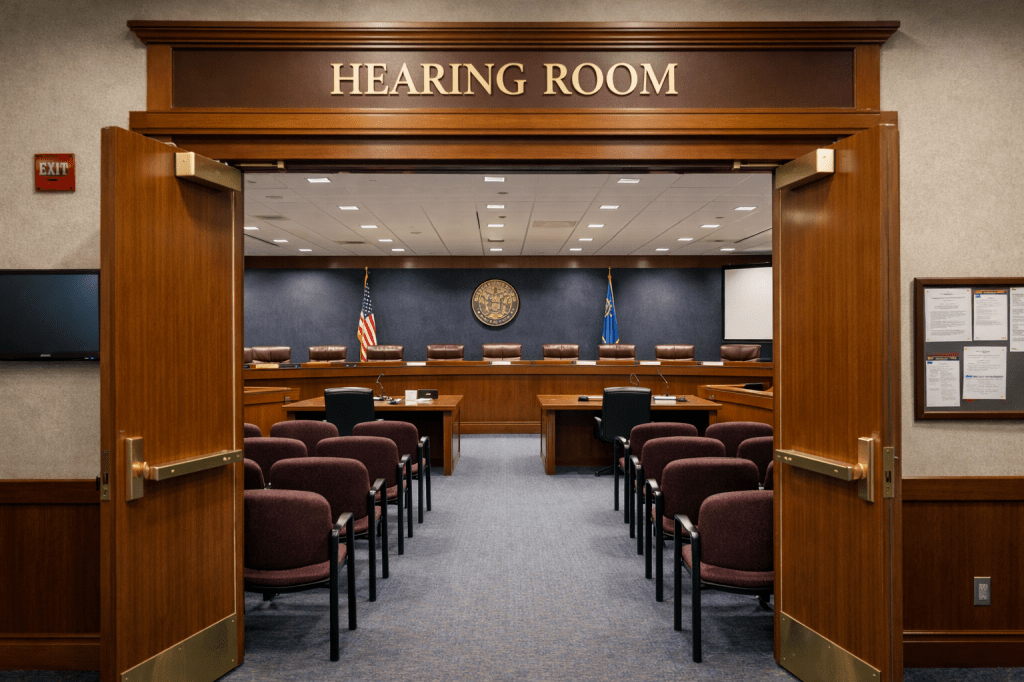
Ask an ordinary resident how policy is made in Nevada, and the answer you receive is often close to the textbook version: a bill is introduced, debated, voted on, signed by the governor, and implemented.
That sequence is not incorrect. What it misses is where most of the decisive work actually happens. Whether a policy appears at all, and what form it ultimately takes, is usually determined much earlier, in far quieter settings.
Policy Is Not Proposed—It Is Filtered
In practice, policies rarely emerge simply because someone has a good idea. They enter public view only after passing through multiple rounds of institutional filtering.
By the time an issue reaches the news, it has typically already been studied, debated, revised, and judged worthy of entering the formal process. Issues that fail these early filters often disappear entirely, long before the public is aware they ever existed.
The Legislative Session Is Not the Starting Point
Understanding Nevada’s policy pathway requires recognizing a structural constraint: Nevada does not operate as a year-round legislature.
As a biennial legislature, its formal sessions convene only once every two years and for a limited duration. For most of the calendar, policy is not being conceived on the legislative floor.
Rather than serving as the birthplace of policy, the legislative session functions as a stage for processing and formalizing work that has largely already been done.
The Real Beginning: Interim Committees
Between legislative sessions, most Nevada policies are shaped within interim committees.
These committees do not vote on final outcomes. Their role is more foundational: to study underlying problems, evaluate real-world impacts, hear from experts and members of the public, and decide whether an issue should advance to the next session.
In effect, interim committees determine which issues are even eligible to become law.
From Problem to Law: A More Accurate Policy Path
When the process is mapped as it actually unfolds, policy formation looks less like a straight line and more like a gradual narrowing of possibilities.
A real-world problem emerges. Agencies, communities, or industries begin paying attention. Interim committees conduct research and hold hearings. Reports and recommendations are produced. A decision is made on whether the issue will enter the legislative session.
By the time a bill is formally introduced, its basic structure has often already been set.
Why Most People Arrive Too Late
This explains a familiar frustration. When residents first encounter a bill in the news, they often feel shut out of the process.
At that stage, the issue has already been validated, its framework largely fixed, and the most consequential debates have already occurred. Public participation is reduced to support or opposition, with little room to shape outcomes.
Committees Are Not Formalities—They Are Policy Molds
Committees are often misunderstood as procedural formalities. In Nevada, they function as the molds in which policy takes shape.
At this stage, decisions are made about whether a policy is technical or values-based, temporary or permanent, centrally administered or locally implemented.
Once these design choices are set, the space for later debate narrows dramatically.
What Ordinary Residents Often Overlook
Many people assume their input lacks technical expertise and therefore carries little weight.
During the interim stage, however, what committees often need most is not abstract opinion but concrete information drawn from lived experience: how systems are actually used, where friction emerges, and what challenges arise during implementation.
Only those who live within these systems can provide that insight.
What You Need Is Not More Politics, but Better Timing
Understanding this process sometimes leads to a new misconception: that effective participation requires constant attention to politics.
In reality, meaningful civic engagement depends far more on timing and positioning than on continuous involvement.
Knowing when to show up, where to engage, and what is worth saying at a given stage matters more than frequent expression.
Column Note
This is Part 2 of the series “Policy Is Not Made on Election Day.” The next article turns to geographic reality, examining where Clark County sits within Nevada’s policy system and why that position matters for residents.
By Voice in Between
Discover more from 华人语界|Chinese Voices
Subscribe to get the latest posts sent to your email.
