By Voice in Between
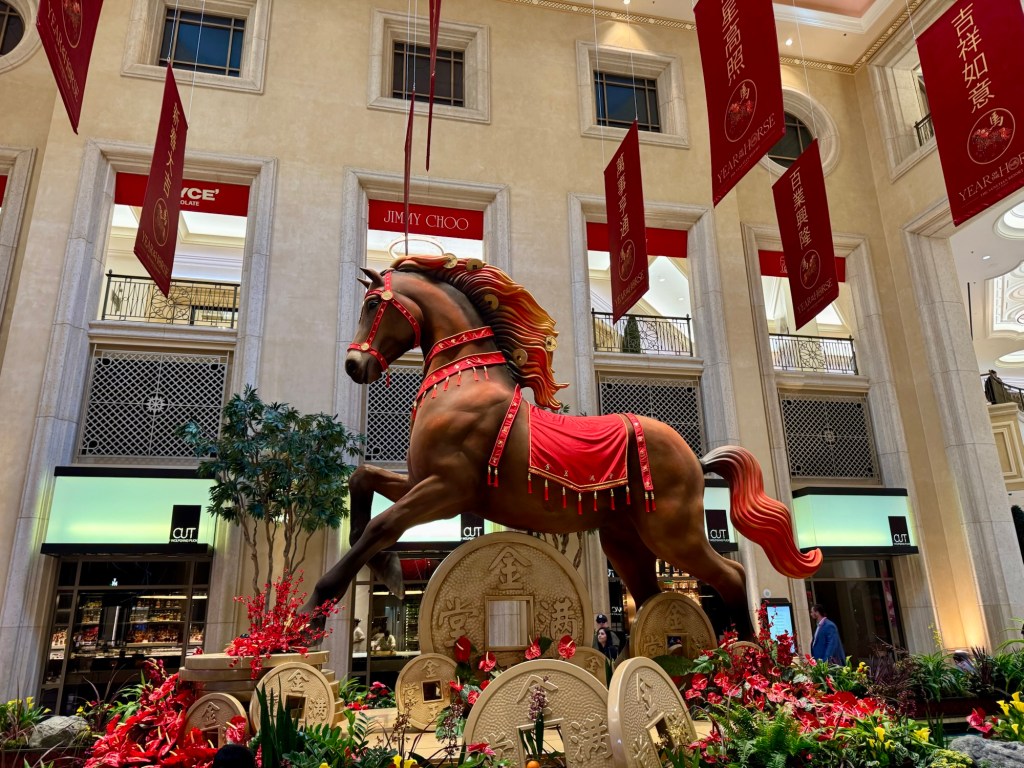
Each year, as the Lunar New Year approaches, time begins to shift quietly.
The office calendar remains Gregorian. Meetings are still scheduled into late afternoon. The city moves at its usual pace. Yet this year felt slightly different: Lunar New Year’s Eve happened to fall on a U.S. federal holiday, and schools were closed. There was no rush to get children out the door. A small space opened in the schedule. The rhythm at home softened, if only a little.
Even so, the overlap felt more like coincidence than recognition.
No public system counted down to it. No citywide lights marked its arrival.
Spring Festival here is never a holiday arranged for us.
It is time we choose to keep.
The meal still has to be prepared. Calls still have to be made. Red envelopes still have to be filled.
Some things do not disappear simply because of distance.
Time Does Not Live on the Calendar
Life abroad is structured by work, bills, tax deadlines, and school calendars.
The lunar calendar does not appear in mainstream systems.
This year’s holiday alignment brought relief. But the weight of the New Year still rests inside the household — deciding when to gather, whether to make that late-night call across time zones, whether to bring out the small touches of red that signal something important.
Schedules must be adjusted. Space must be carved out.
Someone may arrive home for dinner still wearing a jacket from the day. Someone else may answer work messages while watching a pot on the stove to keep it from boiling over.
It is not grand. But it is deliberate.
The deliberateness is not about ritual for its own sake.
It is about confirming that beyond the dominant system of time, another rhythm still exists.
The moment someone mentions “New Year,” the response feels familiar, regardless of where one comes from.
No explanation is required.
The Dining Table Is Where It Truly Happens
Far from home, the Spring Festival often narrows to the size of a table.
There are no temple fairs, no streets echoing with firecrackers.
The sense of the New Year takes shape slowly in the kitchen.
When familiar ingredients cannot be found, local substitutes take their place. Store-bought dumplings may sit beside handmade ones. The flavor may not match memory exactly, but the meaning of the meal does not depend on perfection.
Elders recount stories from years past. Children listen, half understanding.
On a screen, parents appear from across oceans, faint sounds of celebration audible in the background.
In that moment, the festival is not spectacle.
It is connection.
Continuity Does Not Happen Automatically
Children do not automatically understand the New Year.
For those growing up in English, words like reunion, red envelope, or staying up to welcome the year must be introduced carefully, slowly.
So stories of the zodiac are told before bedtime. The meaning of certain numbers inside an envelope is explained. A simple phrase — “Happy New Year” — is practiced in Chinese until it can be spoken with ease.
These efforts are quiet but intentional.
Because culture abroad is never self-sustaining.
Spring Festival becomes a choice.
Not something passively inherited, but something actively preserved.
Identity Is Not a Conflict
Working in English during the day, returning to Chinese at night —
the shift has become routine.
The New Year does not create tension between identities.
If anything, it clarifies structure.
One can belong here and still remember where one began.
One can participate fully in society and still keep language and memory intact.
Identity does not have to divide.
It can layer. It can coexist.
The Spring Festival makes that layering visible.
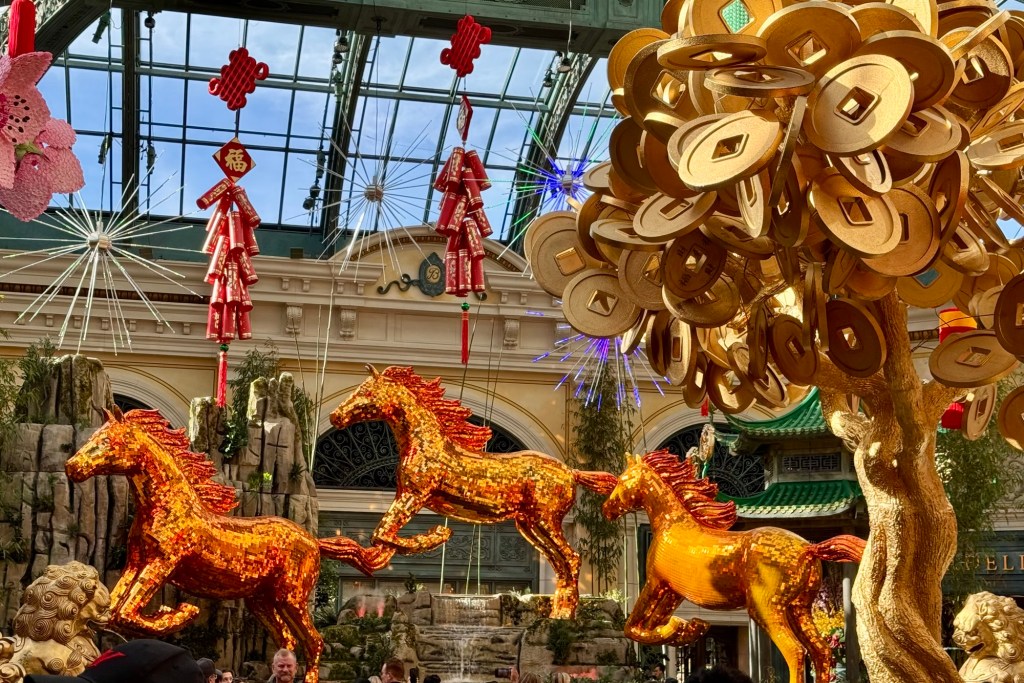
When the Festival Steps Outside the Home
In the southwest of Las Vegas, around Spring Valley, familiar signs appear each year.
Red lanterns hang in Chinese plazas. Gift boxes of sweets are stacked near supermarket entrances. Restaurants fill with families waiting for reunion dinners. The sound of lion dance drums draws not only Chinese families but curious neighbors.
It may not be grand. But it is real.
When the festival moves from the dining table to the street, it becomes more than a private observance.
It becomes a quiet declaration of presence.
Life happens in this city.
So does the New Year.
Distance Does Not Mean Loss
Only after leaving does one fully understand what “New Year” means.
It confirms belonging.
It confirms that family remains connected.
It confirms that culture endures.
The festival is not loud.
It unfolds under kitchen lights, at the sealing of a red envelope, in a simple reminder spoken softly.
These small moments allow roots to grow again.
As the year begins, may families living abroad continue to set aside this time for themselves.
The New Year does not happen automatically.
But as long as someone chooses to keep it, it remains.
Even far from home, spring still arrives.
— Written on Lunar New Year’s Eve, the Year of the Horse
Discover more from 华人语界|Chinese Voices
Subscribe to get the latest posts sent to your email.
