— Who Actually Moves an Issue Forward?
Column Note | Policy Is Not Made on Election Day
This is a civic education column oriented toward action capacity. It focuses not on political positions or opinion expression, but on how ordinary residents, within real institutional structures, can determine when, toward whom, and in what way to participate in order to produce tangible impact.
Using Nevada as a working example, this column seeks to break down abstract politics into pathways that are identifiable, accessible, and influenceable—helping residents enter the right institutional space at the right time.
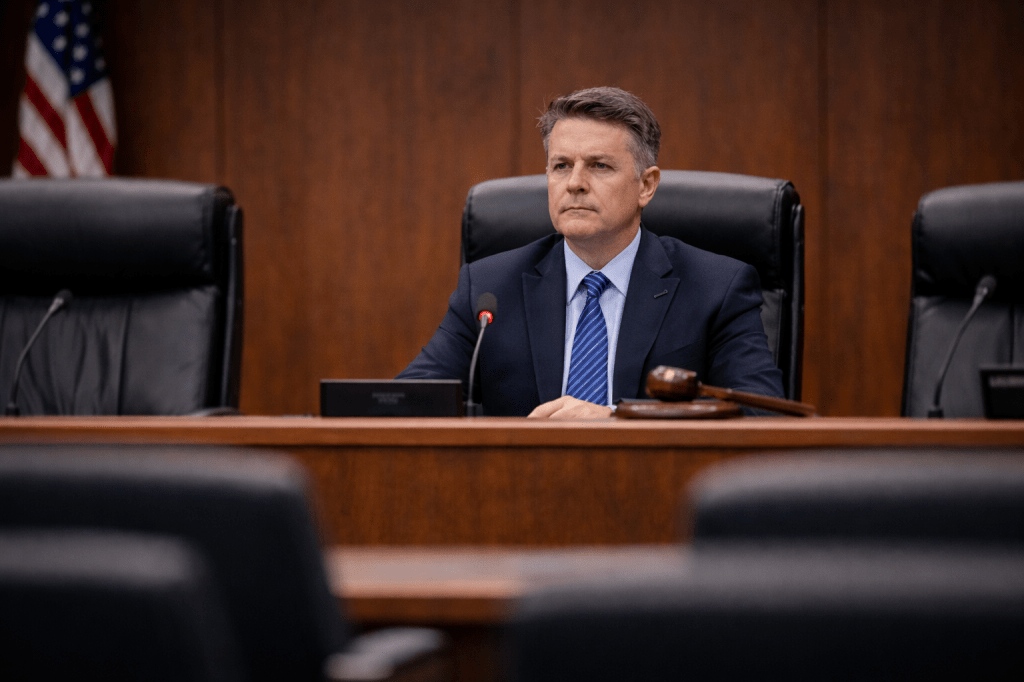
Many people instinctively look to the governor when discussing public affairs.
The governor carries symbolic authority and final signature power. But in most concrete policy matters, by the time the governor appears, the procedural path is already near completion.
The individuals who truly determine whether an issue exists within the system are often not those at the top—but those who control the agenda.
The Real Power of the Chair and Vice Chair
Within committees and hearing structures, the Chair and Vice Chair exercise influence less through public statements and more through procedural control: whether an issue is placed on the agenda and whether it advances to discussion or vote.
They do not primarily control opinions—they control process.
No agenda means no testimony. No testimony means no record. No record means no vote.
If an issue never enters the agenda, institutionally it has not occurred.
The Power to Decide What Gets Discussed Next
Agenda control is one of the most underestimated forms of power.
Who decides what is discussed at the next meeting also shapes public attention, media focus, administrative preparation, and whether a policy enters a timeline.
A timeline is itself a form of authority.
Mature civic capacity is not only about expressing positions—it is about recognizing whether an issue has reached the stage where it can be scheduled, and identifying who has the authority to schedule it.
One Legislator vs. a Coalition: When to Act Alone, When to Act Together
Once the key actor is identified, strategy matters.
Targeted, individual communication is effective when an issue is still forming, remains technical in nature, and has not yet entered open confrontation.
Collective action becomes necessary when the issue is formally on the agenda, clear divisions have emerged, and a vote carries risk.
The strength of a coalition lies not merely in numbers, but in visibility.
Why So Many People Speak into Empty Space
Many fail to influence outcomes because they address the wrong point in the structure.
They speak to the media but never enter the process. They contact individual legislators without reaching the agenda. They speak during moments of emotional intensity but miss the decision window.
Expression occurs—but impact does not.
Civic maturity is not about volume. It is about precision.
Capability Goal: Stop speaking into empty space.
Next Chapter Preview
Chapter 7 | The Five Mistakes First-Time Hearing Participants Most Often Make
Knowing who to approach is not the same as knowing how to speak effectively.
Capability Goal: Avoid ineffective participation.
By Voice in Between
Discover more from 华人语界|Chinese Voices
Subscribe to get the latest posts sent to your email.
