—— When Cost of Living Becomes the Central Issue for Nevada Voters (Part 1)
With roughly two months remaining before the 2026 midterm primary elections, Nevada’s election season has quietly begun.
Community organizations are reminding voters to register. Media outlets are introducing electoral districts. Various groups are publishing voter guides and candidate information. Political discussion is gradually heating up. But unlike previous election cycles, the focus of voter attention this time appears to be shifting in a noticeable way.
More and more conversations are centering on a very concrete and immediate issue:
The cost of living.
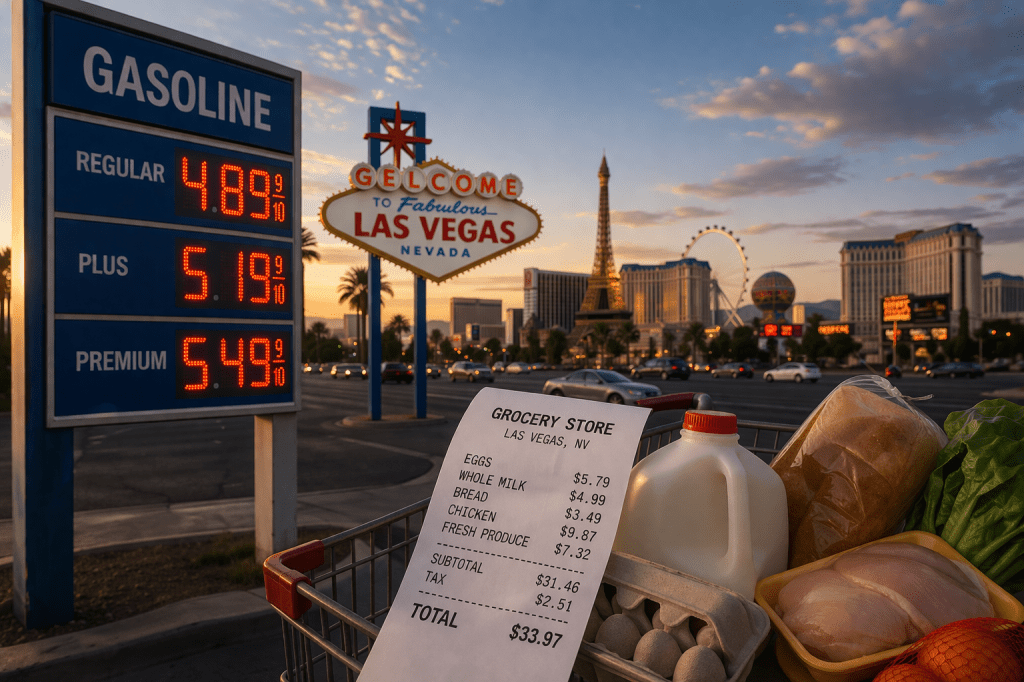
This shift is not accidental. It is a natural response to changing economic realities.
Over the past few months, signs of a slowdown in the U.S. economy have become more visible. Job growth has weakened, and consumer spending has become more cautious. At the same time, oil prices have risen, inflationary pressure remains persistent, and growing tensions in the Middle East have added further uncertainty to the economic outlook.
These macroeconomic developments are gradually translating into everyday pressures for ordinary households.
In Nevada, those pressures are particularly pronounced.
As a state heavily dependent on tourism and service industries, Nevada’s economic structure makes it more sensitive to economic cycles than many other states. When the national economy slows, Nevada often feels the effects earlier. When consumer spending declines and travel weakens, the first sectors affected are typically hotels, restaurants, retail, and related services — industries that form the backbone of Nevada’s employment.
At the same time, the cost of living continues to rise.
Rent is increasing. Insurance premiums are climbing. Electricity bills are going up. Gas prices are rising. These changes may not immediately appear in economic statistics, but they accumulate steadily in monthly household budgets.
For many families, the issue is not simply whether income is declining. It is something more subtle but more tangible: income may not be falling, but expenses continue to rise.
This lived experience often carries more weight than macroeconomic indicators.
Against this backdrop, the cost of living is shifting from a long-standing concern to a more immediate factor shaping how voters think about elections.
Historically, economic concerns have often played a central role in U.S. midterm elections. But in Nevada in 2026, this dynamic may become even more pronounced.
Part of the reason lies in broader economic uncertainty. But another important factor is Nevada’s demographic and urban development trends.
Over the past decade, Las Vegas has experienced sustained population growth. Migration from California and other states has increased demand for housing and contributed to rising costs. At the same time, insurance premiums, utility costs, and everyday expenses have continued to change.
The accumulation of these pressures is leading more residents to ask a simple but increasingly important question:
Is this city becoming harder to afford?
When voters begin to frame their concerns in these terms, election debates tend to shift as well.
This suggests that the 2026 midterm elections may not revolve solely around traditional partisan divides. Instead, they may increasingly center on practical concerns about affordability and economic pressure.
For candidates, this shift carries strategic implications.
Abstract political messaging may resonate less than concrete discussions about everyday life. Conversations about rent, electricity, insurance, and gasoline prices may draw more attention than broader policy debates.
For voters, this shift also changes how they evaluate their choices.
Elections become not only expressions of political preference, but also responses to lived economic realities.
As the primaries approach, discussions about the cost of living are likely to intensify. Candidates will begin offering policy proposals, and organizations will analyze their potential impact.
The contours of Nevada’s 2026 midterm elections are beginning to take shape.
This may become an election defined less by ideology and more by everyday life.
And the cost of living is emerging as one of the most representative issues of this moment.
This series will explore these themes in the coming weeks.
From the perspective of Nevada voters, we will examine several key issues shaping the 2026 elections, including economic slowdown, rising oil prices, housing pressures, healthcare costs, and changes in the labor market.
As Election Day approaches, these practical concerns may prove more influential than ever.
By Voice in Between
Discover more from 华人语界|Chinese Voices
Subscribe to get the latest posts sent to your email.
