— When “Cost of Living” Becomes a Central Issue for Nevada Voters (Part 3)
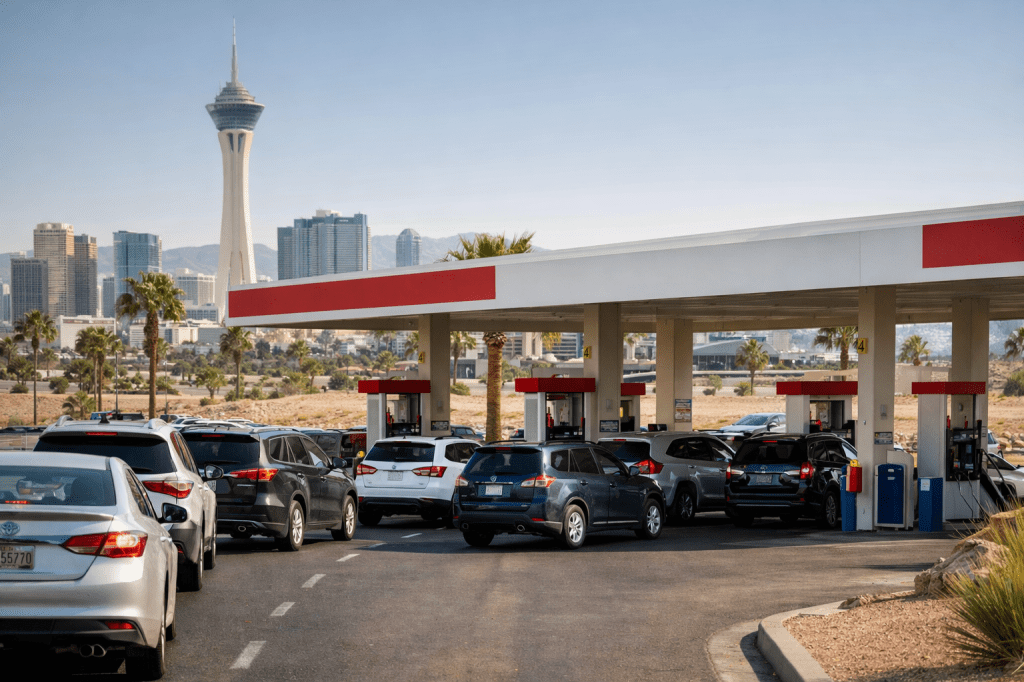
Among all cost-of-living concerns, gas prices are often the easiest to turn into a political issue.
Rising housing costs typically create long-term pressure, while increases in medical expenses tend to occur at specific moments. Gas prices, however, are different. Prices at the pump can change almost daily, and voters feel the impact immediately. For this reason, in many election cycles, gas prices become one of the most sensitive economic indicators influencing public sentiment.
In Nevada, this effect is especially pronounced.
Car Dependence Makes the Impact More Immediate
Unlike many major U.S. cities, Las Vegas is a highly car-dependent city. Limited public transportation, the absence of rail transit, and dispersed employment centers mean that most residents rely on driving to get to work and manage daily life.
Compared with cities like Los Angeles or the San Francisco Bay Area, commuting distances in Las Vegas are not necessarily longer. The key difference is that Las Vegas offers far fewer transportation alternatives. As a result, when gas prices rise, residents have little room to adjust, and household expenses increase almost immediately.
This high level of car dependence makes rising gas prices more directly felt in Nevada and more likely to generate public frustration.
A Service-Based Economy Increases Sensitivity to Gas Prices
Nevada’s economic structure further amplifies the impact of gas prices. Las Vegas relies heavily on tourism and service industries, with many residents working in hotels, restaurants, entertainment venues, and casinos. These jobs typically cannot be done remotely, and irregular work schedules often require employees to rely on personal vehicles.
In contrast, regions with a larger share of technology or professional industries tend to have higher levels of remote work, making them less sensitive to fluctuations in gas prices. In Las Vegas, however, rising gas prices often translate directly into higher household expenses.
For many families, changes in gas prices are not just economic indicators—they are immediate financial pressures.
Tourism Dependence Extends the Impact Statewide
Rising gas prices affect not only residents but also Nevada’s broader economy. A large portion of Las Vegas visitors come from neighboring states, particularly California and Arizona, and many travel by car.
When gas prices increase, short-distance travel may decline, and visitor spending may fall. This can affect hotel occupancy rates, restaurant revenue, and entertainment spending, ultimately influencing employment and income across the state.
As a result, in Nevada, gas prices are not only a cost-of-living issue but also a factor in economic growth.
Higher Gas Prices Push Up Overall Living Costs
Rising fuel costs also increase transportation expenses, which in turn affect the prices of other goods and services. Higher costs for food transportation, construction materials, and deliveries ultimately show up in consumer prices.
This means that rising gas prices can amplify broader cost-of-living pressures, making economic strain more visible to voters.
Why Gas Prices Easily Become Political Issues
Gas prices have three characteristics that make them particularly influential in shaping voter sentiment:
First, they change frequently and are highly visible.
Second, the impact is direct—almost everyone feels it.
Third, they are easy to attribute, with voters often linking price increases to government policies or broader economic decisions.
Because of these factors, gas prices often become a key issue during election cycles.
From Cost of Living to Election Politics
When gas prices rise, voters rarely focus on complex economic indicators. Instead, they feel the immediate impact on their daily lives. Once this perception becomes widespread, it can evolve into political sentiment and ultimately influence election outcomes.
In a swing state like Nevada, this dynamic is particularly important. The state’s cost-sensitive economic structure and relatively fluid voter base make gas prices more likely to evolve into political issues.
This is why, as cost-of-living concerns take center stage, rising gas prices may become an important factor shaping Nevada’s 2026 elections.
(To be continued)
Next:
Housing Pressure: Why It More Easily Becomes a Political Issue in Nevada
By Voice in Between
Discover more from 华人语界|Chinese Voices
Subscribe to get the latest posts sent to your email.
