— The New Reality: The Changing Role of Chinese Americans (Part IV)
Column Introduction | The New Reality: The Changing Role of Chinese Americans
As U.S.–China relations enter a period of long-term competition, the social environment facing Chinese Americans is undergoing profound change. For decades, Chinese Americans were largely viewed as an immigrant community. Today, however, they are gradually becoming an established ethnic group within American society.
This transformation is driven not only by shifts in international relations, but also by the internal development of Chinese American communities. From identity and career paths to community structures and political participation, the social role of Chinese Americans is quietly evolving.
This column focuses not on short-term political events, but on these longer-term, structural changes. Through a series of observations and analyses, we aim to understand how Chinese Americans may reposition themselves—and navigate their future—when U.S.–China relations become a long-term backdrop.
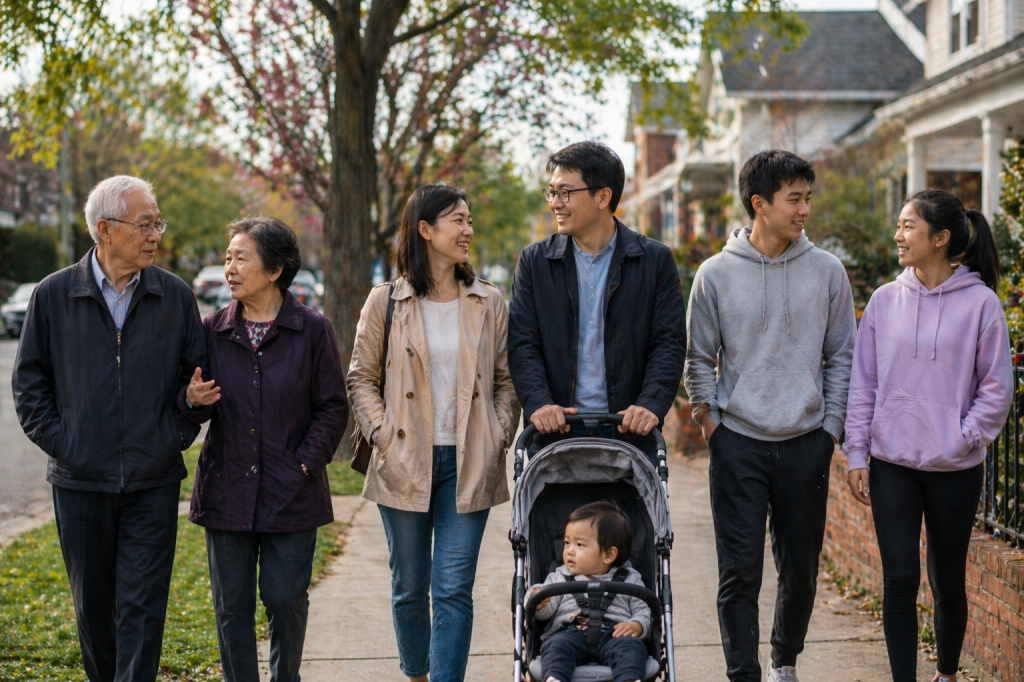
If the changes in U.S.–China relations are first reflected in the external environment, their deeper impact is gradually reshaping the internal structure of Chinese American communities. These changes are not always immediately visible, but they have already begun to alter how communities operate, what issues they prioritize, and how internal relationships are formed.
Against this backdrop, the question posed in the title is not difficult to answer: as U.S.–China tensions increasingly become a long-term condition, structural changes are indeed taking place within Chinese American communities. The more important question is not whether these changes exist, but how they manifest—and how they will shape the future trajectory of the community.
From Relative Homogeneity to Increasing Differentiation
At an earlier stage, Chinese American communities were often perceived from the outside as relatively homogeneous. In media coverage and public discourse, Chinese Americans were frequently treated as a single, unified group, as if internal differences were negligible.
From within, however, this sense of homogeneity was always more apparent than real. Over time, internal differences have become more visible and increasingly structural in nature.
One major source of difference lies in immigration timing. Earlier generations of Chinese immigrants differ significantly from those who arrived in the past two or three decades in terms of economic status, social resources, and familiarity with institutions. Another source of variation comes from background diversity, as immigrants from different regions and professional or educational backgrounds contribute to a more complex community structure.
In the past, these differences could be somewhat softened or overlooked in everyday life. In the current environment, however, they are becoming more visible and are beginning to shape how communities operate.
Structural Differences Between the First and Second Generations
If differences in immigration timing create horizontal variation, generational change introduces deeper structural differentiation.
The participation of first-generation Chinese immigrants in community life has often been organized around familiar networks—hometown associations, business ties, cultural activities, and educational support systems. These networks have played an essential role in helping immigrants adapt and have formed the foundation of traditional Chinese American communities.
In contrast, the social participation pathways of second- and third-generation Chinese Americans are markedly different. Their social networks, career trajectories, and sources of information are more deeply rooted in broader American society rather than within traditional Chinese community structures. For them, the “Chinese community” is no longer the only—or even the primary—social space.
This shift suggests that the community is no longer a relatively closed system bound by language and culture, but is increasingly becoming an open structure connected to wider social institutions.
This generational divide is redefining the boundaries of what constitutes the “Chinese community.”
From Economic Focus to Issue Diversification
For a long time, Chinese American communities tended to focus on a relatively narrow set of priorities: economic advancement, children’s education, and social stability. This emphasis on upward mobility has been a common feature among many immigrant groups.
However, as the community grows and the social environment evolves, this singular focus is beginning to shift. More Chinese Americans are paying attention to a broader range of public issues, including education policy, community safety, racial dynamics, and social equity.
This expansion of concerns reflects not only a change in individual priorities, but also a transformation in community structure. When a community begins to engage with institutional and policy issues, its function extends beyond that of a support system and takes on the characteristics of public expression.
This shift also lays the groundwork for future political participation and social influence.
Tensions Between New Immigrants and Established Communities
An important factor in this structural transformation is the continued arrival of new immigrants. In recent years, immigrants from diverse backgrounds have continued to join Chinese American communities, making the internal structure even more complex.
New immigrants often bring new resources, perspectives, and networks, but they may also introduce points of tension with established communities. Differences may arise in language use, information sources, political attitudes, and interpretations of U.S.–China relations.
These differences do not necessarily lead to conflict, but they do affect communication patterns and the formation of consensus within the community. On certain issues, the community may no longer present a unified voice, but instead reflect multiple or even divergent perspectives.
This phenomenon suggests that Chinese American communities are evolving from a single, unified group into a multi-layered structure.
From “Community” to “Structure”
As internal differences expand, generational divisions deepen, and priorities diversify, Chinese American communities are undergoing an important transformation: from a community centered on culture and mutual support to a more complex social structure.
Within this structure, relationships between different groups are no longer simply about coexistence, but increasingly involve differences in resource distribution, issue prioritization, and modes of expression.
This shift calls for a reconsideration of the very concept of the “Chinese community.” It is no longer a singular entity, but rather a network composed of multiple groups.
Facing the New Reality
Changes in U.S.–China relations do not directly determine the internal structure of Chinese American communities, but they do accelerate the visibility of these structural transformations. In a more complex international and domestic environment, internal differences become more pronounced and harder to reconcile.
In this context, a new reality is emerging: Chinese American communities can no longer be understood as a simple, unified whole, but rather as a structure that is continuously differentiating and reorganizing.
Recognizing this may be essential to understanding the future development of Chinese Americans.
And within this evolving structure, a more fundamental question naturally arises: when the community itself is changing, who can represent it?
This question may well be the central focus of the next essay in this series.
By Voice in Between
Discover more from 华人语界|Chinese Voices
Subscribe to get the latest posts sent to your email.
