The Structure Behind AANHPI Heritage Month
[Column Note | Policy Is Not Made on Election Day]
This is a civic education column that begins with understanding structure. Rather than focusing on political positions or emotional expression, it examines how public decisions are actually shaped—what processes matter, where influence is concentrated, and whether, and how, ordinary people can enter these processes.
Using Nevada as a case, this article breaks down the abstract idea of “representation” into a structure that can be observed, understood, and potentially influenced.
Every May, when AANHPI Heritage Month arrives, similar scenes unfold across the United States: official proclamations, community cultural events, and themed media coverage. For many, these moments signal something meaningful—visibility, a form of public recognition that feels long overdue and gradually expanding.
But if we take a step back from the surface of celebration, a different reality begins to emerge:
this “visibility” is not something that simply happens. It is organized, constructed, and actively produced.
In Las Vegas, this dynamic is particularly visible.
A Carefully Constructed Moment of Visibility
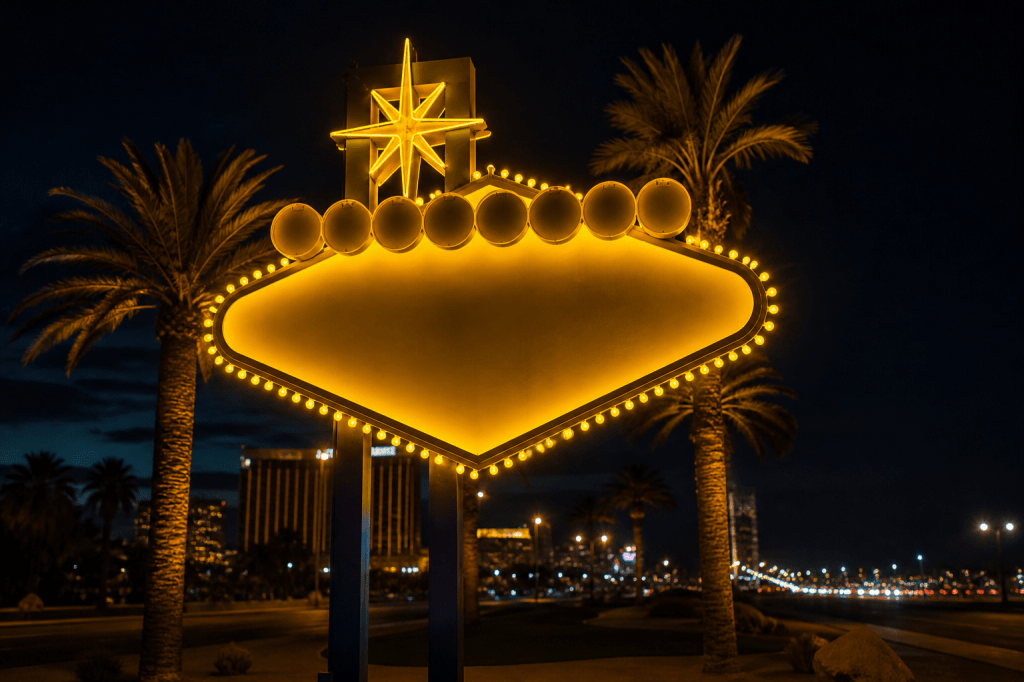
In late April, the iconic “Welcome to Fabulous Las Vegas” sign was lit in gold to mark AANHPI Heritage Month. The event was jointly organized by Clark County Commission, Gold House, and One APIA Nevada, and hosted by Michael Naft and Justin Jones.
On the surface, this is a familiar form of cultural celebration:
lighting, symbolism, media attention, community presence.
But if we unpack it, the event simultaneously accomplishes three things:
First, it creates a highly shareable visual symbol—“a golden Las Vegas.”
Second, it provides a low-risk public appearance opportunity for elected officials.
Third—and more fundamentally—it establishes something deeper:
who has the ability to bring a community into public space.
In other words, visibility is not evenly distributed.
It depends on who organizes, who mobilizes, and who connects to power.
Organizations: Who “Represents” AANHPI Communities?
In the American political system, visibility often requires organizational mediation.
Groups like One APIA Nevada do more than host events. They function as an interface:
- Internally: connecting diverse Asian communities (Chinese, Vietnamese, Korean, Filipino, etc.)
- Externally: linking those communities to government, media, and corporate resources
Through this interface, the broad and often loosely defined identity of “AANHPI” becomes consolidated into something recognizable to policymakers and actionable in political terms.
But this raises a frequently overlooked question:
When an organization “represents” a community, it is also selecting which voices are amplified—and which are not.
This is not necessarily a matter of intent.
It is a structural reality.
Because representation, by definition, involves selection.
Funding: Who Pays for Visibility?
Beneath the surface lies a more practical layer: money.
Events like this—lighting installations, public space usage, media amplification—do not occur spontaneously. They are typically supported by a combination of:
- Corporate sponsorships (especially brands targeting diverse consumer bases)
- Foundation grants (often under “diversity and inclusion” initiatives)
- Government partnerships (with both symbolic and electoral value)
Funding does not automatically imply control.
But it does shape outcomes in a predictable way:
👉 It influences which kinds of narratives are more likely to be presented.
For example:
- Cultural celebration is easier to support
- Policy conflict is harder to stage publicly
- “Safe,” positive, and inclusive messaging is more likely to be elevated
As a result, what gets seen is not just visibility—it is filtered visibility.
Politics: Who Shows Up Matters More Than the Event Itself
In events like these, one detail often matters more than the lighting itself:
who is physically present.
When elected officials attend, speak, and take photos, it signals more than symbolic support. It communicates:
- This is a recognizable voter group
- This is a safe issue to publicly align with
- This is an organization worth engaging with
In local politics, presence is not neutral—it is a form of resource allocation.
Because political attention is scarce.
Where officials choose to appear reflects strategic judgment.
Chinese Americans: Inside the Structure, but Not Always at the Center
This is where the picture becomes more complex.
Within the broader AANHPI framework, Chinese Americans often occupy a dual position:
On one hand,
they are one of the largest and most economically active subgroups,
and should, in theory, be central.
On the other hand,
in many specific events and organizational structures,
their sense of participation appears inconsistent—sometimes even peripheral.
This gap is often shaped by several structural factors:
- Language and information divides (Chinese-language vs. English-language ecosystems)
- Generational differences (new immigrants vs. U.S.-raised populations)
- Different approaches to civic participation (risk-averse vs. engagement-oriented)
The result is a pattern that many people intuitively feel but rarely articulate:
Chinese Americans are often included statistically, but not concentrated in participation.
Which explains a common sentiment:
“These events seem to represent us—but not entirely.”
Visibility Is Not the Endpoint
AANHPI Heritage Month may appear, on the surface, to be about culture.
But in practice, it functions as a window:
It reveals how a community is organized, expressed, and integrated into political structures.
The more important questions, then, are not:
- Are we being seen?
But rather:
- Who is making us visible?
- Do we have a voice in that process?
- If not, do we understand how to enter it?
Because in the American system,
visibility is not an outcome—
it is an ongoing process.
And understanding that process often determines whether a community
simply appears in the spotlight,
or begins to shape how the spotlight is turned on.
By Voice in Between
Discover more from 华人语界|Chinese Voices
Subscribe to get the latest posts sent to your email.
