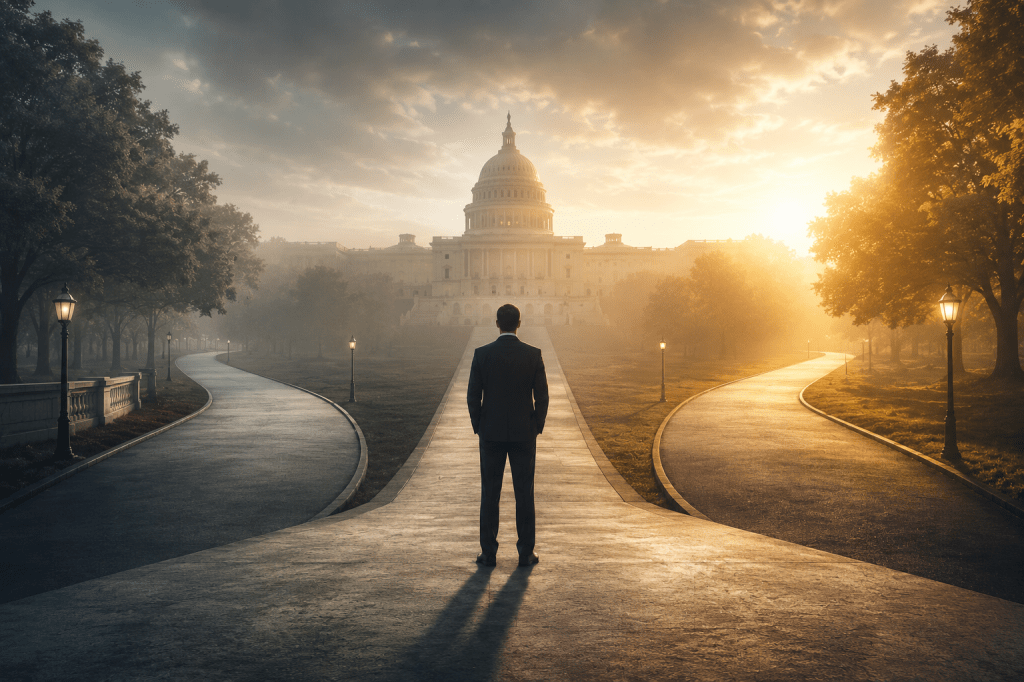
When people discuss American elections, the question they most often ask is simple: who is running?
The media tracks campaign announcements, fundraising numbers, and polling data. Analysts examine voter coalitions and speculate about each candidate’s chances of victory. For most voters, an election seems to begin on the day someone officially enters the race.
Yet for those who follow politics closely, another question is often even more revealing:
Who chose not to run?
Sometimes the most important story in an election is not who entered the race, but who decided to stay out of it.
Nevada’s 2026 election cycle offers several examples of this phenomenon. As the gubernatorial race gradually took shape, a number of figures widely believed to have higher political ambitions ultimately chose not to enter the contest. Some remained in their current positions. Some pursued different offices. Others simply waited.
To many voters, these decisions may appear to be matters of personal preference. From a political perspective, however, they often reveal more about the realities of power than any campaign speech ever could.
Because in American politics, running is a calculation—and not running is a calculation as well.
Politicians Are Calculating More Than Victory and Defeat
Many people still view politics through a somewhat heroic lens. If someone is talented, experienced, and ambitious, the assumption is that they should step forward whenever an opportunity appears.
Real-world politics rarely works that way.
Professional politicians certainly consider whether they are capable of holding a particular office, but they are equally concerned with a different question:
Is this the right moment?
For a rising political figure, the challenge is rarely choosing between action and inaction. More often, it is choosing among multiple possible paths.
Should they run for governor or for Congress?
Should they challenge an incumbent or wait for an open seat?
Should they run this year or two years from now?
To ordinary voters, these questions may sound like calculations about electability. To politicians, however, they are often decisions that shape the next decade—or even the next several decades—of their careers.
As a result, when a prominent political figure chooses not to run, it is often not because they lack ambition. It may simply mean they do not believe this particular opportunity is worth investing their political capital.
Why Didn’t Sisolak Return?
When Nevada’s 2026 election cycle began, many Democrats wondered whether former Governor Steve Sisolak would attempt a political comeback.
On paper, he seemed to possess many advantages. He had statewide name recognition, an established fundraising network, and extensive campaign experience. Judging solely from his résumé, he appeared fully capable of launching another gubernatorial campaign.
Yet he chose not to do so.
Only Sisolak himself knows all the reasons behind that decision, but from a political standpoint, the logic is not difficult to understand.
Any politician attempting a comeback after an electoral defeat must confront a difficult question:
Do I represent the future, or do I represent the past?
Does the coalition that supported me still exist?
Will major donors invest in another campaign?
Have new leaders emerged within the party?
Are voters still looking for the same message they supported years ago?
There are no universal answers to these questions, but they all influence whether a return campaign makes sense.
For many professional politicians, the greatest risk is not losing. The greatest risk is entering the wrong race at the wrong time.
Why Don’t More State Legislators Run for Governor?
A similar pattern can often be observed at the state legislative level.
Whenever a gubernatorial race develops, observers inevitably ask why certain well-known state legislators chose not to run.
At first glance, their absence may seem surprising. Many already possess political experience, media exposure, and established networks of supporters.
But the gap between winning a legislative district and winning a statewide election is much larger than many people realize.
A legislator may be highly visible within their district but largely unknown elsewhere in the state. A fundraising operation capable of winning a local race may not be sufficient to sustain a statewide campaign.
As a result, the question many politicians face is not whether they are qualified. It is whether they are prepared.
Sometimes two additional years of preparation can be more valuable than an immediate campaign.
Why Are Open Seats So Attractive?
One reality is widely understood throughout American politics:
Challenging an incumbent is extremely difficult.
Incumbents possess name recognition, fundraising networks, media attention, and organizational resources. Challengers must not only prove that they are qualified, but also persuade voters to abandon someone they already know.
This helps explain why reelection rates for members of Congress and many local officeholders remain remarkably high.
For that reason, many ambitious politicians are not simply waiting for an election. They are waiting for an opportunity.
When an incumbent retires, resigns, or seeks higher office, competition that had been suppressed suddenly becomes possible. People who previously had no intention of running begin to reconsider. Others who had been quietly watching the political landscape move quickly into action.
This is why political observers pay such close attention to open seats.
For many potential candidates, those are the rare moments when timing, resources, and opportunity align.
Sometimes Choosing Not to Run Is a Statement
Most people think of campaigns as acts of political expression.
In reality, choosing not to run can also send a powerful message.
When a widely respected political figure decides to remain in their current position, they are communicating something about how they view the political landscape.
They may believe that party leaders have already reached a consensus.
They may believe that the race has effectively been decided.
They may believe that a better opportunity will emerge in the future.
For this reason, political observers often pay close attention not only to who enters a race, but also to who remains on the sidelines.
Campaign speeches may reveal a candidate’s aspirations. Decisions about whether to invest political capital often reveal their genuine assessment of reality.
Politicians can project optimism in public.
It is much harder to deceive themselves when making decisions about their own careers.
Politics Is Not Just About Courage—It Is Also About Calculation
Many political stories celebrate courage, vision, and leadership. Those qualities are undeniably important.
But focusing only on those traits makes it difficult to understand why some politicians run repeatedly while others wait patiently; why some challenge incumbents while others focus on open seats; and why some seemingly qualified figures never appear on the ballot at all.
The reality is that politicians are not only idealists. They are also risk managers.
They evaluate resources.
They evaluate timing.
They evaluate opponents.
And they evaluate the opportunities that may emerge years into the future.
So when a well-known political figure does not appear on the ballot, perhaps the first question should not be:
“Why didn’t they run?”
A more revealing question might be:
“What are they waiting for?”
Because in American politics, many of the most important decisions are not made during campaigns.
They are made before campaigns ever begin.
That is why, when observing an election, it is important not only to watch who enters the race, but also to pay attention to who stays out of it.
Sometimes those who remain on the sidelines tell us more about the future than those who step onto the stage.
By Voice in Between
Discover more from 华人语界|Chinese Voices
Subscribe to get the latest posts sent to your email.
