Reflections on the Changing Role of Community Organizations Through the Agenda of the Fifth Chinese American Convention
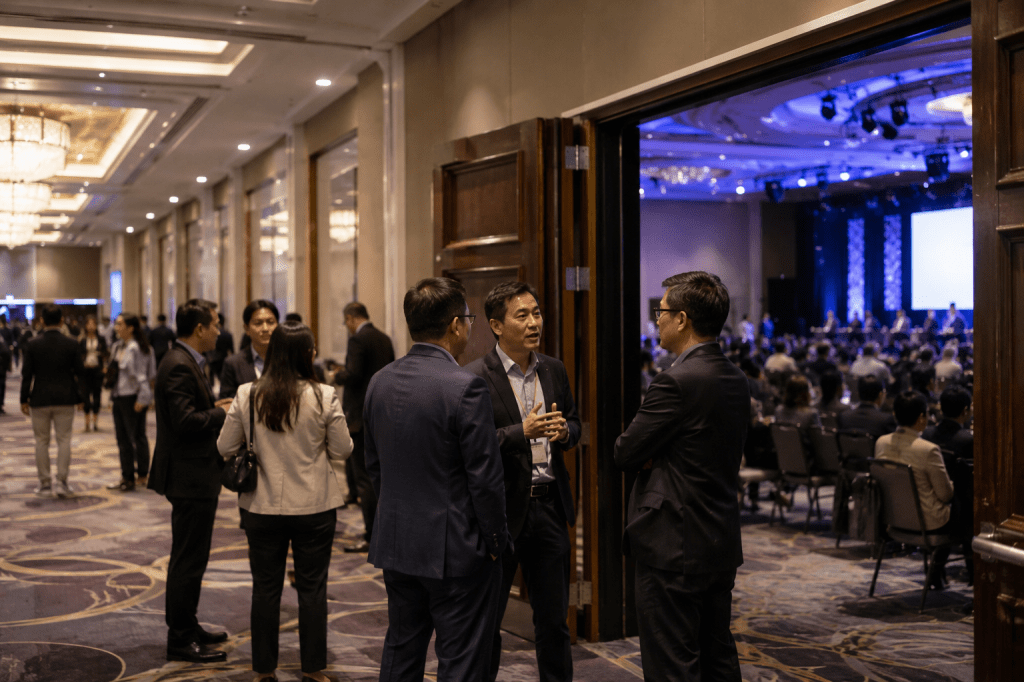
The Fifth Chinese American Convention will soon take place in Las Vegas.
According to the agenda released by the organizers, this year’s convention will feature discussions on artificial intelligence, mental health, youth leadership, civic engagement, civil rights, nonprofit development, the midterm elections, and the future of overseas Chinese communities amid changing global dynamics.
These topics are certainly worth discussing in their own right. Yet perhaps the more interesting question lies elsewhere.
If we compare these themes with the issues most frequently discussed in the daily lives of ordinary Chinese Americans, a noticeable gap quickly emerges. In many Chinese-language community groups and social circles, people are often concerned with housing prices, employment, education, health insurance, investment planning, retirement, and their children’s academic future. Whether among recent immigrants or families who have lived in the United States for decades, conversations often return to these immediate concerns of family life.
Yet at national gatherings organized by Chinese American organizations, those topics rarely occupy center stage. Instead, the agenda is filled with discussions about leadership development, community building, civic participation, youth engagement, and organizational governance—subjects that appear far more public in nature.
This difference does not necessarily mean that one set of concerns is more important than the other, nor does it suggest that community organizations have become disconnected from everyday reality. Rather, it may point to a more significant development: Chinese American organizations today are playing a role that differs from the one they played in the past.
Why Isn’t the Convention Talking About Housing Prices or Retirement?
If we think of a Chinese American convention simply as a large community event, a natural question arises: why are the issues that dominate everyday conversations absent from the main agenda?
The answer may lie in a misunderstanding of what community organizations are expected to do.
For individual residents, community matters are often measured by their impact on daily life. Rising mortgage rates, increasing health insurance costs, college admissions, retirement planning, and job security directly affect families and therefore dominate personal conversations.
Organizations, however, confront a different set of questions.
Their concern is not whether a particular family manages to purchase a home this year, but whether there will still be enough people willing to sustain community institutions ten years from now. Their focus is not merely whether one student gains admission to a prestigious university, but whether the next generation will continue to participate in public life. In other words, residents naturally focus on their own lives, while organizations are compelled to think about the future of the community as a whole.
Viewed from this perspective, the divergence between the concerns of individuals and the concerns of organizations is not surprising at all. It may, in fact, be inevitable.
Chinese American Organizations Were Not Originally Created for These Purposes
If we look back two or three decades, today’s organizations appear quite different from those that served earlier generations of immigrants.
For many first-generation immigrants, Chinese American organizations were primarily vehicles for mutual assistance. Whether they were hometown associations, business organizations, or local community groups, their purpose was often straightforward: helping newcomers find opportunities, build networks, adapt to unfamiliar surroundings, and access support when needed.
Lunar New Year celebrations, Mid-Autumn Festival events, Chinese language schools, scholarship programs, and community fundraising efforts formed the public face of many organizations.
At the time, this model made perfect sense. For a relatively small immigrant population with limited resources, the primary challenge was not influencing society but finding a place within it.
In many respects, these organizations functioned as community service institutions. They helped individuals solve practical problems and helped families establish social connections. The size and developmental stage of the community simply did not require them to take on a broader mission.
As the Community Changes, Organizations Change as Well
Over the past several decades, the demographic composition and social position of the Chinese American community have changed dramatically.
More Chinese Americans are now born and raised in the United States. More immigrant families have transitioned from newcomers to long-term residents. Chinese Americans have become increasingly present in professional fields, corporate leadership, academia, and public institutions. At the same time, the community itself has grown larger and more diverse.
A community numbering in the millions inevitably faces challenges different from those of a much smaller immigrant population.
As the community evolves, its organizations must evolve as well.
For today’s organizations, cultural celebrations alone are no longer sufficient. Someone must cultivate future leaders. Someone must coordinate resources across regions. Someone must build long-term relationships with government agencies, media organizations, and other ethnic communities. Someone must organize collective advocacy when necessary.
These challenges do not solve themselves, nor can they be addressed by individual families acting alone.
Seen in this light, the convention’s recurring focus on youth leadership, civic engagement, nonprofit development, and community advocacy reflects a deeper organizational concern about the future. These organizations may not be worried primarily about this year’s mortgage rates. Instead, they are asking whether the community will retain sufficient organizational capacity ten years from now. They may not be focused on the short-term impact of a particular policy, but rather on whether Chinese Americans will continue to participate in shaping the public decisions that affect their future.
So What Problems Are Chinese American Organizations Trying to Solve?
At this point, a deeper question begins to emerge.
If organizations are increasingly focused on leadership development, public affairs, and community building, are they responding to community needs—or are they helping define those needs?
The answer is not straightforward.
On one hand, organizations are clearly responding to real changes. As communities grow and become more engaged in public life, new challenges inevitably arise. On the other hand, organizations also play a role in determining which issues deserve attention. When an organization invests significant resources in leadership training, civic engagement programs, or national networks, it is not merely responding to existing concerns—it is also shaping how the community understands its future.
This phenomenon is hardly unique to Chinese Americans. Many mature ethnic organizations have undergone a similar transition from cultural and social associations to institutions focused on public affairs and long-term community development. In the process, organizational leaders often become preoccupied with structural and future-oriented questions, while ordinary residents remain focused on immediate concerns. Maintaining a connection between the two is an ongoing challenge.
As the convention approaches, therefore, the most interesting question may not be which speakers will appear on stage or which panels attract the largest audiences. A more revealing question is what Chinese American organizations themselves consider important.
The convention agenda may not reflect the topics that Chinese Americans discuss every day. Yet it likely reflects what these organizations believe the community must prepare for over the next decade.
And perhaps that is one of the most useful ways to understand the changing role of Chinese American organizations today: they are gradually evolving from institutions that serve the community’s present needs into institutions that seek to prepare for its future.
By Voice in Between
Discover more from 华人语界|Chinese Voices
Subscribe to get the latest posts sent to your email.
