— AI and Public Governance Series (Part 2)
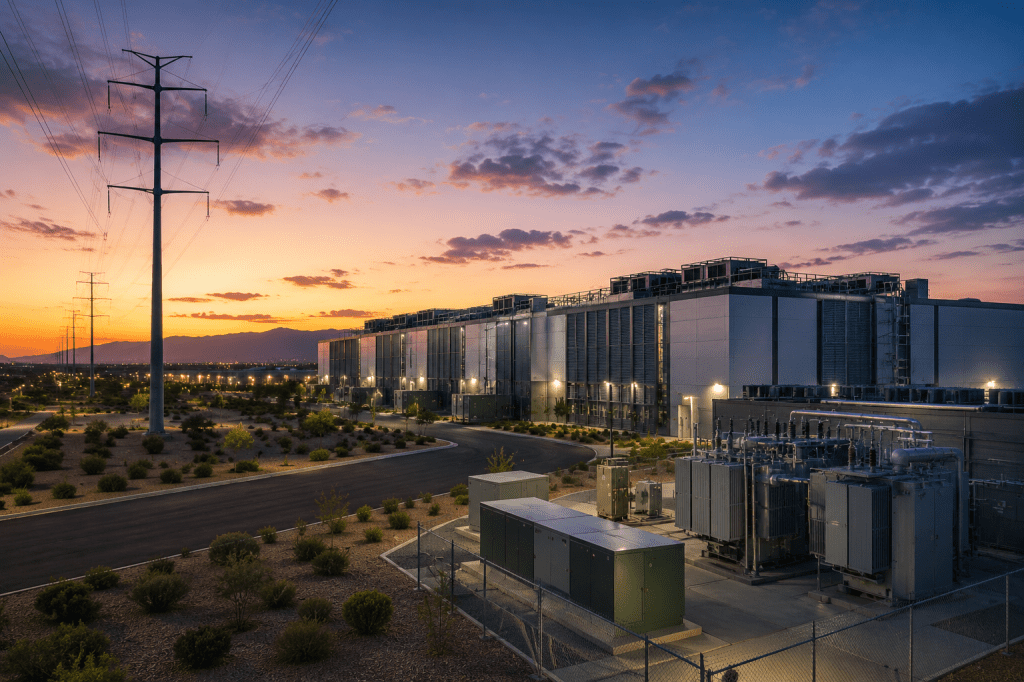
When people talk about artificial intelligence (AI), they usually think of smarter chatbots, more powerful search tools, or increasingly realistic image and video generation. Yet behind these highly visible technological advances lies a much less discussed reality: the rapid growth of AI is bringing the electric grid back to the center of public policy.
If the first article in this series examined why data centers have become part of local governance, the next question naturally follows: why do so many discussions about AI ultimately lead back to a subject that seems far more traditional—electricity?
The answer is straightforward. AI may not require new office buildings, but it cannot exist without a reliable and continuous supply of electricity.
Why Does AI Consume So Much Power?
During the internet era, data centers primarily supported websites, email services, and cloud storage. Although these facilities were already large, their electricity demand was relatively predictable.
AI has fundamentally changed that equation.
Training large-scale AI models requires thousands of high-performance GPUs operating simultaneously. Even after training is complete, the enormous volume of daily user requests—from text generation and image creation to speech recognition and autonomous driving applications—continues to demand vast amounts of computing power.
These servers operate around the clock. They require not only substantial electricity to perform calculations, but also continuous cooling to maintain stable operating conditions.
As a result, companies planning new data centers today are no longer asking only whether sufficient land is available. Increasingly, the more important question is whether adequate electrical capacity exists.
For the AI industry, electricity is no longer simply a public utility. It has become one of the most critical factors shaping where future investment takes place.
Why Is the Electric Grid Becoming a Public Concern?
Until recently, few residents paid much attention to the capacity of the electric grid.
As long as the lights turned on, electricity was simply taken for granted as part of everyday life.
That assumption is beginning to change.
As more large-scale data centers are proposed, local governments are recognizing that the issue extends well beyond the construction of additional buildings. What is changing is the overall pattern of electricity demand across entire communities.
A single AI data center may require hundreds of megawatts—or even close to a gigawatt—of continuous power. Meeting that demand may require new substations, additional high-voltage transmission lines, and long-term expansion of regional electrical infrastructure.
For local governments, this is no longer merely an economic development issue. It is increasingly becoming an infrastructure planning issue.
Who Should Pay for the Infrastructure?
This question has become the subject of growing debate across many American states.
If a company wishes to build a large AI data center that requires new transmission lines or substations, should those investments be financed directly by the company? Or should electric utilities build the infrastructure first and gradually recover the costs through electricity rates?
If more AI companies cluster in the same region, will the long-term costs of upgrading the grid ultimately be shared by all electricity customers?
There is no single answer.
Different states, utility companies, and regulatory agencies are experimenting with different approaches.
As a result, the electric grid is no longer simply an engineering concern. It is increasingly becoming a matter of public policy.
What Does This Mean for Ordinary Residents?
Many people may assume these discussions have little to do with their daily lives.
In reality, they may affect households more directly than they realize.
Over the coming years, residents are likely to remain concerned about familiar issues: whether electricity prices will rise, whether power outages will become less frequent, whether renewable energy can provide reliable service, and whether their communities can continue attracting new industries.
Although these questions appear different, they are connected by a common issue: whether the electric grid can adapt to the rapidly growing electricity demands of the AI era.
In other words, the discussion is no longer simply about how much electricity technology companies consume. It is about how society chooses to plan and invest in its shared public infrastructure.
From Roads to Power Grids: The Changing Objects of Governance
Looking back over the past century, every major technological transformation has required governments to build new forms of public infrastructure.
The railway era demanded railway regulation.
The automobile era required highways, traffic laws, and parking systems.
The internet era brought new frameworks for communications networks and cybersecurity.
Today, AI is presenting another generation of governance challenges.
Local governments are no longer reviewing only data center proposals. They must also coordinate grid expansion, energy supply, land-use planning, and environmental impacts. Issues once discussed primarily among engineers are now appearing regularly on the agendas of public hearings, planning commissions, and local legislative bodies.
AI is therefore changing more than the technology industry.
It is also changing the priorities of public governance.
What Should We Really Be Watching?
Most people do not need to understand every new AI model or follow every technological breakthrough.
What deserves greater attention is something else: every technological revolution eventually creates new public choices.
In the years ahead, discussions about data centers, electrical grids, energy systems, and public investment are likely to appear with increasing frequency in local government meetings. Although these decisions may seem highly technical, they could shape the direction of cities for decades to come.
For that reason, perhaps the most important question in the age of AI is not how intelligent the next generation of models will become. It is whether our public infrastructure can evolve quickly enough to support technological change—and how those decisions will affect the lives of ordinary residents.
Because when AI transforms an industry, it ultimately transforms what a city must build, what it must invest in, and what it must learn to govern.
By Voice in Between
Discover more from 华人语界|Chinese Voices
Subscribe to get the latest posts sent to your email.
