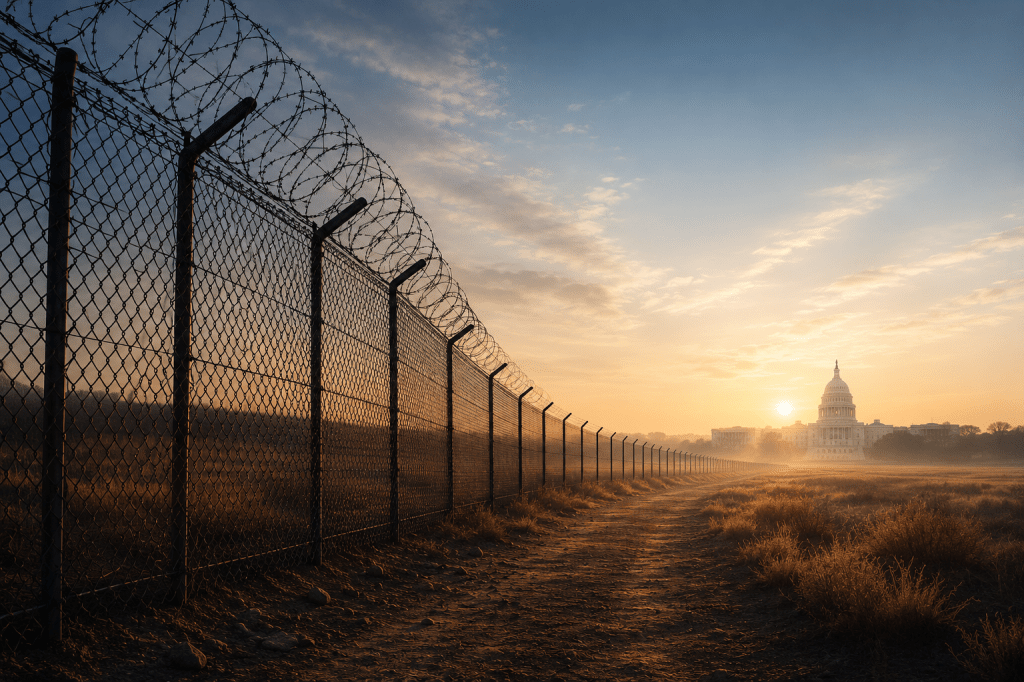
The Chinese Exclusion Act marked the beginning of an era in which the U.S. federal government assumed systematic control over immigration. Over the decades that followed, this system continued to expand, and so did the scope of its authority. What began as the power to determine who could enter the country gradually evolved into the power to decide, in times of national crisis, who could remain in their own homes.
Viewed together, the Chinese Exclusion Act of 1882 and the wartime incarceration of Japanese Americans reveal a historical connection that goes far beyond the fact that both targeted people of Asian descent. Nor is their significance limited to the racism that shaped each policy. More fundamentally, they illustrate how the federal government acquired increasingly sophisticated institutional capacities to regulate populations, verify identities, restrict movement, and, under extraordinary circumstances, intervene in individual liberty.
This does not mean that the Chinese Exclusion Act inevitably led to the incarceration of Japanese Americans. The two events arose in different historical contexts, targeted different communities, and rested on different legal and political foundations. They should not be understood as successive chapters of a single policy. Rather, they reveal a broader transformation in the development of the modern American state. The federal government first claimed greater authority at the nation’s borders. Decades later, it exercised unprecedented authority within the nation’s borders, reaching directly into the daily lives of people who already called the United States home.
From Open Borders to Federal Immigration Administration
During much of the nineteenth century, the United States did not possess anything resembling today’s comprehensive immigration system. Cross-border migration was not entirely unrestricted, but the federal government had yet to establish a nationwide framework of visas, entry inspections, identity documentation, detention procedures, or deportation mechanisms. Immigration remained largely influenced by state and local authorities, while the administrative capacity of the federal government was still relatively limited.
The historical significance of the Chinese Exclusion Act therefore extends far beyond its immediate prohibition on Chinese labor immigration. More importantly, it compelled the federal government to begin systematically classifying people seeking entry into the United States. Certain Chinese immigrants were required to carry official documents, verify their identities, and demonstrate that they belonged to categories exempted from exclusion, such as merchants, students, diplomats, or travelers.
As exclusion laws expanded, so too did the federal bureaucracy responsible for enforcing them. Border inspections, identity verification, detention, deportation, and administrative review gradually became permanent functions of the national government rather than temporary responses to a particular political controversy.
Today, passports, visas, immigration status, and border inspections appear to be ordinary features of every modern state. Yet none of these institutions emerged naturally or automatically. In the United States, many of their essential administrative foundations were constructed through decades of exclusionary legislation and enforcement. Chinese immigrants became one of the earliest groups subjected to systematic federal regulation, and it was largely through managing Chinese immigration that the federal government developed many of the administrative tools that would later be applied far more broadly.
In that sense, the Chinese Exclusion Act transformed more than the lives of Chinese immigrants. It fundamentally altered the relationship between the federal government and human mobility itself. The state no longer passively received those who arrived at its borders. Instead, it increasingly classified, examined, documented, and filtered individuals before deciding whether they belonged within the national community.
The border, in turn, ceased to function merely as a geographic boundary. It became an institutional space where legal identity could be recognized, challenged, or denied.
Identity Documents as an Instrument of State Power
Once the state assumes the authority to determine who may enter the country, it must also establish reliable methods of determining who each individual is. Questions that once relied largely on personal testimony—where someone came from, what legal status they possessed, or whether they qualified for admission—came to depend increasingly on official documents, government records, and administrative procedures.
Under the Chinese exclusion system, identity documentation quickly became central to the exercise of federal authority. Chinese immigrants were expected to prove whether they were merchants, students, diplomats, or members of other legally protected categories. Since ordinary Chinese laborers faced broad exclusion, these legal distinctions often determined whether an individual could enter the country, remain in the United States, or return to a community where they had already established a life.
The system demanded more than documentation; it also granted government officials the authority to interpret that documentation. Even when an individual possessed valid papers, immigration officers could question their authenticity or dispute whether the documents sufficiently established legal eligibility. Long-term residence in the United States did not necessarily eliminate the obligation to prove one’s legal identity again and again.
Here we see one of the defining characteristics of the modern administrative state. Governments need not rely exclusively on overt coercion to regulate populations. They can exercise authority through classification, registration, documentation, and administrative procedure. Identity gradually ceased to function solely as a social fact recognized by one’s community. Increasingly, it became an administrative fact whose legal consequences depended upon government recognition.
Such institutional capacity is not inherently oppressive. Modern societies require population registration, travel documents, border controls, and legal distinctions among citizens, permanent residents, temporary visitors, and many other categories. These systems make large, complex societies governable.
The deeper historical lesson lies elsewhere. When administrative systems are first developed within a framework of racial exclusion, they also reveal an enduring danger. Once systems of classification become intertwined with political fear, public prejudice, or organized campaigns of exclusion, an entire community can come to be viewed not as a collection of individuals but as a category to be monitored, questioned, and managed.
By the early twentieth century, the United States had already developed administrative tools far more sophisticated than those available when the Chinese Exclusion Act was first enacted. The question that remained was no longer simply who could cross the nation’s borders. Increasingly, it became how far those same institutional capacities might reach once they turned inward toward society itself.
When State Power Moved Beyond the Border
By the 1940s, the United States confronted a challenge very different from the labor competition and immigration debates that had shaped the Chinese Exclusion Act. The attack on Pearl Harbor transformed national security into the dominant political priority. In February 1942, President Franklin D. Roosevelt signed Executive Order 9066, authorizing military commanders to designate military areas and exclude individuals from them. Over the months that followed, approximately 120,000 people of Japanese ancestry were forced to leave their homes on the West Coast and relocate to incarceration camps in the interior of the country. Nearly two-thirds of them were American citizens by birth.
At this point, the central question of state power had fundamentally changed.
The Chinese Exclusion Act was primarily concerned with who could enter the United States. The wartime incarceration of Japanese Americans raised a different question: who could remain in their own homes.
The first transformed the border into a place where the federal government selected who belonged inside the nation. The second extended governmental authority far beyond the border, allowing the state to reshape where people lived, worked, studied, and built their daily lives. Both episodes reflected the growth of federal power, but they demonstrated different stages in that expansion.
Perhaps the most striking feature of the wartime incarceration was that many of those affected were not immigrants at all. They were American citizens whose constitutional status should have entitled them to the full protection of the law. Yet because of their ancestry, they came to be treated collectively as potential security risks.
The government did not individually demonstrate that each person had engaged in espionage or sabotage. Instead, wartime fear allowed collective identity to substitute for individual evidence. Ethnic background became a proxy for suspicion, and membership in a community became sufficient reason for government intervention.
From the perspective of institutional history, this marks an important turning point.
The Chinese Exclusion Act demonstrated the federal government’s growing ability to regulate movement across national borders. The incarceration of Japanese Americans revealed that those same administrative capacities could now be directed inward, reaching people who were already members of American society.
This does not mean that the Chinese Exclusion Act caused the wartime incarceration. There is no simple line of historical causation connecting the two. Rather, over the course of six decades, the federal government had developed a far more sophisticated administrative system. Population registration, identity verification, executive authority, interagency coordination, and large-scale administrative logistics had all become substantially more advanced than they had been in the late nineteenth century.
The deeper historical connection lies there.
The Chinese Exclusion Act represented an important stage in the federal government’s ability to manage the border. The wartime incarceration demonstrated how those same institutional capacities could, under extraordinary political circumstances, extend into the interior of society itself.
Why Citizenship Failed to Provide Full Protection
The wartime incarceration remains deeply unsettling because it challenges one of the most fundamental assumptions about citizenship.
During the era of Chinese exclusion, many Chinese immigrants were legally barred from becoming naturalized citizens. Exclusion therefore largely reflected the government’s treatment of those considered outsiders.
The incarceration of Japanese Americans exposed a far more troubling possibility.
Even citizenship itself did not necessarily guarantee protection when the country entered a period of profound national crisis.
The American constitutional system rests upon principles such as due process, equal protection, and individual rights. Under ordinary circumstances, government is not expected to restrict liberty simply because of a person’s ancestry, nor should it deprive individuals of their rights without individualized evidence and meaningful legal process.
Yet during World War II, the executive branch justified its actions on the grounds of military necessity. Congress offered little resistance, and the courts initially failed to provide an effective constitutional check. As a result, thousands of citizens who were formally protected by the Constitution found themselves excluded from its practical protections during one of the nation’s most fearful moments.
This episode illustrates an important truth about constitutional government.
Citizenship is indispensable, but it is not an absolute shield.
Whether constitutional rights remain meaningful depends not only upon the words written into law, but also upon whether executive officials exercise restraint, whether courts are willing to conduct genuine judicial review, whether the press continues to scrutinize government action, and whether the broader public remains committed to treating individuals as individuals rather than reducing entire communities to collective stereotypes.
Seen in this light, the Chinese Exclusion Act and the incarceration of Japanese Americans represent two different expressions of the same institutional question.
The first asked whether the state could deny entry on the basis of national origin or ethnicity.
The second asked whether the state could redefine the relationship between existing citizens and their government on the basis of the very same considerations.
That is why these two histories belong in the same conversation.
Their significance does not lie simply in the fact that both involved Asian Americans. Rather, together they illuminate a question that continues to confront every modern democracy:
When national security and individual liberty come into conflict, who determines where the boundary lies—and what institutions are capable of preventing that boundary from continually expanding?
State Capacity Does Not Mean Unlimited Power
Looking back at these events, it is easy to arrive at an overly simple conclusion: whenever the power of the state expands, individual freedom must inevitably shrink. The historical record, however, suggests a more complicated reality.
No modern society can function without a capable state. Border administration, public health, disaster relief, infrastructure, financial regulation, and national defense all depend upon governments possessing sufficient administrative resources and organizational capacity. A state that lacks these capabilities may struggle to maintain public order or protect its citizens.
The more important question, therefore, is not whether governments should possess administrative power. It is how that power is exercised, under what legal conditions it operates, and what institutional limits are placed upon it.
A government without sufficient capacity may fail to protect society. A government whose authority is insufficiently constrained, however, may gradually infringe upon the very liberties it was established to defend. One of the central challenges of modern constitutional democracy is to maintain a balance between these two imperatives.
This is precisely why the Chinese Exclusion Act and the incarceration of Japanese Americans deserve to be examined together.
The Chinese Exclusion Act contributed to the development of a more comprehensive federal system for regulating immigration and managing the nation’s borders. The incarceration of Japanese Americans demonstrated that once a sophisticated administrative apparatus had been created, the same institutional tools could also be employed within the country itself if legal restraints and democratic oversight proved inadequate.
Population registration, identity documents, border inspections, executive orders, and interagency coordination are not, in themselves, instruments of injustice. They are ordinary features of governance in every modern state. The critical issue is not whether these institutions exist, but how they are used and what safeguards exist to prevent their abuse.
For that reason, the purpose of constitutional democracy is not to prevent the state from developing the capacity to govern. Rather, it is to ensure that governmental power cannot bypass due process, individualized evidence, or judicial review.
A democratic government may regulate its borders, but race should never become the criterion for admission. It may respond to war or genuine national emergencies, but ancestry should never be treated as evidence of disloyalty. It may exercise extraordinary powers in extraordinary circumstances, but those powers must remain subject to legal justification, public scrutiny, and clearly defined limits.
From this perspective, the boundaries of state power are never permanently fixed. They are continually renegotiated through wars, political crises, elections, judicial decisions, legislative reforms, and public debate. Every expansion of governmental authority leaves behind new institutional capacities. Every correction leaves behind new constitutional principles. Together, they shape the continuing evolution of the modern state.
Why America Continues to Revisit This History
The repeal of the Chinese Exclusion Act did not erase the administrative system that had grown around it. America’s immigration institutions continued to evolve, becoming an enduring part of the federal government’s responsibilities.
Likewise, the end of World War II did not eliminate the government’s ability to exercise extraordinary authority during times of national emergency. What changed instead was the willingness of American society to reexamine how those powers had previously been used.
In 1943, Congress repealed the Chinese Exclusion Act, beginning a gradual departure from immigration policies explicitly based on race and national origin. Four decades later, the Civil Liberties Act of 1988 formally acknowledged that the wartime incarceration of Japanese Americans had not resulted from genuine military necessity, but from racial prejudice, wartime hysteria, and failures of political leadership. The federal government issued an official apology and provided financial compensation to surviving former incarcerees.
These actions could not restore lost property, recover lost years, or erase the personal suffering endured by those affected. Nor could they guarantee that similar mistakes would never occur again.
What they did demonstrate, however, was something equally significant.
A constitutional democracy is defined not only by its ability to build institutions, but also by its willingness to examine those institutions critically. It is defined not only by the exercise of governmental authority, but also by the capacity to acknowledge when that authority has been exercised unjustly.
That is one reason why the United States continues to preserve former incarceration sites, establish museums, support historical scholarship, produce documentaries, and incorporate these events into public education. The purpose is not merely to commemorate the suffering of a particular ethnic community. It is to remind future generations that every institution, no matter how legitimate its original purpose, can be distorted by fear, prejudice, and political pressure. Powers that appear reasonable in one historical moment must always remain open to critical examination in the next.
It is within this broader historical context that the documentary And Then They Came for Us acquires significance beyond historical remembrance alone.
The film is not simply about what happened to Japanese Americans during World War II. Nor is it merely an attempt to revisit a closed chapter of American history. Instead, it asks viewers to confront a recurring question in democratic societies: when governments extend their authority beyond previously accepted limits, that expansion rarely announces itself as the abandonment of democracy. More often, it appears in the language of national security, public safety, administrative necessity, or emergency response. And in many cases, those who experience its consequences first are communities with the least political influence and the weakest public voice.
From the Chinese Exclusion Act to the incarceration of Japanese Americans, the United States witnessed a profound transformation in the scope of federal authority. The government first asserted greater control over those seeking to enter the country. Later, during wartime, it asserted unprecedented authority over people who were already part of the nation. It first required outsiders to prove their identity. Later, it expected citizens to demonstrate their loyalty.
What changed was not simply the population being governed. It was the expanding reach of the modern state into the everyday lives of those under its authority.
Seen from this perspective, these two historical episodes should not be connected merely because both involved Asian Americans. Nor should they be understood as evidence of a single, uninterrupted narrative of ethnic persecution.
Their deeper significance lies elsewhere.
Together, they reveal how a modern state gradually acquires the institutional capacity to govern an increasingly complex society—and how a constitutional democracy must continually redefine the limits within which that power may legitimately be exercised.
The Chinese Exclusion Act encouraged the federal government to develop systematic mechanisms for managing those who entered the country. The wartime incarceration of Japanese Americans forced the nation to confront a far more difficult question: once the state possesses the capacity to govern society itself, who ensures that it does not place entire communities outside the ordinary protection of constitutional rights?
That question did not disappear with the end of World War II.
It continues to reappear whenever democratic societies debate immigration, border security, emergency powers, national security, and civil liberties.
History leaves behind more than memories of past injustice. It also leaves behind an enduring institutional challenge: a modern state must possess sufficient capacity to protect society, yet it must also remain subject to sufficiently strong constitutional constraints to prevent that very capacity from exceeding its legitimate boundaries.
Further Resources
Documentary Recommendation: And Then They Came for Us (2017)
Directed by Abby Ginzberg and Ken Schneider, this documentary combines first-hand testimony from survivors—including George Takei—with archival footage and historical records to examine the incarceration of Japanese Americans during World War II. It also explores the lasting implications of this history for American democracy, civil liberties, and public memory. For readers interested in exploring the themes discussed in this article in greater depth, it is a highly recommended documentary.
By Voice in Between
Discover more from 华人语界|Chinese Voices
Subscribe to get the latest posts sent to your email.
