— Why the Cost of Living Often Feels Easier to Rise Than to Fall
In the previous article, we explored the difference between inflation and the cost of living. Inflation measures the rate at which prices change across the economy, while the cost of living is reflected in the bills that every household has to pay every day. For that reason, a decline in inflation does not necessarily mean that the cost of living will immediately fall.
That naturally leads to another question.
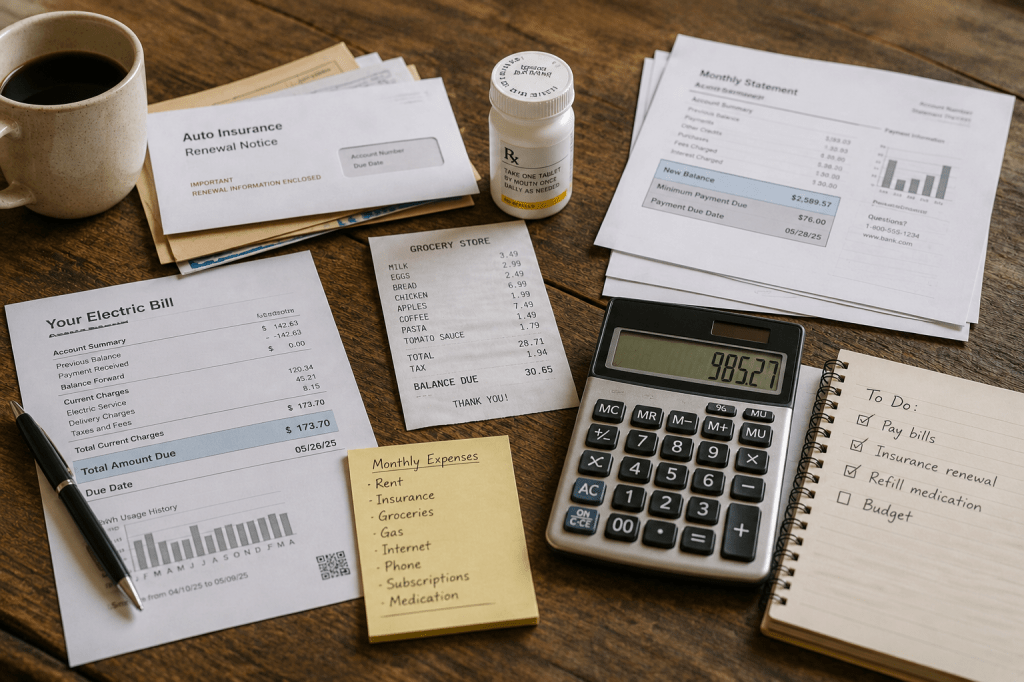
Your auto insurance premium goes up when it’s time to renew. A generic prescription medication that you’ve been buying for years costs much more than it did just a few years ago. Netflix announces another price increase, raising your monthly subscription once again. Each individual increase may amount to only a few dollars, but together they raise a simple question: Why do so many prices rarely come back down once they’ve gone up?
The answer is not simply “because of inflation.” Different goods and services are priced in different ways, and they follow different pricing mechanisms.
If Inflation Has Come Down, Why Haven’t Prices?
Many people naturally expect that if the news says inflation is falling, prices should gradually return to where they used to be.
The confusion comes from mixing up two different concepts.
Inflation measures how quickly prices are rising—not the price level itself. If a product increased in price by 10 percent last year but only 2 percent this year, economists say inflation has declined. Yet consumers are still paying more than they did a year ago; prices are simply rising more slowly than before.
Once prices have increased, they do not automatically return to previous levels simply because inflation has eased. Unless new forces push prices lower, they usually remain where they are.
Most Prices Reflect More Than One Cost
Consumers see the final price. Businesses see an entire cost structure.
When a restaurant raises menu prices, the decision is rarely based only on the price of beef or eggs. Labor, rent, utilities, insurance, equipment, and many other operating expenses all play a role. The same is true for a bottle of generic eye drops or any other generic medication. Its retail price reflects manufacturing, transportation, wholesalers, pharmacies, and the broader supply chain—not just the cost of producing the drug itself.
That is why a decline in one particular cost does not necessarily lead to a lower selling price. Final prices reflect the combined effect of many different costs rather than any single one of them.
Many Living Expenses Are Not Repriced Every Day
Some prices change constantly. Others hardly change at all until the next contract or renewal period.
The prices of fruit, eggs, or milk at the grocery store may fluctuate with supply and demand. Rent, however, changes according to lease agreements. Auto and health insurance premiums are adjusted when policies are renewed. HOA fees are often based on annual budgets. Internet service, mobile phone plans, and many subscription services are also reviewed only at specific intervals.
For consumers, this means that many of the expenses most closely tied to everyday life remain unchanged for long periods once a new price takes effect. People naturally hope those prices will return to previous levels, but unlike weekly grocery specials, they are not repriced every day.
Consumers Also Help Shape Prices
Prices are influenced not only by costs, but also by consumer behavior.
When a price increase causes large numbers of customers to stop buying a product, businesses often rethink their pricing strategy. But when consumers continue purchasing despite higher prices, the new price level is more likely to become permanent.
Netflix provides a familiar example. Its subscription fee was relatively low when the service first launched, but after multiple price increases, today’s standard monthly rate is significantly higher. The company occasionally offers promotions, yet it has rarely returned to its earlier base price. One reason is simple: after years of raising prices, it found that many subscribers continued to stay.
Of course, not every product follows the same pattern. People who rely on long-term prescription medications, housing, or insurance often cannot simply stop buying because prices have risen. In those cases, the reasons prices remain high are different. Some are driven by costs, others by market structure, competition, contracts, or consumer behavior.
Why Do Some Things Keep Getting Cheaper?
If many prices rarely fall after rising, why do televisions, computers, and many consumer electronics become less expensive over time?
The answer lies in competition.
Technology improves rapidly, new products are introduced every year, and manufacturers compete intensely for customers. If one company keeps prices too high for too long, consumers can often switch to another brand. Competition therefore pushes companies to improve their products while also putting downward pressure on prices.
This shows that there is no single rule governing how prices change. Different goods and services behave differently because their costs, competitive environments, and consumer choices are different.
Understanding How Prices Are Formed Matters More Than Expecting Them to Return
Everyone hopes that when inflation comes down, prices will eventually return to where they used to be.
That expectation is understandable, but prices are rarely determined by a single factor. Some continue to fall because of technological progress and market competition. Others remain elevated because of contracts, operating costs, market demand, or industry structure.
So when auto insurance premiums, prescription medications, or subscription services fail to return to their previous prices, it does not necessarily mean they all follow the same pattern. Understanding the different forces that shape prices helps explain why the cost of living so often feels much easier to rise than to fall.
By Voice in Between
Discover more from 华人语界|Chinese Voices
Subscribe to get the latest posts sent to your email.
