— Cross-Border Retirement Series, Part Two
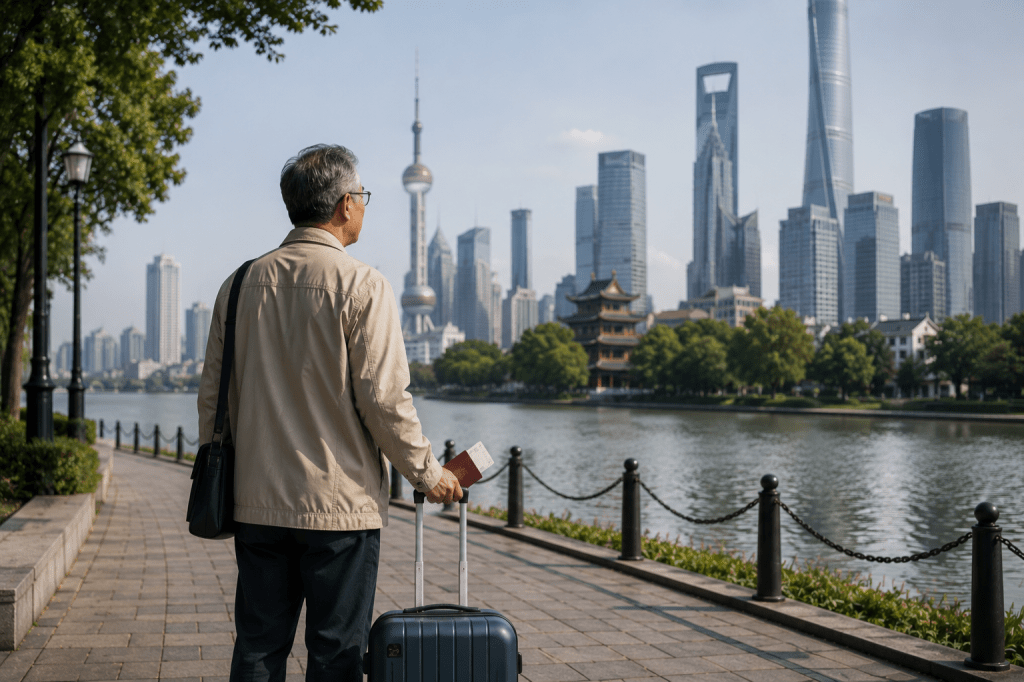
The previous article discussed a question that is becoming increasingly relevant for some first-generation Chinese immigrants who have acquired foreign citizenship: whether to return to mainland China and live there for an extended period after retirement.
For many, the idea does not seem unfamiliar. China is where they were born and raised. The language and way of life remain familiar, and some still have siblings, relatives, friends, or even a home there. Over the past several decades, they may also have returned to China many times for family visits or extended stays. It is therefore easy to imagine retirement in China as simply staying longer than they did before.
Once serious planning begins, however, the situation often turns out to be more complicated.
The reason is not that China has suddenly become unfamiliar. It is that decades of immigrant life have changed a person’s legal status and, at the same time, changed the relationships that connect that person to two different countries.
The China You Know and Your Legal Status in China Are No Longer the Same Thing
In everyday conversation, first-generation immigrants may naturally talk about “going back to China,” “going home,” or even “returning to the country.”
These expressions make sense emotionally and culturally. Regardless of what citizenship someone later acquired, China may remain one of the most familiar cultural environments in that person’s life and the place where much of his or her early life was formed.
Under China’s current legal framework, however, overseas Chinese who retain Chinese citizenship and ethnic Chinese who have acquired foreign citizenship do not have the same legal status.
An overseas Chinese citizen living abroad remains a Chinese national. A former Chinese citizen who has acquired foreign citizenship, by contrast, enters and resides in China as a foreign national.
During a short visit, that distinction may have little visible effect on everyday life.
Someone can enter China with a foreign passport, stay for several weeks or months, visit relatives, travel, shop, and go about daily life without much difficulty. As long as the visa and permitted period of stay are in order, it may be easy to forget that the person’s legal relationship with China is no longer what it once was.
Long-term retirement makes that distinction more relevant.
How long someone can remain in China, what type of residence arrangement is available, how healthcare and financial services are handled, and how long-term residence may interact with taxes, assets, and family matters all need to be considered on the basis of the person’s current legal status.
That creates an important institutional difference between “going back for a while” and building a long-term life in China.
What Changed Was More Than a Passport
Acquiring foreign citizenship obviously changes a person’s legal status. But viewing that change simply as exchanging one passport for another understates what several decades of immigrant life can mean.
After working abroad for twenty or thirty years, many parts of a person’s life have become established there.
Retirement income may come from that country’s social security system and retirement accounts. Healthcare coverage may have been built there. Bank and investment accounts may be located there, and adult children may also live there. Citizenship brings additional tax obligations, civic rights, and other legal relationships.
In ordinary life, these arrangements are spread across many different areas and rarely feel like one large “cross-border issue.”
They begin to come together, however, when someone plans to spend most of retirement in China.
A retiree may live day to day in China while pension income continues to arrive in a U.S. account. Most medical care may take place in China while retirement healthcare coverage remains centered in the United States. Adult children may live abroad while siblings and longtime friends remain in China. Housing, assets, and family responsibilities may also be divided between the two countries.
At that point, changing where one lives is no longer simply a geographic move. It requires reconsidering the institutional and family relationships that have developed over several decades.
Why Didn’t It Feel This Complicated Before?
A natural question follows: if someone has returned to China many times before and generally encountered few difficulties, why should retirement require so much more thought?
The main reason is that a short stay and long-term retirement require different levels of stability.
During a family visit, most important arrangements remain abroad. Bank accounts, health insurance, retirement assets, and legal relationships do not change. An unfamiliar issue can often be postponed, and a health problem may be handled by adjusting travel plans.
Long-term retirement requires those arrangements to work for years rather than weeks or months.
If someone spends most of the year in China, healthcare cannot be treated only as an occasional out-of-pocket expense, and money management cannot depend solely on short-term currency exchanges. Over time, residence status, healthcare, assets, and family support become part of the structure of everyday life.
More importantly, these issues may not become obvious immediately after retirement.
In one’s sixties and in good health, it may still be easy to manage cross-border affairs independently and change plans when necessary. At a more advanced age, matters that once seemed minor can gradually become much more important.
Short-term experience in China can therefore help someone decide whether the living environment feels comfortable, but it cannot fully answer whether the same arrangement will work as a long-term retirement plan.
The Most Easily Overlooked Gap Is Between Familiarity and Legal Status
A naturalized Chinese immigrant considering retirement in China is obviously not in the same position as a foreign retiree who has never lived there.
Someone born and raised in China usually does not need to learn the language from the beginning and is likely to remain familiar with local food, social customs, and everyday interactions. Even after many years abroad, that experience can make readjustment considerably easier.
Legally, however, both are foreign citizens.
That gap is one of the most distinctive features of cross-border retirement for naturalized Chinese immigrants.
Daily life may feel deeply familiar, while access to the country’s institutions must now be approached through the person’s status as a foreign national.
This does not mean that retirement in China is necessarily difficult or impractical. People with qualifying family ties in China may be able to obtain residence through existing family-reunion arrangements, while others who meet relevant requirements may have additional paths to longer-term residence.
What needs to change is the expectation.
Being born in China does not mean that someone can plan retirement today according to the rules and assumptions that applied decades ago when that person was still a Chinese citizen. It is useful to distinguish from the beginning between what remains familiar and what now needs to be handled differently.
Cross-Border Retirement Means Living Between Two Systems
When first-generation immigrants left China earlier in life, the process often involved moving from one society into another.
Returning to China after retirement is not necessarily the reverse of that process.
Decades of life abroad do not disappear when someone moves back to China. Pension income, assets, adult children, tax obligations, and citizenship may remain connected to the other country. At the same time, everyday residence, healthcare, and some family relationships may once again be centered in China.
For naturalized Chinese immigrants, cross-border retirement is therefore less about leaving one system and reentering another than about having two systems remain part of the same retirement life.
That arrangement can offer considerable flexibility. Overseas retirement income can support daily life in China, while family and social relationships in the country of citizenship can be maintained.
But that flexibility also has to be managed.
While someone is healthy, the connection between the two sides is usually maintained by that person. As age advances, international travel may become more difficult, healthcare needs may increase, and help may eventually be needed to manage financial or family affairs. At that point, whether the cross-border arrangement can continue to function smoothly becomes a much more practical question.
Understand Your Status Today Before Deciding Where to Retire Tomorrow
Discussing legal status is not meant to create another obstacle to retirement in China.
The opposite is true. The earlier someone understands how his or her status has changed, the easier it becomes to build retirement plans on realistic assumptions.
For first-generation Chinese immigrants who have acquired foreign citizenship, China can remain an extremely familiar place to live and may very well become the primary place of residence after retirement.
But that choice is no longer the same as the traditional idea of simply “returning home to retire.”
It has to take into account both current foreign citizenship and the retirement income, healthcare coverage, assets, and family relationships built during decades of life abroad.
In other words, what needs to be reconsidered is not a person’s emotional connection with China, but the practical relationships that now connect that person to two countries.
Once that distinction is understood, the questions that follow become easier to evaluate: whether long-term life in China is suitable, what needs to be prepared in advance, and whether the arrangement can continue to work as a person grows older.
About This Series
The Cross-Border Retirement series focuses on first-generation Chinese immigrants who were born and raised in China, later settled abroad and became foreign citizens, and are now reconsidering whether to live in mainland China for extended periods during retirement.
For this group, China remains familiar in language, culture, and everyday life. At the same time, legal status, retirement income, healthcare coverage, assets, and family relationships have increasingly become divided between two countries.
Retiring in China is therefore not simply a decision about where to live. It also requires managing these cross-border relationships.
The series will continue to examine the personal choices, long-term care needs, residence arrangements, healthcare, pensions, taxation, and financial management involved in making this kind of retirement work in practice.
By Voice in Between
Discover more from 华人语界|Chinese Voices
Subscribe to get the latest posts sent to your email.
