— Cross-Border Retirement Series, Part Three
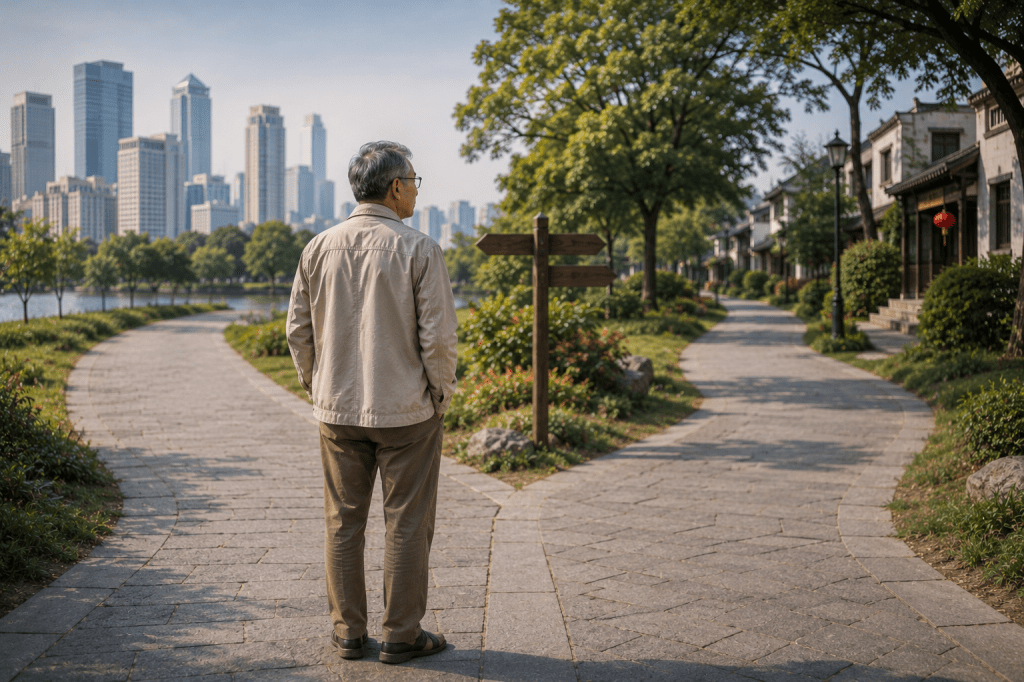
The first two articles in this series discussed why more first-generation Chinese immigrants who have acquired foreign citizenship are considering retirement in China. They also examined an important change that can easily be overlooked: after decades of living abroad, a person’s legal status, family relationships, and ties to social institutions may be very different from what they were when that person first left China.
For this group, retiring in China is no longer simply a matter of returning to a place where they once lived. It means reorganizing the next several decades of life in China as a foreign citizen.
When people begin planning seriously, they often start by researching policies.
What kind of visa will I need? Can I live in China long term? How will healthcare work? Can I continue receiving my pension or retirement benefits?
These are all important questions. But before spending too much time studying specific rules, there are several more fundamental questions worth considering first.
A visa determines whether you can stay. A pension determines where your income comes from. Healthcare coverage determines how medical expenses will be paid. All of these matter, but none of them can answer the most basic question for you:
Is this kind of retirement actually right for me?
One way to begin answering that question is to ask yourself five others.
Question One: What Would You Truly Miss If You Left?
When people discuss retiring in China, the easiest thing to compare is cost.
Where is housing cheaper? Where does food cost less? Where are everyday services more affordable? It is not difficult to put those numbers into a spreadsheet.
But retirement is not a shopping decision.
After living in one place for decades, what is hardest to leave behind is often not a particular product or expense, but the life that has gradually taken shape there.
For some people, it is children and grandchildren. For others, it is friends and a familiar community. Some want to speak Chinese every day and eat the food they grew up with, while others have become accustomed to life abroad and may not want to readjust to a different environment.
These things are difficult to assign a dollar value to, yet they may matter far more than saving several hundred dollars a month.
For first-generation immigrants, the choice can be particularly complicated.
China is where they were born and raised, but decades abroad have also created another daily life. Their hometown may still feel familiar, while the city where they now live may also have become an important part of who they are.
So before comparing the cost of living between two countries, it is worth asking:
What in my current life would genuinely affect my happiness if I lost it?
The answer will be different for everyone, but it will influence almost every decision that follows.
Question Two: Are You Planning for Yourself at Retirement, or for Yourself at 80?
This is one of the easiest traps to fall into when planning for retirement.
Someone considering retirement in their sixties will naturally imagine the future based on how they feel today.
They can drive, fly internationally, go to the doctor on their own, and manage banking, housing, and paperwork independently. Under those circumstances, living in China—or dividing the year between two countries—may not seem particularly difficult.
But retirement can last twenty or even thirty years.
A lifestyle that works well at 65 may not work nearly as well at 80.
Health can change. Mobility can decline. Tasks that once seemed routine may gradually require help from other people.
That means evaluating a retirement destination requires more than asking:
“Would I be comfortable living there today?”
It also requires asking:
“If my health is not as good fifteen years from now, could this way of life still work?”
From this perspective, retirement planning is not really about the day someone retires. It is about a stage of life that may continue changing for decades afterward.
Question Three: When You Need Help, Who Can Actually Be There?
For someone in good health, distance can seem like little more than the price of an airline ticket.
For an older person, distance can mean something very different.
If you are suddenly hospitalized, who can get to the hospital?
If an important medical decision needs to be made, who can be there with you?
If you temporarily cannot drive, cook, or live independently, who can actually provide help?
This is not only a question about children.
Siblings, longtime friends, neighbors, community relationships, and professional care services can all form part of a person’s support network.
For first-generation naturalized Chinese immigrants, this deserves particular attention.
Some still have siblings and old friends in China, while their adult children have built their lives entirely abroad. At the beginning of retirement, returning to China may feel like reconnecting with a strong and familiar social network. Ten or twenty years later, however, those siblings and friends will also have grown older. By the time substantial long-term care is needed, the people who once seemed most available may no longer be able to provide it.
At the same time, having children abroad does not mean they will automatically be able to provide all the care their parents may eventually need.
A practical way to think about this is:
Do not ask only how many people you know. Ask how many people could actually be there when you need help.
Question Four: If Your Life Spans Two Countries, Will Your Existing Support Systems Still Connect?
Cross-border retirement differs from ordinary retirement in one important way.
A person can move to another country, but many of the institutional relationships built over several decades do not automatically move with them.
For first-generation Chinese immigrants who have acquired foreign citizenship, this is especially relevant.
Retirement income may come from abroad. Healthcare coverage may be based in the country where they previously lived. Bank and investment accounts may remain there, and adult children may also be there, while everyday retirement life takes place in China.
At the same time, the retiree is now living in China as a foreign citizen.
What type of long-term residence is available, what healthcare arrangements can be obtained, and how certain public and financial services can be accessed cannot simply be assumed on the basis of what was possible decades earlier as a Chinese citizen.
While someone is healthy, this separation may cause relatively little difficulty.
The complications often become more visible when medical care becomes frequent, long-term medication is needed, or a person becomes more dependent on healthcare, financial, and public services.
That is why it is important to understand not only the separate rules governing visas, healthcare, pensions, banking, and taxation, but also whether arrangements belonging to two different countries can work together well enough to support a stable long-term retirement.
This is also why cross-border retirement cannot be evaluated only by comparing living costs.
You may move to China, but the pension, healthcare coverage, financial accounts, and civic relationships you built over decades in another country do not automatically move with you.
Question Five: If You Could No Longer Travel Freely Between the Two Countries, Where Would You Want to Live?
This may be the hardest of the five questions to answer.
For many naturalized Chinese immigrants, the ideal version of cross-border retirement is to spend several months a year in China and several months abroad.
Live in one place when the weather is pleasant, return when you want to see your children, fly back when something needs to be handled, and return to China again when you miss the life there.
While someone remains healthy, this arrangement may be entirely workable.
But it depends on an assumption that is easy to overlook:
You are still able to travel freely.
As people age, long international flights can become increasingly difficult. An illness, a fall, or simply reduced mobility may make what was once an easy trip much harder.
At that point, “living in both places” may gradually have to become “living mainly in one place.”
For someone who has acquired foreign citizenship, that possibility has additional practical consequences.
If China eventually becomes the primary place of residence, how will long-term residence, healthcare, and care needs be handled?
If the person ultimately returns to the country of citizenship, what happens to housing, property, and social relationships in China?
Before choosing a cross-border retirement, it is therefore worth asking a difficult but practical question:
If I eventually had to choose only one place, where would I want to stay?
The answer may be China.
It may be the country where you have already lived for several decades.
And the answer itself may change as health, age, and family circumstances change.
What matters is not finding a permanent answer today, but recognizing that the ideal arrangement of moving freely between two countries may not last forever.
The Real Comparison Is Not Between Two Countries, but Between Two Futures
Discussions about retiring in China can easily turn into comparisons such as “Is China better than the United States?” or “Is China cheaper while America offers better protections?”
Those comparisons rarely produce a truly useful answer.
The countries may be the same for everyone, but individual lives are not.
Someone whose children all live abroad while most relatives and friends remain in China may reach a different conclusion from someone whose entire family and social circle have become rooted overseas. A healthy person with substantial financial resources may also reach a very different conclusion from someone who requires continuing medical support.
For first-generation Chinese immigrants who have acquired foreign citizenship, there is another variable that does not normally arise in domestic retirement planning:
Their legal status and primary social protections may belong to a different country from the one in which they plan to live.
So the more useful comparison is really between two possible futures:
If I remain in the country where I live now, what might my life look like ten or twenty years from now?
If I retire in China, what might my life look like ten or twenty years from now?
Once cost of living, legal status, changes in health, family support, and institutional protections are placed into those two possible futures, the choice may gradually become clearer.
Visas, healthcare coverage, pensions, and taxes certainly need to be researched.
But those systems should be tools that help make a retirement choice possible. They should not make the choice for you.
For first-generation Chinese immigrants who have acquired foreign citizenship, planning for cross-border retirement is not really about finding a way to “go back to the past.”
Their legal status has changed. Their family structure may have changed. The hometown they remember has changed as well.
What they actually need to plan is this:
How can I use the legal status, family relationships, and resources I have today to build a life that can work for the next twenty or thirty years?
About This Series
The Cross-Border Retirement series focuses on first-generation immigrants who were born and raised in China, later moved abroad and acquired foreign citizenship, and are now considering whether to return to mainland China for long-term retirement.
For this group, retirement in China may offer advantages in language, culture, cost of living, and family or social connections. At the same time, living there as a foreign citizen raises practical questions involving long-term residence, healthcare coverage, pensions, taxation, financial management, and care at an advanced age.
The purpose of this series is not to tell readers which choice is better. It is to help them understand how to evaluate whether a retirement arrangement can continue to work through the different stages of later life when one person’s life has already come to span two countries.
By Voice in Between
Discover more from 华人语界|Chinese Voices
Subscribe to get the latest posts sent to your email.
