From Eligibility and Direct Deposit to Contacting Social Security — A Step-by-Step Guide
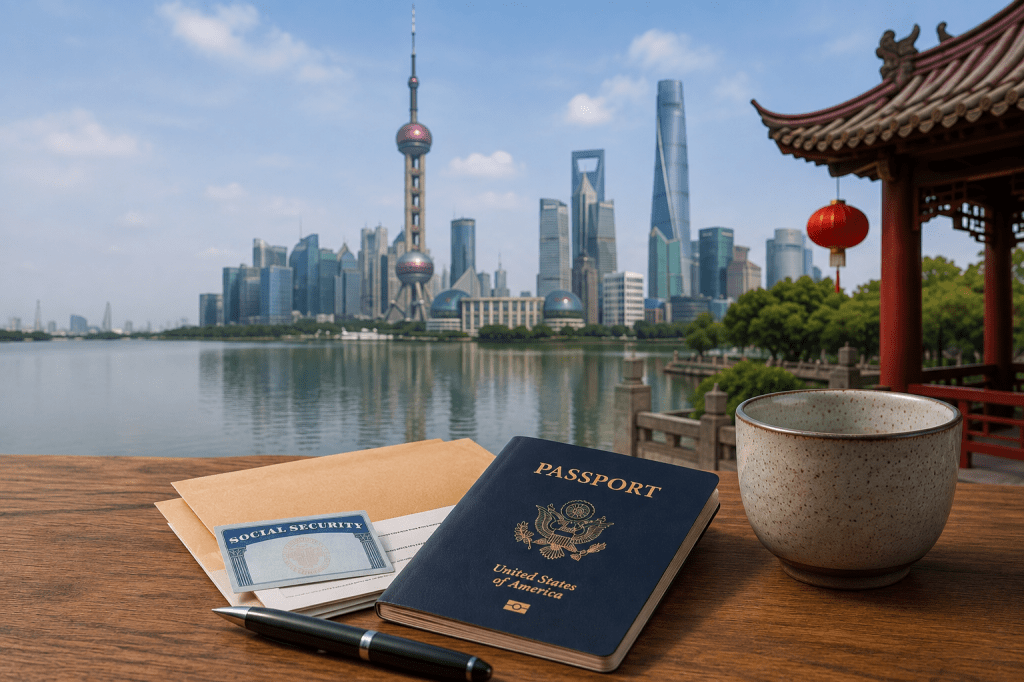
For many Chinese immigrants in the United States who are considering retirement in China, one of the first questions is straightforward: If I move back to China, can I continue receiving the U.S. Social Security benefits I earned after decades of working in America?
Knowing that the answer may be “yes” is only the beginning.
Once you actually start planning the move, practical questions quickly follow. Do you need to notify the Social Security Administration (SSA) before leaving the United States? Can your benefits continue to be deposited into your U.S. bank account? Can they be deposited directly into a bank account in China? Since there are no regular Social Security offices in China, whom do you contact if something goes wrong? And after moving to China, are there ongoing requirements you need to meet?
There are established rules and procedures for these situations. The key is to understand your own circumstances first and then handle the necessary steps in the right order.
Step 1: Find Out Exactly What Type of “Social Security” You Receive
In everyday conversation, people sometimes use “Social Security” to describe different government benefits. But these programs do not all follow the same rules.
Common benefits include:
- Social Security Retirement Benefits;
- Spousal Benefits;
- Survivor Benefits;
- Social Security Disability Insurance (SSDI); and
- Supplemental Security Income (SSI).
This distinction is particularly important when moving overseas because the rules are different.
SSI deserves special attention. SSI is not the same as regular Social Security retirement benefits. Under SSA rules, with limited exceptions, a person who is outside the United States for 30 consecutive days or more, or for an entire calendar month, may become ineligible for SSI. After being outside the country for 30 consecutive days or more, the person generally must return to the United States and remain in the country for 30 consecutive days before becoming eligible again.
So if you are considering long-term retirement in China, the first question should not be, “How do I send my Social Security to China?”
It should be:
What type of benefit am I actually receiving?
Step 2: Determine Whether You Are a U.S. Citizen
For regular Social Security retirement, survivor, and disability insurance benefits, U.S. citizens who otherwise remain eligible can generally continue receiving benefits while living in many countries. China is not one of the countries where the United States generally prohibits Social Security payments.
But if you are not a U.S. citizen, the answer requires more careful analysis.
Under SSA’s general rules, benefits for a non-U.S. citizen may stop after the person has been outside the United States for six consecutive calendar months unless an exception applies. Whether an exception applies can depend on nationality, the type of benefit, whether benefits are based on your own work record or someone else’s record, and other circumstances.
SSA provides a Payments Abroad Screening Tool to help people work through these rules based on their individual circumstances. The tool applies to Title II benefits, but it is a screening tool rather than a binding SSA determination.
Non-U.S. citizens should also be aware of another requirement: SSA currently instructs non-U.S. citizens who will be outside the United States for at least 30 consecutive days to complete Form SSA-21, Supplement to Claim of Person Outside the United States.
The important point is:
A U.S. citizen and a green card holder retiring in China should not automatically assume that exactly the same overseas payment rules apply to both.
Step 3: If You Already Receive Social Security, Decide Where the Money Should Go
Suppose you are already retired and your Social Security benefit is deposited into your bank account every month. You are now preparing to move to China.
There are two basic approaches.
Option 1: Continue Using Your U.S. Bank Account
If your Social Security benefits are already paid by Direct Deposit into a U.S. bank account and you plan to keep that account, moving to China does not necessarily mean that you must redirect your Social Security payments to a Chinese bank.
The advantage is simplicity: fewer things need to change.
However, your bank’s own policies regarding overseas residence, foreign addresses, account maintenance, and identity verification are separate matters. It is a good idea to check with your bank before moving abroad.
Option 2: Have Social Security Deposited Directly Into a Bank Account in China
China currently participates in SSA’s International Direct Deposit (IDD) program. Eligible Title II beneficiaries can therefore apply to have their Social Security benefits deposited directly into a qualifying account at a financial institution in China.
SSA has a form specifically for China:
SSA-1199-OP49 Direct Deposit Sign-Up Form (China)
The form itself is relatively straightforward.
The beneficiary completes and signs Section 1, while the financial institution completes Section 3. The current China-specific form states that the receiving account must be a U.S. dollar (USD) account.
SSA does not currently publish a list of designated banks in China for International Direct Deposit. Before applying, beneficiaries should confirm with their bank that the USD account can receive U.S. Social Security payments through IDD and that the bank can complete Section 3 of Form SSA-1199-OP49, including the bank name, CNAPS Code, SWIFT/BIC, and account information. Even when using a major bank, it is advisable to confirm with the specific branch in advance rather than assume that any USD account will automatically meet SSA’s requirements.
So the answer to the common question, “Can my U.S. Social Security be deposited directly into a Chinese bank account?” is not merely “possibly.”
SSA currently has an International Direct Deposit arrangement specifically for China.
Whether it is better to keep using a U.S. bank account or switch to a Chinese bank account is a separate question. The answer depends on factors such as whether you plan to maintain U.S. banking relationships, how you use U.S. dollars and Chinese yuan, and the practical requirements of maintaining your accounts.
Step 4: Once You Are in China, Whom Do You Contact About Social Security?
This is something many retirees discover only after they need help.
SSA has local offices throughout the United States, but there are no ordinary SSA field offices in China.
So what happens if you are living in Beijing, Shanghai, Guangzhou, Chengdu, or another Chinese city and have a Social Security problem?
Under SSA’s current overseas service structure, China is served by the Federal Benefits Unit (FBU) at the U.S. Embassy in Manila, Philippines.
If you live in China and need assistance with an overseas Social Security matter, you should therefore use SSA’s designated overseas service channel and contact the FBU responsible for China rather than looking for a local SSA field office in China.
This is also one reason to organize your SSA records, benefit documents, and contact information before leaving the United States.
Step 5: If You Have Not Started Receiving Benefits, Do Not Wait Until You Are in China to Learn How the System Works
Some people may move to China at age 62 or 65 but plan to wait until age 67 or even 70 before claiming Social Security retirement benefits.
In that situation, “Can I receive Social Security in China?” and “How do I apply for Social Security from China?” are two different questions.
SSA’s overseas service system also handles benefit applications from people living outside the United States. China is currently served by FBU Manila for these matters as well.
If you already know that you are likely to retire in China, it makes sense to organize important records before leaving the United States, including:
Social Security records, proof of birth and identity, marriage records, information about a spouse or former spouse, and other documents that could affect a future benefit claim.
You do not necessarily need to claim benefits before moving. But ideally, you should not wait until you are already in China to understand your Social Security situation for the first time.
Step 6: Moving to China Does Not Mean You Can Forget About SSA
This is another commonly overlooked issue.
SSA operates a Foreign Enforcement Program to verify that beneficiaries living abroad remain eligible for payments and to identify events that could affect benefits, such as changes in citizenship, marriage, or divorce. Depending on the beneficiary’s circumstances, these reviews may occur annually or every other year.
Many beneficiaries living overseas who receive benefits on their own behalf may encounter:
SSA-7162 Report to United States Social Security Administration
If a Representative Payee manages benefits on behalf of another beneficiary, Form SSA-7161 may apply instead.
If you receive an SSA letter or overseas eligibility questionnaire while living in China, do not set it aside simply because the English is difficult to understand.
After moving overseas, changes involving your address, marital status, citizenship, work, or other circumstances that may affect your benefits should also be reported as required by SSA.
Step 7: Give Yourself an “SSA Checkup” Before Moving to China
If you already receive Social Security and are preparing to move from the United States to China for the long term, review these six items before leaving.
First, confirm the type of benefit you receive.
Is it your own retirement benefit, a spousal or survivor benefit, SSDI, or SSI?
Second, confirm your citizenship status.
If you are not a U.S. citizen, pay particular attention to the overseas payment rules rather than assuming that green card holders and U.S. citizens are treated exactly the same.
Third, make sure SSA has accurate contact information.
If you move abroad permanently or for an extended period, SSA needs to be able to reach you.
Fourth, decide how you want to receive your payments.
Will you continue using a U.S. bank account, or apply for International Direct Deposit into an eligible USD account in China?
Fifth, organize your important documents.
Keep your SSA benefit notices, identification documents, marriage or divorce records, and other important benefit-related records in a secure place.
Sixth, know whom to contact later.
For people living in China, FBU Manila currently handles Social Security matters for the region.
Once these six issues are organized, the Social Security side of retiring in China becomes much more manageable.
When Should You Be Cautious About Handling Everything on Your Own?
If your situation is relatively straightforward — for example:
U.S. citizen + receiving your own retirement benefit + moving to China long term + continuing to use your existing U.S. bank account
— it may be relatively easy to determine the necessary steps using SSA’s official information.
But you should look more carefully at the rules if your situation involves:
non-U.S. citizenship, spousal benefits, survivor benefits, SSDI, SSI, suspended benefits, years of overseas residence while SSA still has an old U.S. address, an SSA eligibility questionnaire you do not understand, or a first-time Social Security application from China.
The reason is not that Social Security is mysterious.
It is that the same question — “Can I still receive my Social Security if I retire in China?” — may have different answers for different people.
Retiring in China Means Organizing Both Sides of Your Life
For many first-generation Chinese immigrants, living in China again may not be the most difficult part of retirement. They know the language, may still have relatives and friends there, and understand much of everyday life.
What may be less familiar is how to manage the retirement system they spent decades building in the United States after they leave.
Social Security is only one part of that system.
Knowing that you “can receive Social Security in China” is only the beginning. Before leaving the United States, it is far more useful to organize your benefit type, overseas payment eligibility, banking arrangements, SSA contact information, and continuing reporting responsibilities one by one.
Then, after you arrive in China, your U.S. Social Security can function as what it is supposed to be: a stable source of retirement income rather than a continuing source of uncertainty.
This article provides general public information and practical guidance only. It does not constitute legal, tax, or individualized Social Security eligibility advice. Eligibility for benefits and overseas payment decisions are ultimately determined by the U.S. Social Security Administration.
By Voice in Between
Discover more from 华人语界|Chinese Voices
Subscribe to get the latest posts sent to your email.
