A low-cost U.S. number could help preserve access to your bank, investment, and retirement accounts
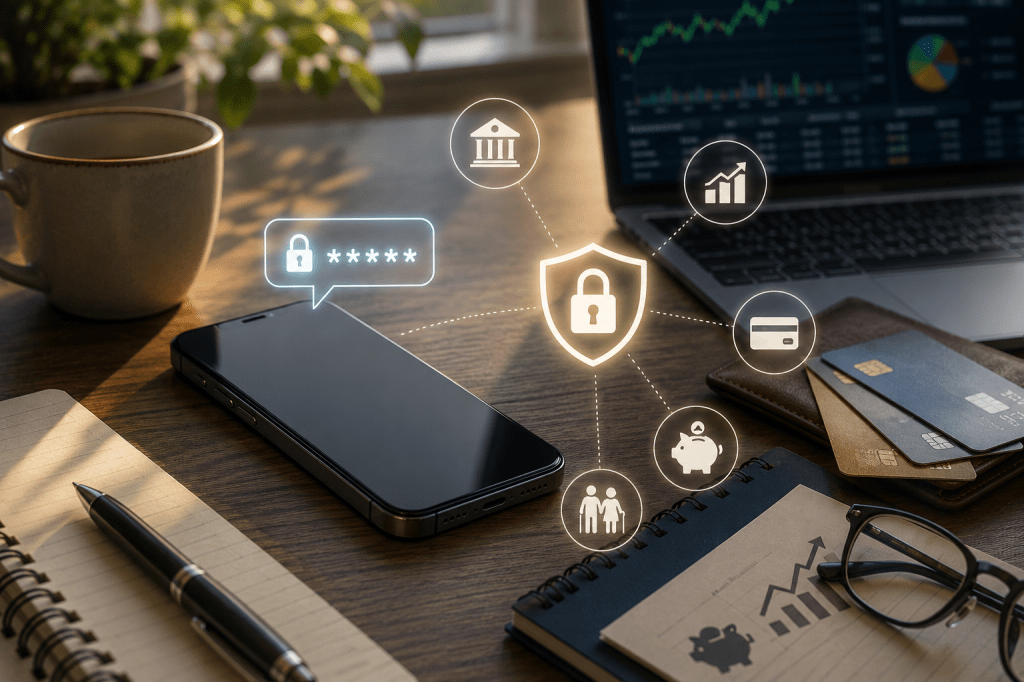
When preparing to retire in China, people usually think about the major issues first: Should I keep my U.S. bank accounts? How will I continue receiving Social Security? What should I do about Medicare? How will I manage my credit cards and investment accounts?
Compared with those questions, a U.S. phone number may seem like a minor detail. If you will be living primarily in China, continuing to pay $50, $70, or more each month for a U.S. wireless plan may appear unnecessary.
But today, a U.S. phone number is no longer just a way to make calls. Banks, credit card companies, brokerages, IRAs and 401(k)s, email providers, and many other important online services may use text messages to verify your identity. While you are living in the United States, this happens so routinely that you barely notice it. Only after moving overseas and canceling the number might you discover that you know your password—but still cannot get into your account.
For retirees who intend to keep financial and retirement accounts in the United States, the better solution is often not to cancel the U.S. number, but to turn an expensive wireless plan into a low-cost U.S. number that functions as part of your digital identity.
Why Has a Phone Number Become So Important?
Logging into a U.S. bank or financial account increasingly involves two-factor authentication, or 2FA. After entering your password, the institution may send a one-time password (OTP) to the mobile number registered with the account. Some banks require another verification when you add a recipient, make a large transfer, change devices, or reset a password.
The problem is that many U.S. institutions do not accept a Chinese mobile number for these purposes.
You might notice no immediate difference after moving to China and canceling your U.S. number. But the next time a bank asks you to verify your identity—or when you replace your phone and need to sign into an app again—a simple process can become complicated. What once took a few seconds may require an international call, additional identity verification, or an account-recovery process.
So if you plan to continue using U.S. banks, credit cards, investment accounts, retirement accounts, and other important services, keeping a U.S. mobile number capable of receiving verification messages should be part of your cross-border retirement planning.
That does not mean you need to keep paying for an expensive unlimited-data plan.
A $50 or $70 Monthly Plan Can Often Be Replaced by One Costing a Few Dollars
Once you live primarily in China, the purpose of your U.S. number changes. Your Chinese number handles everyday calls and mobile data, while the U.S. number is mainly there to preserve the number, receive verification messages, and occasionally take a U.S. call.
That makes low-cost prepaid mobile virtual network operators, or MVNOs, worth considering.
Examples include Tello, US Mobile, Mint Mobile, and Ultra Mobile. These companies use networks operated by larger carriers such as T-Mobile and Verizon but generally have much lower overhead, fewer retail stores, and less emphasis on device subsidies. As a result, they can offer much cheaper plans.
Tello, for example, allows customers to customize data and calling allowances, with low-usage plans costing only a few dollars to the low teens per month and supporting texting, eSIM, and Wi-Fi Calling. US Mobile also offers inexpensive plans, eSIM, and Wi-Fi Calling. Ultra Mobile has traditionally focused heavily on customers with international needs, while Mint Mobile can also be inexpensive but is generally better suited to customers willing to pay for longer service periods in advance.
For someone living overseas, however, price should not be the only consideration. More important questions include: Is this a genuine U.S. mobile number? Can it receive bank short-code messages? Does the carrier support Wi-Fi Calling and texting? Can the account be renewed and managed online from overseas? And if the phone is lost, how can the SIM or eSIM be restored?
There is another important consideration: some low-cost U.S. carriers, including Tello, require a new line to be initially activated while the customer is physically in the United States and connected to a U.S. cellular network. Policies vary by carrier, so initial activation and overseas recovery rules should be checked along with the monthly price.
For someone who primarily needs a U.S. number for 2FA and account access, the annual cost can often be reduced to somewhere between several dozen and a little over a hundred dollars.
Why Not Just Use a Free Internet Phone Number?
Google Voice and other VoIP services may seem like an obvious alternative. They can be extremely inexpensive and, in some cases, have virtually no ongoing monthly cost. For ordinary calls, they can work very well.
But using such a number as the primary authentication method for financial accounts is a different matter.
Some financial institutions identify VoIP numbers and may not accept them for short-code messages or one-time passwords. In other words, being able to receive an ordinary text message does not necessarily mean the number will reliably receive verification codes from every bank or financial institution.
If a phone number is connected to bank deposits, credit cards, and retirement assets, relying entirely on a VoIP number just to save another $50 or $100 a year may not be worth the risk. For important financial authentication, retaining a genuine U.S. mobile number is generally the more practical approach.
How Can You Receive U.S. Verification Codes While Living in China?
One of the key technologies that makes this possible is Wi-Fi Calling and texting.
If both the U.S. carrier and the phone support it, a U.S. mobile line can use an internet connection while you are in China to connect to the carrier’s system and continue receiving calls and text messages. At home, for example, the phone can connect to Wi-Fi and receive a verification code sent by a U.S. bank without requiring an expensive international roaming package simply to receive a text.
A Dual SIM iPhone can make the arrangement even more useful. The Chinese line can handle local calls and mobile data, while the U.S. line handles 2FA and U.S. communications. With compatible devices and carriers, the U.S. line may also be able to use the other SIM’s cellular data connection to maintain Wi-Fi Calling. This can make it possible to receive calls and texts through the U.S. line even when you are away from Wi-Fi, without relying on international data roaming on the U.S. line.
The division of labor becomes simple:
The Chinese number supports your life in China; the U.S. number maintains access to your U.S. accounts.
But for people returning to China, this creates an important hardware issue that should be addressed before leaving the United States.
If You Need a New iPhone, a Compatible Hong Kong Model Is the Most Practical Choice
If you want to use both a Chinese number and a U.S. number on the same iPhone, the regional version of the phone matters.
Recent U.S. iPhones cannot solve this problem. U.S.-market iPhones beginning with the iPhone 14 do not have a physical SIM tray and rely on eSIM. At the same time, mainland Chinese carriers do not provide Chinese domestic eSIMs for overseas-market iPhones. A recent U.S.-market iPhone therefore cannot provide the combination we need: a Chinese domestic line plus a U.S. eSIM.
Mainland China versions do not solve the problem either. iPhones sold for the mainland Chinese market operate under China’s eSIM restrictions and cannot install foreign-carrier eSIMs such as those from Tello or US Mobile for this purpose. They therefore cannot provide the required Chinese line plus U.S. eSIM combination either.
The practical solution is a Hong Kong-market iPhone model that supports a physical nano-SIM plus eSIM.
The arrangement is straightforward:
China Mobile, China Unicom, or China Telecom → physical nano-SIM
Tello, US Mobile, or another compatible U.S. carrier → eSIM
This allows one phone to maintain both a Chinese and a U.S. number.
However, simply buying something labeled “Hong Kong version” is not enough. SIM configurations have changed between iPhone generations, and some earlier Hong Kong models used two physical SIMs instead. Before buying, check the exact model and confirm that it specifically supports nano-SIM + eSIM. Current Hong Kong-market iPhone 17 models offer this combination and also support Dual eSIM.
For someone planning to live between China and the United States for years, the SIM configuration should therefore become part of the phone-buying decision—alongside the screen, camera, storage capacity, and price.
Set Up the U.S. eSIM Before You Leave the United States
This step is particularly important.
Some low-cost U.S. carriers, including Tello, require the initial activation of a new line to take place in the United States. If you intend to use such a number for receiving 2FA codes while living in China, do not wait until after moving to China to open the account, install the eSIM, and attempt the first activation.
A safer sequence is to obtain a compatible phone first and verify that its IMEI is accepted by the U.S. carrier you intend to use. Then, while still in the United States, purchase the plan and install and activate the SIM or eSIM.
If you want to keep a U.S. number you have used for many years, you can then port that number from T-Mobile, AT&T, Verizon, or another existing carrier to the lower-cost provider. Do not cancel the old line first. Doing so could cause you to lose the number you are trying to transfer.
Once the port is complete, don’t stop after making a test phone call. Test what will actually matter after you move: Can your bank’s short-code messages reach you? What about your credit card company and brokerage? Can you sign in after changing devices? Is Wi-Fi Calling and texting working properly?
The process should therefore look something like this:
Choose the right phone → choose a low-cost U.S. carrier → open and initially activate the line in the United States → port your existing U.S. number → enable Wi-Fi Calling/Text → test important financial accounts → then move overseas.
If you are already living in China and try to build this system from scratch, your choices may be more limited and the process considerably more difficult. This belongs on the before-leaving-the-United-States checklist, not the after-arrival list.
Don’t Just Ask What It Costs—Ask What Happens If You Lose the Phone
Long-term overseas use introduces another issue that is easy to overlook: recovering the number after losing the phone may ultimately matter more than the monthly price.
Imagine a retiree who has been living in Shanghai for several years. The U.S. eSIM is connected to bank accounts, credit cards, and investment accounts. One day the phone is lost, and access to the U.S. number disappears with it.
At that point, the important question is no longer whether the plan costs $5 or $10 a month. It is:
Can I recover this U.S. number while I am in China?
Before choosing Tello, US Mobile, Mint Mobile, Ultra Mobile, or another provider, find out how a replacement eSIM is issued, whether it can be installed while overseas, what identity verification is required, what happens if the account Security PIN is forgotten, and how long the number is retained if an AutoPay payment fails.
There is also an important distinction between “a new line must initially be activated in the United States” and “an already activated line can be restored to a replacement eSIM while overseas.” Those are not the same policy. Anyone planning to attach a U.S. number to important bank and retirement accounts for many years should verify the carrier’s overseas recovery procedures in advance.
For long-term overseas use, account and number recovery can be just as important as the monthly price.
If a phone number protects access to substantial retirement assets, paying another few dollars a month for a provider with a more reliable recovery process may be money well spent.
Keep the Number—but Don’t Make It Your Only Key
A U.S. mobile number can be important without becoming the only way to verify your identity.
Before leaving the United States, review your most important accounts. If a bank, brokerage, or email provider supports an Authenticator App, Passkey, Security Key, or App Push Notification, consider setting up those methods as well. Important email accounts should also have independent recovery methods, and recovery codes should be stored securely.
This way, a temporary problem with the U.S. phone number does not simultaneously lock you out of every important U.S. account.
One situation is particularly worth avoiding: your mobile account requires your email account for recovery, while your email account can only be recovered through that same mobile number. Everything works perfectly until the phone is lost—and then the two systems can lock each other.
The better approach is to maintain at least two independent identity-recovery paths, rather than putting everything behind a single SMS code.
When Retiring in China, Don’t Forget Your U.S. “Digital Key”
As the Chinese Voices cross-border retirement series moves from general policy questions into practical implementation, one reality becomes increasingly clear: retiring in China does not mean completely ending your life in the United States and starting over.
Social Security may still come from the United States. Bank accounts may remain open. IRAs and 401(k)s may stay in the U.S. financial system. Credit cards and investment accounts may continue to be used. You may be living in China while still needing to maintain an important part of your financial and digital life in America.
A U.S. mobile number is one small tool connecting those two worlds.
The practical solution, therefore, is usually not to continue paying for an expensive unlimited U.S. wireless plan—and not to cancel the number when leaving the country. Instead, move the existing number to a reliable low-cost mobile provider; use a phone that can accommodate a Chinese physical SIM and a U.S. eSIM; complete the account setup, initial activation, number transfer, Wi-Fi Calling configuration, and financial-account testing while still in the United States; and establish additional authentication and recovery methods for your most important accounts.
An American phone number that once cost $50 or $70 a month can then become a cross-border digital utility costing only several dozen to a little over a hundred dollars a year.
It may rarely ring. It may use almost no U.S. mobile data. But the next time your bank unexpectedly asks for a verification code, your brokerage needs to confirm your identity, or an important account has to be recovered, its value becomes obvious.
What you are really preserving is not a U.S. wireless plan. It is access to the entire network of American accounts connected to that number.
This article provides general practical information and does not constitute telecommunications, financial, or cybersecurity advice. Wireless plans, phone models, eSIM and Wi-Fi Calling policies, and relevant mainland China regulations may change. Verify current requirements for your specific device and carrier before making arrangements.
By Voice in Between
Discover more from 华人语界|Chinese Voices
Subscribe to get the latest posts sent to your email.
