— The 2026 Midterm Elections as a Test of Asian American Coalition Politics
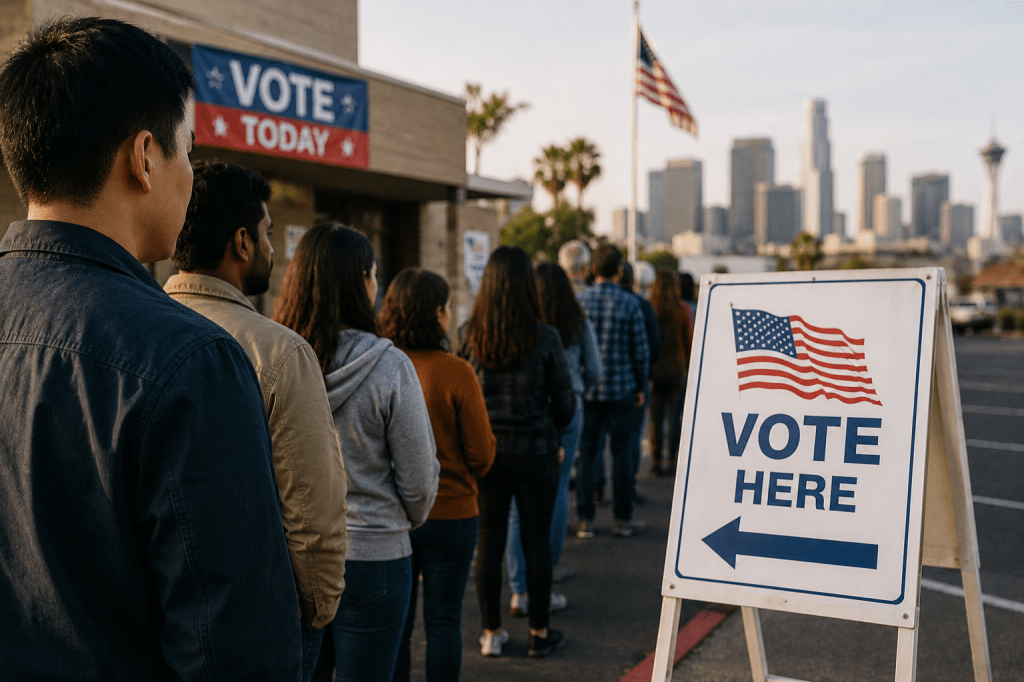
Over the past two decades, the Asian American population has continued to grow across the United States. In many key states, Asian American voters have evolved from a relatively overlooked minority into a constituency that political candidates can no longer afford to ignore. From Nevada and Arizona to Georgia and Virginia, both Democrats and Republicans are investing increasing resources into reaching Asian American communities.
If one looks only at the demographic numbers, the story seems straightforward: the Asian American population is growing, therefore Asian American political influence is growing as well.
But the reality is more complicated.
Population growth does not automatically translate into political power. A community becomes politically influential not simply because of its size, but because of its ability to organize, identify shared interests, and act collectively. That is precisely the challenge facing AAPI in the 2026 midterm elections.
In a previous discussion, we explored an often-overlooked reality: AAPI functions more like a coalition than a naturally unified community. Chinese Americans, Indian Americans, Filipino Americans, Vietnamese Americans, and Pacific Islanders are grouped together not because they share a common culture or history, but because American institutions have chosen to place them within the same demographic category.
If that observation is correct, then the central question is no longer whether Asian Americans are “united enough.” The more important question becomes this:
As the Asian American population becomes increasingly diverse and its interests increasingly fragmented, can AAPI still sustain a meaningful degree of political cooperation?
That may be one of the most important stories to watch in 2026.
Growing Numbers Do Not Automatically Create Shared Interests
For many years, mainstream American discourse has treated AAPI as a single political category.
Yet today’s reality is that the differences within AAPI may be larger than they were twenty years ago.
An Indian American software engineer in Silicon Valley, a Chinese American family operating a restaurant in Las Vegas, a Filipino American nurse working in a healthcare system, and a second-generation voter from a Southeast Asian refugee family may inhabit entirely different social and economic worlds.
They may hold different views on housing policy, different priorities regarding immigration, different expectations for educational reform, and even different levels of trust in the two major political parties.
For that reason, the most interesting question in 2026 may not be which party Asian Americans support.
It may be whether Asian Americans can continue to function as a meaningful political category at all.
That sounds paradoxical, but it reflects a very real challenge.
The strength of any coalition does not come from complete internal agreement. It comes from whether its members continue to believe that cooperation serves them better than acting alone.
Cost of Living May Become a New Common Language
If we look at the current national political climate, one trend stands out clearly.
Many traditional identity-based issues have moved into the background, while concerns about the cost of living have become a central source of anxiety across communities.
Rent continues to rise.
Mortgage rates remain elevated.
Auto insurance and healthcare costs are becoming increasingly burdensome.
Educational expenses continue to climb.
These concerns affect people regardless of whether they are Chinese American, Indian American, Filipino American, or anything else.
From the perspective of coalition politics, this may actually create an opportunity.
Coalitions are often strongest not when people share the same identity, but when they face the same pressures.
That was true during the pandemic.
It may also be true during the current affordability crisis.
If AAPI organizations focus more attention on issues such as housing affordability, small business conditions, educational opportunity, and economic mobility, they may become more politically influential than if they rely solely on appeals to ethnic identity.
For most voters, monthly bills are often more politically motivating than abstract discussions of identity.
Education May Reveal the Limits of the Coalition
Not every issue, however, creates shared interests.
Education provides a good example.
For many Asian American families, education remains one of the most important pathways to upward mobility. Yet once discussions move from broad principles to specific policies, internal divisions become much more visible.
Some communities strongly support merit-based systems centered on testing and academic performance.
Others place greater emphasis on equal access to educational opportunity.
Some focus on preserving access to highly competitive programs and schools.
Others prioritize improving under-resourced schools.
These perspectives do not always align naturally.
In fact, many coalitions find it easier to unite in opposition to something than to agree on how resources should be distributed.
Education policy falls into the latter category.
For that reason, debates over education may become one of the most important tests of AAPI’s political cohesion in the coming years.
Nevada May Offer a Preview of the Future
If we narrow our focus to Nevada, these dynamics become especially visible.
The state’s Asian American population includes Chinese American small-business owners, Filipino American healthcare professionals, South Asian professionals, newly arrived immigrant families, and second-generation voters born and raised in the United States.
These groups do not automatically form a community.
Yet they all operate within the same political and economic system.
They face rising housing costs.
They participate in debates over educational quality.
They share concerns about public safety and economic opportunity.
These common experiences may ultimately matter more than cultural similarities.
Political coalitions are rarely built upon the idea that people are the same. They are built upon the recognition that people face similar institutional realities.
The Real Test of 2026 Is Not About Candidates
For that reason, the significance of the 2026 midterm elections for AAPI may not lie in whether Asian Americans ultimately vote Democratic or Republican.
That is merely an outcome.
The more important question is whether AAPI can maintain a meaningful level of political cooperation as its population grows larger, more diverse, and more internally divided.
The success of coalition politics has never depended on turning everyone into the same kind of person.
Its success depends on the ability to identify shared interests despite growing differences.
That may be the most important thing to watch in 2026.
The election will test more than individual candidates.
It will test more than party strategy.
It will test whether AAPI, as a political coalition, has matured enough to remain effective in an era of increasing diversity, increasingly complex interests, and increasingly fragmented identities.
In the end, the question facing AAPI is not whether it can become a unified community.
The question is whether it can remain a functional coalition.
By Voice in Between
Discover more from 华人语界|Chinese Voices
Subscribe to get the latest posts sent to your email.
