— Cross-Border Retirement Series, Part Six
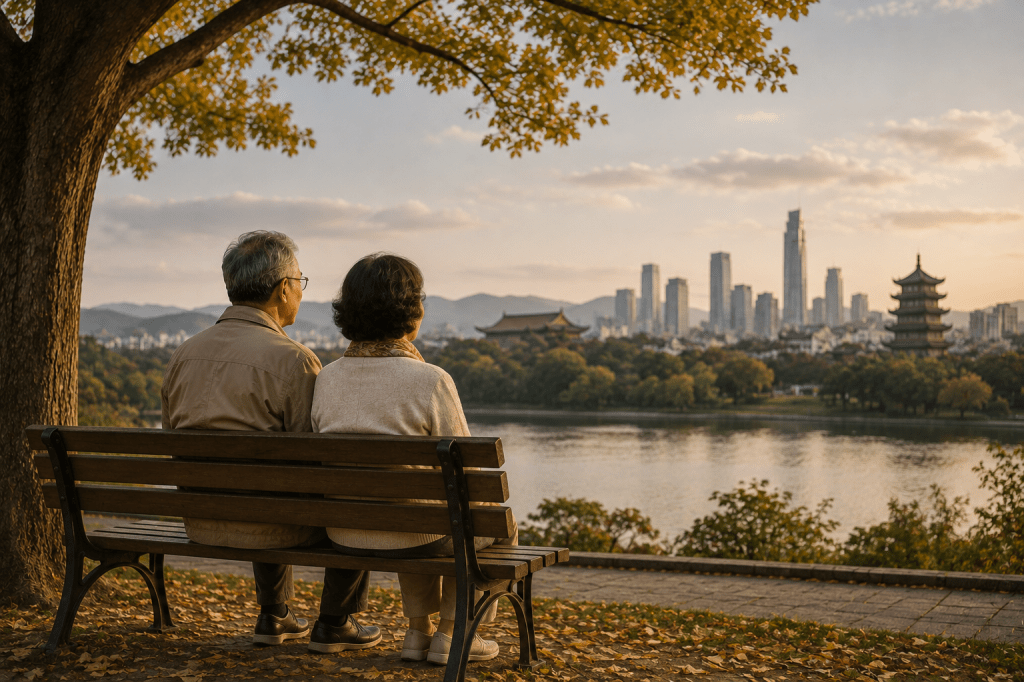
For many first-generation Chinese immigrants, the question of retiring in China is not simply about whether the cost of living may be lower there, nor is it only about familiar language, food, and ways of life. At a deeper level, China is the place where they were born and raised.
The traditional Chinese idea of “fallen leaves returning to their roots” is familiar to many people. Leaving one’s hometown while young to work and make a living, then returning later in life, was once an easily understood life path.
For first-generation immigrants who have acquired foreign citizenship and lived abroad for decades, however, that path has become much more complicated.
The place they may want to return to is still their homeland, but they are no longer in the same legal position as when they left. At the same time, the place once simply described as “overseas” has taken on an entirely different meaning after several decades of life there.
That leads to the final question in this series: when a person’s life has come to span two countries, what does it really mean to decide where to spend retirement?
The Homeland We Remember Is Not Exactly the China of Today
When people consider retiring in China, familiarity is often one of the first things that comes to mind.
They speak the language, enjoy Chinese food, understand the culture, and may still have siblings, former classmates, and friends there. These advantages can make readjustment much easier.
But long-term retirement differs in an important way from a short family visit.
During a visit, people often experience the more pleasant side of life. Relatives and friends make time to meet, favorite restaurants can be revisited, and familiar places can be seen again. Even when something is inconvenient, the stay will end in a few weeks or months.
Long-term living is different. After several years, or even a decade, what matters is ordinary daily life.
China itself may also have changed substantially during the twenty or thirty years someone has lived abroad. Cities, consumer habits, healthcare systems, public services, and even everyday social interactions may differ from what a person remembers. Familiar neighborhoods may have changed, while old friends may have moved away or entered their own retirement years.
Retiring in China may therefore offer major cultural and linguistic advantages, but it should not be understood simply as resuming the life one left behind. The person returning today has to adapt to the China that exists now, not the China preserved in memory.
China Is Not the Only Thing That Has Changed
First-generation immigrants themselves also change during decades of life abroad.
When they first immigrate, many may think of the new country primarily as a place to work and live, while continuing to think of China as their real home. Over time, however, that distinction often becomes less clear.
After several decades in another country, careers, housing, healthcare, bank accounts, and retirement income have all been established there. Children grow up there, friendships and neighborhood relationships develop there, and acquiring citizenship creates a new legal status with corresponding rights and obligations.
These changes may not feel especially significant in everyday life. It is often only when retirement raises the possibility of returning to China for the long term that people realize how difficult it has become to divide the two places neatly into “homeland” and “foreign country.”
That does not mean their emotional connection to China has weakened. It simply means that decades of life have added another layer of reality.
For first-generation naturalized Chinese immigrants, China can remain the homeland, while the country where they have spent decades abroad has also become part of their life.
Where the Family Lives Changes What a Retirement Location Means
This change is especially visible in family relationships.
First-generation immigrants may still have siblings, relatives, and longtime friends in China, while their adult children have established their own lives abroad. Early in retirement, that cross-border family structure may not create major difficulties. Parents may still be healthy, able to travel independently, and capable of spending parts of the year in both countries.
As they grow older, however, family distance becomes more important.
As earlier articles in this series have discussed, advanced age may require more than regular contact with relatives and friends. Someone may need practical help during a hospitalization, after mobility declines, or when everyday affairs become difficult to manage independently.
At that point, siblings and friends in China may themselves be elderly, while adult children overseas—although farther away—may increasingly become the people expected to take responsibility.
For that reason, retirement location cannot be decided simply by counting how many relatives or friends live in each country. The more important question is whether family and social support in each place will still be able to function at different stages of later life.
Living in Both Countries May Work Well, but It May Not Last Forever
For naturalized Chinese immigrants who are healthy and financially able to do so, spending several months each year in China and several months abroad can be a very practical arrangement.
It allows them to keep the familiarity of life in China while maintaining close ties with adult children and social relationships overseas. For someone newly retired, this may even make more sense than immediately deciding where to live permanently.
But this lifestyle depends on one obvious condition: the person must remain physically able to travel.
Crossing the Pacific may be manageable in one’s sixties. By the time someone reaches their eighties, illness, reduced mobility, or even a single accident may make frequent long-distance travel unrealistic.
Living in both countries can therefore remain a viable lifestyle for many years, but it should not be assumed that it can continue indefinitely.
A sound cross-border retirement plan should preserve the ability to change living arrangements as age and health change. Living mainly in China during the early years of retirement does not mean that arrangement must continue forever. Staying mainly abroad at first also does not prevent a later move to China if family and living conditions change.
At an Advanced Age, “Where Is Home?” Becomes a Practical Question
When people are younger, the idea of home is often associated primarily with emotion and belonging.
At an advanced age, the concept acquires more practical meaning.
A place suitable for long-term retirement should not only feel comfortable. It should also provide stable access to healthcare, care services, and social support. For naturalized Chinese immigrants, long-term residence status, the ability to manage overseas pensions and assets, and whether adult children can participate during emergencies also matter.
These considerations do not replace emotional attachment, but they increasingly influence real-life decisions.
Someone may deeply enjoy living in China but find that primary healthcare coverage, adult children, and long-term care arrangements remain abroad. Another person may have lived overseas for decades yet still feel more at ease spending retirement in China.
Both situations are entirely possible.
What should be avoided is turning the choice of retirement location into a judgment about identity—as if returning to China alone represents “returning to one’s roots,” while remaining abroad necessarily means growing old in a foreign land.
For first-generation immigrants whose lives have been divided between two countries for decades, reality is usually more complicated.
“Returning to One’s Roots” Is Taking on a New Meaning
The traditional idea of returning to one’s roots developed in a social structure in which birthplace, family, and later life often remained centered in the same place.
International migration has changed that structure.
Someone may be born in China, work in the United States for thirty years, have children living in America, receive retirement income from the United States, and then return to China after retirement. After several years in China, that same person may later return to the United States because of health or family needs.
A life like this is difficult to describe simply as “returning” or “staying.”
For first-generation naturalized Chinese immigrants, the real retirement decision may therefore be less about determining where they ultimately belong and more about deciding which living arrangement best fits the next stage of life.
Early in retirement, cost of living, cultural environment, and freedom may matter more. At an advanced age, healthcare, care needs, and distance from family may gradually become more important. A realistic retirement plan should allow these priorities to change over time.
In that sense, retiring in China does not have to become a permanent statement about identity.
It is first and foremost a living arrangement.
The Final Question Is Still Whether the Life Can Be Sustained
This series began by asking why more naturalized Chinese immigrants are considering retirement in China. It then examined changes in legal status, personal decision-making, long-term care, and practical issues involving residence, healthcare, pensions, taxation, and financial management.
These topics may look different from one another, but they ultimately point to the same issue.
Retirement is not simply about choosing the place that feels most comfortable today. It is about arranging a life that may continue for another twenty or thirty years.
For first-generation Chinese immigrants who have acquired foreign citizenship, that life carries an additional layer of complexity. Cultural memory may remain rooted in China, while family and social relationships are spread across two countries. Retirement income and institutional protections may not be located in the same country where everyday life takes place.
There is therefore no single answer to the question of retiring in China that will work for everyone.
Some people may be well suited to living in China long term. Others may be better off remaining in the country of citizenship. Still others may be able to divide their lives between two countries for a significant part of retirement. As they grow older, those choices may change.
The important thing is not to decide too early where one must ultimately “settle,” but to consider future changes while health remains good and choices remain relatively broad.
In the end, the criteria for deciding whether a place is suitable for retirement are not especially mysterious: whether you want to live there, whether you can afford to remain there over the long term, whether healthcare and care services will be available, and whether someone can actually be there when help is needed.
A place where these conditions can exist together is more likely to be a place where someone can realistically spend the later years of life.
Series Conclusion
The Cross-Border Retirement series has focused on first-generation Chinese immigrants who have acquired foreign citizenship and are reconsidering long-term life in mainland China after retirement.
They are legally different from Chinese citizens who continue to live abroad. For this group, retiring in China combines the familiarity of homeland, language, and culture with the reality that a foreign citizen must make long-term living arrangements in China.
Retirement planning therefore cannot rely only on cost-of-living comparisons or the experience of short family visits. Legal status, healthcare, pensions, taxation, family distance, long-term care, and financial management can all affect whether such a life remains sustainable.
This series does not attempt to conclude that people should return to China or remain abroad. The more useful question is what kind of life a person may need at different stages of later life and whether existing family, financial, and institutional arrangements can support those choices.
For first-generation immigrants who have spent decades living between two countries, that may be more practical than trying to find a single, permanent place to call their final destination.
By Voice in Between
Discover more from 华人语界|Chinese Voices
Subscribe to get the latest posts sent to your email.
