— Cross-Border Retirement Series, Part One
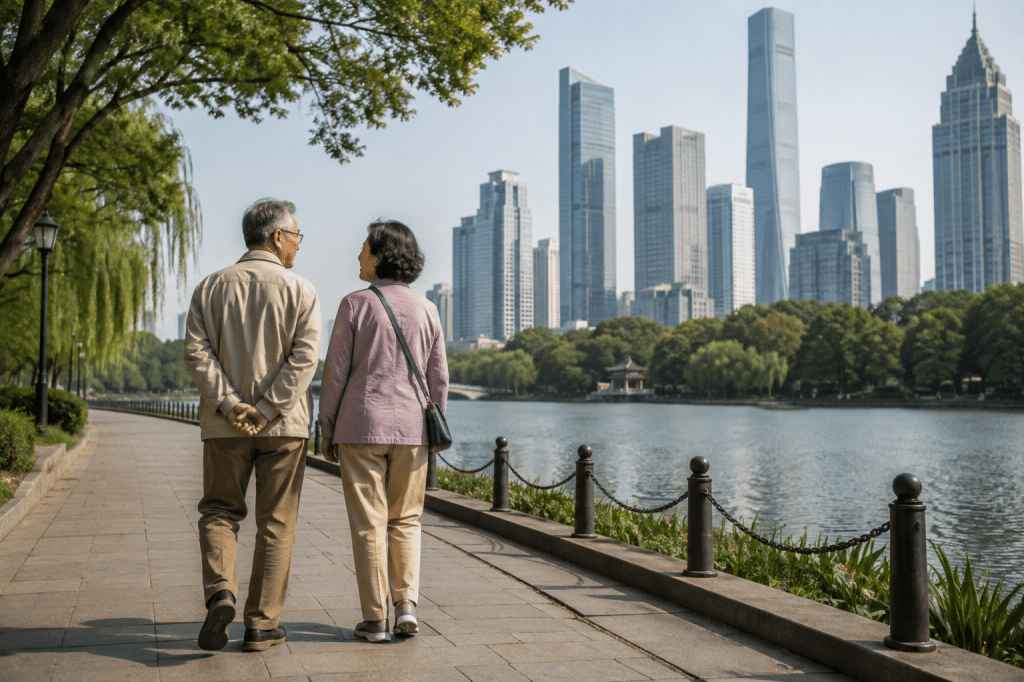
For many first-generation Chinese immigrants, retirement was rarely something they seriously thought about when they first left China.
In the early years of immigration, there were far more immediate concerns: finding stable work, improving income, securing housing, and deciding where their children should go to school. Some eventually settled in the United States, Canada, Australia, or Europe, and many later became citizens of their new countries.
Decades have now passed, and this generation is gradually reaching retirement age. Work is no longer the main factor determining where they live, their children are grown, and some of the constraints that once shaped everyday life have begun to change. At the same time, housing, healthcare, insurance, and the general cost of living are becoming increasingly important parts of retirement planning.
Against this backdrop, some are beginning to reconsider a question that once seemed far less urgent: after retirement, would it make sense to live in mainland China for an extended period of time?
The group discussed here is not primarily overseas Chinese who still hold Chinese citizenship, but first-generation immigrants who have already acquired foreign citizenship. China is where they were born and raised, yet after decades abroad, their legal status, family relationships, retirement income, and social protections are increasingly tied to another country.
For them, retiring in China may look like a return to a familiar place. In practice, however, it has become a form of retirement that spans two countries.
Retirement Changes the Factors That Determine Where People Live
During working age, people usually choose where to live based first on employment.
Where the jobs are, where salaries are higher, and where children can grow up and attend school all play a major role in determining why a family stays in a particular city, or even in a particular country.
Retirement changes those conditions.
A person no longer needs to commute to work every day or remain near a major employment center for career reasons. Once children are grown, school districts also cease to matter in the same way. Some of the factors that shaped residential choices for decades become less important.
At the same time, other questions begin to matter more.
Can retirement income support the desired standard of living? Is daily transportation convenient? Is medical care easy to access? Are family and friends nearby? Will help be available later in life?
For first-generation immigrants who have lived in two countries, these changing priorities naturally expand the range of possible choices.
In the past, living abroad may have been necessary because work and family were there. Retirement can be the first time someone is able to seriously ask whether the next twenty or thirty years still need to follow the same pattern.
The Rising Cost of Living Makes the Question More Concrete
In recent years, higher living costs have made this issue more practical.
For retirees living in countries such as the United States, housing, property taxes, insurance, cars, food, and various personal services can absorb a significant portion of a retirement budget. Once employment income disappears, Social Security, pensions, retirement accounts, and savings become the primary sources of income, making people more sensitive to how far a fixed income can actually go.
Under those circumstances, the cost of living in some Chinese cities can become attractive.
The appeal is not simply that one particular item is cheaper. Many of the everyday services retirees are more likely to rely on can be priced very differently across countries. Dining, public transportation, household help, and certain personal services may be more affordable for someone whose retirement income is denominated in U.S., Canadian, or Australian dollars.
Of course, living costs vary widely across China. Major first-tier cities cannot be compared directly with smaller cities, and exchange rates, housing arrangements, and individual spending habits all matter.
Still, retirement differs from working life in one important respect: a person no longer needs to live in a high-cost location in order to earn a higher salary. As a result, the question of where the same retirement income can support a more comfortable life becomes much more important than it once was.
China’s Appeal Is Not Just About Price
If reducing living costs were the only goal, there would be no shortage of retirement destinations around the world.
What makes China different for many first-generation Chinese immigrants is that lower costs may come with linguistic and cultural familiarity.
Someone who was born and lived in China for decades will usually remain familiar with Chinese food, language, and social habits even after many years abroad. Some still have siblings, relatives, old classmates, and friends in China. Others may retain housing or other family connections there.
That familiarity may not matter as much when someone is young. Working-age immigrants often spend years adapting to a new environment because career and income opportunities make the effort worthwhile. In retirement, priorities can change.
As people grow older, not having to cross a language barrier every time they see a doctor, shop, or handle everyday matters can itself become an important convenience.
That is why the idea of retiring in China cannot be explained simply by saying that China is cheaper. Cost is only one factor. Language, food, social ties, and familiarity with daily life all contribute to the appeal.
The Meaning of Convenience and Safety Also Changes With Age
Retirement can also change the standards people use to judge whether a place is suitable for everyday life.
During working years, few people decide where to immigrate based primarily on whether public transportation is easy to use. At an older age, however, being able to manage daily life without driving can become much more important.
Similar considerations include whether a neighborhood is walkable, whether food and shopping are easy to access, how far hospitals and pharmacies are, and whether someone feels comfortable going out alone.
Some Chinese immigrants who have lived in North America for many years find that certain Chinese cities offer greater convenience in public transportation, dining, shopping, and everyday services. These experiences are highly personal and vary from city to city, so they do not prove that one country is broadly better for older people than another.
They do, however, show that retirement needs are not the same as working-age needs.
A place that is excellent for employment, raising children, and accumulating assets is not automatically the best place to retire. Conversely, a city with fewer high-paying jobs may offer very different advantages to someone who no longer needs to work.
Family Ties Make the Decision More Complicated
First-generation immigrant families are often spread across two countries.
There may still be siblings, relatives, and longtime friends in China, while adult children have built their own lives abroad. For some people, returning to China means reconnecting with earlier family and social networks. For others, remaining abroad means staying closer to children and grandchildren.
That family structure makes retirement in China difficult to treat as a simple economic calculation.
In the early years of retirement, when health is still good and international travel is manageable, spending part of the year in each country may seem like a reasonable way to maintain both sides of life. But as people age, the meaning of family distance begins to change.
Who can be there during an illness? Who can accompany someone to medical appointments? Who can help deal with practical matters when assistance is needed?
At an advanced age, these questions may matter more than how often family members see one another during ordinary times.
Family ties can therefore be a reason to return to China, but they can also be a reason to remain abroad. The answer depends on the structure of each family, not on a rule that applies to everyone.
Feeling Comfortable During a Short Stay Does Not Mean Long-Term Retirement Will Work
Many naturalized Chinese immigrants considering retirement in China have already spent substantial time there over the years.
Some return for a few weeks every year, while others stay for several months at a time. Because the language is familiar, relatives and friends are nearby, and there is no need to work, these visits are often enjoyable and relatively easy.
But visiting and retiring are still very different experiences.
During a short stay, primary healthcare coverage, bank accounts, retirement assets, and legal ties remain abroad. Complicated problems can often be postponed, handled remotely, or dealt with after returning to the country of citizenship. Even when something feels inconvenient, the stay is temporary.
Long-term retirement requires a different kind of stability.
Can someone remain in China legally over many years? How will healthcare be handled? How will overseas pensions and assets support everyday life in China? Who will provide care at an advanced age?
Most of these questions do not fully emerge during short visits.
That means a pleasant experience living in China for several months can be useful evidence when considering retirement there, but it is not enough to show that the same arrangement will still work twenty years later.
Why This Issue Deserves Attention: It Is No Longer Simply About “Going Home”
For first-generation Chinese immigrants who have acquired foreign citizenship, retirement in China differs from the older idea of simply returning to one’s hometown after retirement.
Many left China while they were still Chinese citizens. Decades later, when they begin thinking about living there again for the long term, they may now be citizens of another country.
At the same time, their retirement income, healthcare arrangements, bank accounts, adult children, and other social ties have increasingly become rooted abroad.
Retiring in China, then, is not simply a matter of resuming a life that was left behind decades ago.
It is better understood as an effort to reorganize retirement across two countries that have both become deeply connected to one person’s life.
That arrangement may offer clear advantages, but it also creates new questions. Cost and cultural familiarity are part of the picture, while legal status, healthcare, family distance, long-term care, and the coordination of two different systems form another part.
None of these questions can be answered through a simple comparison of retirement costs in China and overseas.
For first-generation naturalized Chinese immigrants approaching retirement, the more useful question is how different living arrangements may fit the different stages of the next twenty or thirty years.
That is what this series will continue to explore.
About This Series
The Cross-Border Retirement series focuses on first-generation Chinese immigrants who were born and raised in China, later settled abroad and became foreign citizens, and are now considering whether to live in mainland China for extended periods during retirement.
For this group, cross-border retirement is not simply about where life is cheaper or more comfortable. Legal status, healthcare coverage, retirement income, assets, family, and long-term care may be divided between two countries, and those relationships can change as people age.
Rather than offering one answer for everyone, this series examines the advantages, limitations, and practical conditions that may shape whether retirement in China can work for different people.
By Voice in Between
Discover more from 华人语界|Chinese Voices
Subscribe to get the latest posts sent to your email.
